


17,85€
Auf Lager


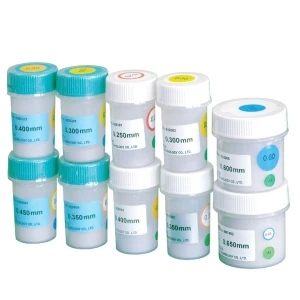
Lötkugeln mit Blei 0,5mm 250.000 Stück für professionelle Lötarbeiten
Marke: Pmtc
17,85€
Inkl. MwSt. (Exkl. MwSt.: 15,00€)
Begrenzter Vorrat
Standardlieferung
Mi, Apr 22 - Fr, Apr 24
Expresslieferung
Mo, Apr 20 - Di, Apr 21
30 Tage Rückgaberecht
Kostenlose Rücksendung innerhalb von 30 Tagen
Sichere Transaktion






Share:
Kostenlose Lieferung
Bei Bestellungen ab 300€
Einfache Rücksendung
30 Tage Rückgaberecht
Sichere Zahlung
100% sicherer Checkout
Qualitätsgarantie
Nur Originalprodukte
Das Lötkugeln mit Blei 0,5mm 250.000 Stk. ist ein unverzichtbares Produkt für Profis im Bereich Löten und BGA-Reballing, die bei ihren Arbeiten Präzision und Qualität benötigen. Hergestellt von Profound Material Technology (Pmtc) in Taiwan, enthält dieses Gebinde Lötkugeln mit Blei mit einem Durchmesser von 0,5 mm, ideal für Anwendungen in der Elektronik und bei der Reparatur von Bauteilen.
Hauptmerkmale:
- Zusammensetzung: 63% Zinn (Sn) und 37% Blei (Pb), eine klassische Legierung zum Löten mit hervorragender Fließfähigkeit und Haftung.
- Durchmesser der Kugeln: 0,5 mm, geeignet für feine Lötarbeiten und das Reballing von BGA-Chips.
- Menge: 250.000 Stück pro Dose, für einen umfangreichen Vorrat bei mehreren Projekten.
- Hersteller: Profound Material Technology, bekannt für seine Qualität bei Lötmaterialien.
- Herkunft: Hergestellt in Taiwan, mit hohen Produktionsstandards.
Typische Anwendungen:
- Reballing von BGA-Bauteilen auf Elektronikplatinen.
- Präzisionslöten in der Elektronik, insbesondere dort, wo bleihaltiges Material für bessere Leitfähigkeit und mechanische Festigkeit benötigt wird.
- Reparatur und Wartung elektronischer Geräte, die zuverlässige und dauerhafte Lötverbindungen erfordern.
Kompatibilität: Diese Dose mit Lötkugeln ist mit gängigen Lötstationen und Reballing-Werkzeugen auf dem Markt kompatibel und lässt sich dadurch problemlos in professionelle Arbeitsabläufe integrieren.
Dank ihrer Zusammensetzung und Größe sind diese Lötkugeln mit Blei ideal für Techniker und Profis, die optimale Ergebnisse beim Präzisionslöten suchen. Das Blei in der Legierung verbessert die Fließfähigkeit und senkt den Schmelzpunkt, was die Arbeit mit empfindlichen Bauteilen erleichtert.
Für eine sachgemäße Verwendung wird empfohlen, vorsichtig zu handeln und die geltenden Sicherheitsvorschriften beim Arbeiten mit bleihaltigen Materialien zu beachten.
- 63Sn 37Pb Zusammensetzung für hochwertiges bleihaltiges Löten
- 0,5 mm Kugeldurchmesser für präzises BGA-Reballing
- 250.000 Stück pro Dose für langen Einsatz
- Hergestellt von Profound Material Technology (Pmtc) in Taiwan
- Ideal für professionelles Löten und Elektronikreparatur
Kundenfragen & Antworten
Quina és la proporció exacta i el tipus d'aliatge utilitzat en aquestes boles d'estany amb plom, i per què és rellevant per a processos de soldadura BGA?
L'aliatge és 63% estany (Sn) i 37% plom (Pb), conegut com a Sn63Pb37, amb punt de fusió a 183 °C. Aquesta proporció garanteix una excel·lent mullabilitat i formabilitat de la unió, quelcom crític en BGA per la precisió i fiabilitat que requereixen aquests reballs, sent la fórmula estàndard en electrònica tradicional.
Quines són les dimensions exactes de cada bola i el diàmetre màxim de variació permès pel fabricant?
Cada bola té un diàmetre de 0,5 mm. El fabricant no especifica la tolerància exacta, però a la indústria se sol acceptar una desviació de ±0,02 mm per a boles d'aquest tipus. Es recomana verificar-ho visualment o mecànicament si es requereix més precisió.
Amb quins tipus de plantilles (stencils) i processos de reballing són compatibles aquestes boles de 0,5 mm?
Són compatibles amb plantilles d'acer o polímer dissenyades per a boles BGA de 0,5 mm de diàmetre. Adequades tant per a reballing manual com automàtic en estacions de rework BGA estàndard. No són adequades per a encapsulats que requereixin boles d'un diàmetre diferent.
A causa del contingut de plom, quines precaucions de seguretat i normatives s'apliquen en l'ús, la manipulació i el descart d'aquestes boles?
L'ús de plom requereix manipulació en zones ventilades, ús de guants i rentat de mans després del contacte. El seu ús està restringit a la UE per RoHS, excepte excepcions industrials, i s'han de descartar com a residus perillosos segons la normativa local. No són aptes per a productes destinats al consum general en territoris RoHS.
Hi ha diferències funcionals fonamentals entre aquestes boles Sn63Pb37 i alternatives sense plom (per exemple, Sn96.5Ag3Cu0.5) en termes d'aplicació i durabilitat?
Les boles Sn63Pb37 tenen un punt de fusió més baix i més ductilitat en comparació amb alternatives sense plom com Sn96.5Ag3Cu0.5, cosa que facilita l'operació i redueix l'estrès tèrmic. Tanmateix, les sense plom ofereixen més resistència mecànica i compleixen la normativa RoHS; l'elecció depèn dels requisits normatius i de fiabilitat del producte final.
What is the exact ratio and type of alloy used in these leaded solder balls, and why is it relevant for BGA soldering processes?
The alloy is 63% tin (Sn) and 37% lead (Pb), known as Sn63Pb37, with a melting point of 183 °C. This ratio ensures excellent wetting and joint formation, which is critical in BGA due to the precision and reliability required by these reballs, and it is the standard formula in traditional electronics.
What are the exact dimensions of each ball and the maximum diameter variation allowed by the manufacturer?
Each ball has a diameter of 0.5 mm. The manufacturer does not specify the exact tolerance, but in the industry a deviation of ±0.02 mm is usually accepted for balls of this type. We recommend checking visually or mechanically if greater precision is required.
Which types of stencils and reballing processes are these 0.5 mm balls compatible with?
They are compatible with steel or polymer stencils designed for 0.5 mm BGA balls. Suitable for both manual and automatic reballing on standard BGA rework stations. They are not suitable for packages that require a different ball diameter.
Due to the lead content, what safety precautions and regulations apply to the use, handling and disposal of these balls?
Lead requires handling in ventilated areas, the use of gloves and hand washing after contact. Their use is restricted in the EU under RoHS except for industrial exemptions, and they must be disposed of as hazardous waste in accordance with local regulations. They are not suitable for products intended for general consumer use in RoHS territories.
Are there fundamental functional differences between these Sn63Pb37 balls and lead-free alternatives (for example, Sn96.5Ag3Cu0.5) in terms of application and durability?
Sn63Pb37 balls have a lower melting point and greater ductility compared with lead-free alternatives such as Sn96.5Ag3Cu0.5, making them easier to work with and reducing thermal stress. However, lead-free options offer greater mechanical strength and comply with RoHS; the choice depends on the regulatory and reliability requirements of the final product.
Kundenbewertung schreiben
Kunden, die diesen Artikel gekauft haben, kauften auch

Ihre zuletzt angesehenen Artikel


 Lötkugeln mit Blei 0,5mm 250.000 Stück für professionelle Lötarbeiten
17,85€