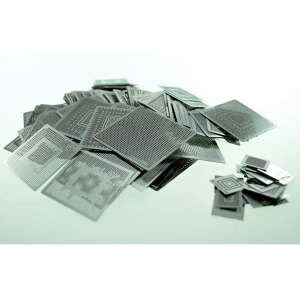


Lötkugeln mit Blei 0,6 mm, 25.000 Stück für Lötarbeiten
Marke: Pmtc
Inkl. MwSt. (Exkl. MwSt.: 4,50€)






Produktbeschreibung
Die Lötkugeln mit Blei 0,6mm 25.000 ud sind ein unverzichtbares Zubehör für Profis und Hobbyanwender in der Elektronik-Löttechnik, die bei ihren Arbeiten Präzision und Qualität benötigen. Hergestellt von Profound Material Tecnology (Pmtc) in Taiwan, bietet dieses Produkt eine optimale Zusammensetzung aus 63% Zinn (Sn) und 37% Blei (Pb), ideal für Löt- und Reballing-Prozesse an elektronischen Bauteilen.
Hauptmerkmale:
- Durchmesser der Kugeln: 0,6 mm, geeignet für feine und präzise Lötarbeiten.
- Menge: 25.000 Stück pro Dose, ausreichend für mehrere Projekte und Reparaturen.
- Zusammensetzung: 63Sn 37Pb, eine traditionelle Mischung für bleihaltiges Löten, die gute Fließeigenschaften und mechanische Festigkeit gewährleistet.
- Marke: Pmtc, bekannt für Qualität bei Lötmaterialien.
- Herstellung: Profound Material Tecnology, Taiwan, Garantie für hohe Qualität und kontrollierte Produktion.
Anwendungen und Einsatzbereiche:
Diese bleihaltigen Zinnkugeln sind ideal für:
- Reballing von BGA-Chips und anderen elektronischen Bauteilen.
- Präzisionslöten auf Leiterplatten und empfindlichen Komponenten.
- Reparatur und Wartung elektronischer Geräte, die zuverlässige Lötverbindungen erfordern.
Kompatibilität:
Dieses Produkt ist kompatibel mit Lötstationen und Reballing-Werkzeugen, die mit 0,6 mm Lötkugeln arbeiten. Es ist besonders nützlich für Techniker und Profis, die präzise und langlebige Ergebnisse beim bleihaltigen Löten suchen.
Hinweise:
- Das Produkt ist derzeit nicht auf Lager, bitte Verfügbarkeit vor dem Kauf prüfen.
- Die Verwendung von bleihaltigem Zinn sollte unter Beachtung der geltenden Vorschriften und Vorsichtsmaßnahmen für den Umgang mit Blei erfolgen.
Mit dieser Dose bleihaltiger Lötkugeln erhalten Sie ein hochwertiges Lötmaterial, das präzise Arbeiten erleichtert und professionelle Ergebnisse bei Ihren Elektronikprojekten ermöglicht.
- 25.000 bleihaltige Lötkugeln mit 0,6 mm Durchmesser
- Zusammensetzung 63Sn 37Pb für traditionelles Löten
- Hergestellt von Profound Material Tecnology (Pmtc) in Taiwan
- Ideal für Reballing und Präzisionslöten
- Kompatibel mit Lötstationen und Reballing-Werkzeugen
Kundenfragen & Antworten
Quina és la composició exacta de les boles d’estany i quins avantatges aporta l’aliatge 63Sn/37Pb en aplicacions de soldadura electrònica?
La composició és 63% estany (Sn) i 37% plom (Pb), coneguda com a eutèctica. Aquest aliatge es fon a 183 °C, oferint una transició sòlid-líquid precisa, cosa que redueix defectes com ponts de soldadura o juntes fràgils en el reballing de components BGA davant d’aliatges sense plom que requereixen més temperatura.
Quines consideracions de seguretat s’han de tenir en manipular boles de soldadura amb plom i quina normativa les regula?
El plom és tòxic per ingestió o inhalació de pols; és recomanable fer servir guants i treballar en zones ben ventilades. L’ús de productes amb plom està regulat per normatives com RoHS a la UE, i es permet en aplicacions industrials o reparacions específiques, no per a dispositius de consum nous.
Les boles de 0,6 mm són compatibles amb tots els encapsulats BGA o hi ha limitacions d’ús?
El diàmetre de bola de 0,6 mm és estàndard per a molts encapsulats BGA de pas mitjà, però no és compatible amb tots. Sempre s’ha de consultar el datasheet del component per assegurar la coincidència amb el pitch i la mida del pad. Si la bola és massa gran o massa petita pot causar problemes d’alineació o fiabilitat.
Hi ha diferències de rendiment o d’aplicació respecte a boles de soldadura lead-free de diàmetre similar?
Les boles amb plom tenen un punt de fusió més baix (183 °C davant de 217–221 °C en lead-free), cosa que redueix les tensions tèrmiques sobre components i PCB. Tanmateix, les boles lead-free (p. ex. SAC305) poden ser necessàries per complir normatives. Es recomanen boles amb plom per a rèpliques o reparacions en equips legacy, per la seva major facilitat de soldat i resistència als cicles tèrmics.
What is the exact composition of the tin balls, and what advantages does the 63Sn/37Pb alloy offer in electronic soldering applications?
The composition is 63% tin (Sn) and 37% lead (Pb), known as eutectic. This alloy melts at 183°C, offering a precise solid-to-liquid transition, which reduces defects such as solder bridges or brittle joints in BGA reballing compared with lead-free alloys that require higher temperatures.
What safety considerations should be taken when handling lead solder balls, and what regulations govern them?
Lead is toxic if ingested or inhaled as dust; wearing gloves and working in well-ventilated areas is recommended. The use of lead-containing products is regulated by standards such as RoHS in the EU, and is permitted for industrial applications or specific repairs, but not for new consumer devices.
Are 0.6 mm balls compatible with all BGA packages, or are there usage limitations?
A 0.6 mm ball diameter is standard for many medium-pitch BGA packages, but it is not compatible with all of them. The component datasheet should always be checked to ensure it matches the pitch and pad size. If the ball is too large or too small, it can cause alignment or reliability issues.
Are there performance or application differences compared with lead-free solder balls of a similar diameter?
Lead-containing balls have a lower melting point (183°C versus 217–221°C for lead-free), which reduces thermal stress on components and the PCB. However, lead-free balls (e.g. SAC305) may be necessary for regulatory compliance. Lead-containing balls are recommended for replicas or repairs on legacy equipment, due to their easier soldering and better thermal cycle resistance.
What is the exact composition of the tin balls, and what advantages does the 63Sn/37Pb alloy offer in electronic soldering applications?
The composition is 63% tin (Sn) and 37% lead (Pb), known as eutectic. This alloy melts at 183°C, offering a precise solid-to-liquid transition, which reduces defects such as solder bridges or brittle joints in BGA reballing compared with lead-free alloys that require higher temperatures.
What safety considerations should be taken when handling lead solder balls, and what regulations govern them?
Lead is toxic if ingested or inhaled as dust; wearing gloves and working in well-ventilated areas is recommended. The use of lead-containing products is regulated by standards such as RoHS in the EU, and is permitted for industrial applications or specific repairs, but not for new consumer devices.
Kundenbewertung schreiben
Kunden, die diesen Artikel gekauft haben, kauften auch

Ihre zuletzt angesehenen Artikel