

Aoyue Int9378 digitale Lötstation 60W bleifrei für professionelle Arbeiten
Marke: Aoyue
Inkl. MwSt. (Exkl. MwSt.: 66,70€)


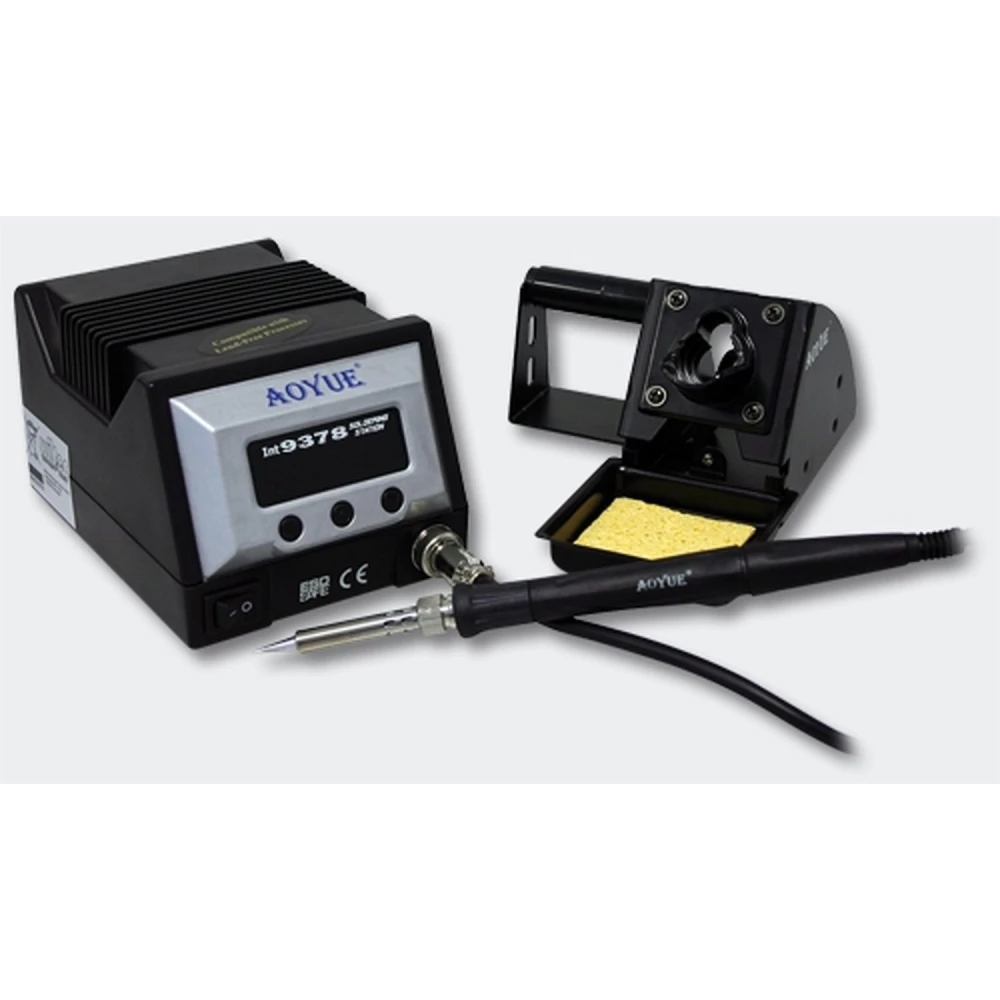
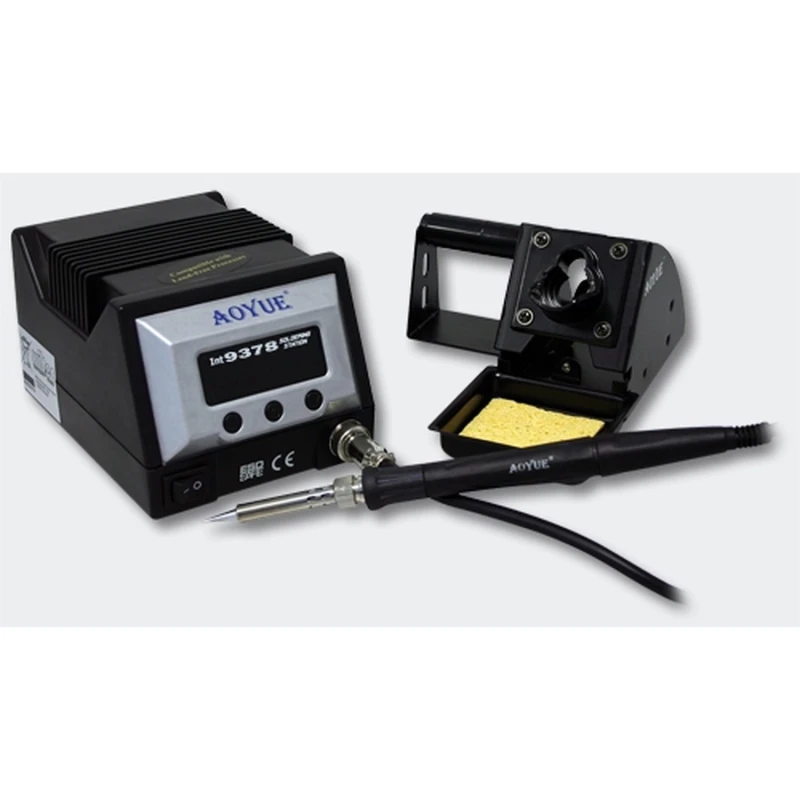
Die Aoyue Int9378 digitale Lötstation 60W bleifrei ist ein fortschrittliches Werkzeug, das für Präzision und Effizienz bei elektronischen Lötarbeiten entwickelt wurde. Mikroprozessor-gesteuert schützt diese Station empfindliche Schaltungen vor Schäden durch statische Aufladung und sorgt so für eine sichere und zuverlässige Leistung.
Das integrierte keramische Heizelement ermöglicht ein schnelles Erreichen der gewünschten Temperatur, die zwischen 200 °C und 480 °C eingestellt werden kann und sich an unterschiedliche Lötanforderungen anpasst. Außerdem verfügt sie über eine Auto-Standby- und Wiederherstellungsfunktion, die die Aktivität des Benutzers über einen Vibrationssensor im Griff erkennt und die Station zum Energiesparen sowie zur Verlängerung der Lebensdauer des Heizelements ein- oder ausschaltet.
Die Station ermöglicht die Programmierung von zwei Temperatureinstellungen, die über Touch-Tasten zugänglich sind, und erleichtert so schnelle Änderungen während des Arbeitsprozesses ohne ständiges Nachjustieren. Der Benutzer kann die Temperaturanzeige je nach Vorliebe in Grad Celsius oder Fahrenheit wählen.
Kompatibel mit bleifreiem und bleihaltigem Löten ist die Aoyue Int9378 ideal für Profis und Hobbyanwender, die eine zuverlässige und effiziente Lötstation suchen.
Hauptmerkmale
- Lötkolbenleistung: 60W / 24V AC
- Temperaturbereich: 200 °C - 480 °C
- Keramisches Heizelement für schnelles Aufheizen
- Mikroprozessorsteuerung für ESD-Schutz (sicher gegen elektrostatische Entladung)
- Auto-Standby- und Wiederherstellungsfunktion über Vibrationssensor im Griff
- Zwei programmierbare Temperatureinstellungen mit Touch-Taste
- Temperaturanzeige in °C oder °F
- Erdungswiderstand unter 2 ohmios und Erdungspotential unter 2 mV
- Abmessungen: 165 x 115 x 95 mm
- Gesamtgewicht: 2,5 kg (Lötkolben mit Kabel 110 g)
- Farbe schwarz und silber
Lieferumfang
- 1x Aoyue Int9378 Station
- 1x Anschlusskabel
- 1x Lötkolbengriff
- 1x Lötspitze T-B
- 1x Aluminium-Lötkolbenhalter
Empfohlene Einsatzbereiche
Diese Station ist ideal für Elektronikreparaturen, den Aufbau von Schaltungen und Projekte, die sowohl bleihaltiges als auch bleifreies Löten erfordern. Ihre schnelle Aufheizzeit und präzise Steuerung machen sie geeignet für Profis und Hobbyanwender, die Wert auf Qualität und Langlebigkeit ihrer Werkzeuge legen.
Kompatibilität
Kompatibel mit Standard-Lötspitzen vom Typ T-B und mit bleifreiem Lötzinn passt sich die Station an verschiedene Arbeiten und elektronische Materialien an.
Hinweis: Dieses Produkt ist derzeit ausverkauft. Wir empfehlen Ihnen, sich andere in unserem Shop verfügbare Lötstationen anzusehen, um die Option zu finden, die am besten zu Ihren Anforderungen passt.
- Mikroprozessorsteuerung für ESD-Schutz und zum Vermeiden von Schäden durch statische Aufladung
- Keramisches Heizelement für schnelles und effizientes Aufheizen
- Einstellbarer Temperaturbereich von 200 °C bis 480 °C
- Auto-Standby- und Wiederherstellungsfunktion mit Vibrationssensor im Griff
- Zwei programmierbare Temperatureinstellungen per Touch-Taste
- Temperaturanzeige in Grad Celsius oder Fahrenheit
- Kompatibel mit bleifreiem und bleihaltigem Löten
- Inklusive Aluminium-Lötkolbenhalter und T-B-Spitze
- Kompakte Abmessungen und geringes Gewicht für mehr Komfort
Kundenfragen & Antworten
La estació Aoyue Int9378 permet soldar tant amb estany amb plom com sense plom i com afecta això el rendiment?
Sí, la Aoyue Int9378 és compatible amb soldadura tradicional amb plom i soldadura sense plom (RoHS). El seu rang de temperatura (200 °C a 480 °C) cobreix els requisits dels dos tipus de soldadura. Tot i això, la soldadura sense plom generalment requereix una temperatura més alta, cosa que implica cicles tèrmics més exigents per a l’element calefactor; tanmateix, la resistència ceràmica i el control per microprocessador mitiguen el desgast i augmenten la vida útil respecte als models convencionals.
Hi ha algun requisit o precaució amb el voltatge d’entrada i la compatibilitat geogràfica de la Aoyue Int9378?
Aquesta estació funciona amb entrada de 210-230 V CA ±10 % a 50 Hz ±2 Hz, compatible principalment amb la xarxa elèctrica europea i algunes zones d’Àsia i Sud-amèrica. No és compatible amb xarxes de 110 V CA sense l’ús d’un transformador extern. Fer-la servir fora d’especificació pot danyar l’equip o anul·lar la garantia.
L’estació està certificada com a ESD-safe i quines implicacions té això quan es treballa amb components sensibles?
Sí, la Aoyue Int9378 està certificada com a ESD-safe, amb resistència a terra <2 Ω i potencial a terra <2 mV. Això assegura que la descàrrega electrostàtica es minimitzi i protegeix dispositius electrònics sensibles. És adequada per treballar en plaques de circuit amb components MOSFET, CMOS i similars, on l’ESD pot ser crític.
Does the Aoyue Int9378 station allow soldering with both leaded solder and lead-free solder, and how does this affect performance?
Yes, the Aoyue Int9378 is compatible with both traditional leaded solder and lead-free solder (RoHS). Its temperature range (200 °C to 480 °C) covers the requirements of both solder types. However, lead-free solder generally requires a higher temperature, which means more demanding thermal cycles for the heating element, although the ceramic heater and microprocessor control help reduce wear, increasing service life compared with conventional models.
Are there any requirements or precautions regarding the input voltage and geographical compatibility of the Aoyue Int9378?
This station operates on 210-230 V AC ±10% at 50 Hz ±2 Hz, and is mainly compatible with the European mains supply and some parts of Asia and South America. It is not compatible with 110 V AC mains without an external transformer. Using it outside specification may damage the unit or void the warranty.
Is the station certified as ESD-safe, and what does this mean when working with sensitive components?
Yes, the Aoyue Int9378 is certified as ESD-safe, with earth resistance <2 Ω and earth potential <2 mV. This ensures electrostatic discharge is minimised, protecting sensitive electronic devices. It is suitable for work on circuit boards with MOSFET, CMOS and similar components where ESD can be critical.
Does the Aoyue Int9378 station allow soldering with both leaded and lead-free solder, and how does this affect performance?
Yes, the Aoyue Int9378 is compatible with both traditional leaded solder and lead-free solder (RoHS). Its temperature range (200 °C to 480 °C) covers the requirements of both solder types. However, lead-free solder generally requires a higher temperature, which means more demanding thermal cycles for the heating element, although the ceramic heater and microprocessor control help reduce wear, extending service life compared with conventional models.
Are there any requirements or precautions regarding input voltage and geographical compatibility for the Aoyue Int9378?
This station operates with a 210-230 V AC ±10% input at 50 Hz ±2 Hz, and is mainly compatible with the European mains supply, as well as some parts of Asia and South America. It is not compatible with 110 V AC mains without an external transformer. Using it outside specification may damage the unit or void the warranty.
Is the station certified as ESD-safe, and what does this mean when working with sensitive components?
Yes, the Aoyue Int9378 is certified as ESD-safe, with earth resistance <2 Ω and earth potential <2 mV. This ensures electrostatic discharge is minimised, protecting sensitive electronic devices. It is suitable for work on circuit boards with MOSFET, CMOS and similar components where ESD can be critical.
Tillåter Aoyue Int9378-stationen lödning med både blyhaltigt och blyfritt tenn, och hur påverkar detta prestandan?
Ja, Aoyue Int9378 är kompatibel med traditionell blyhaltig lödning och blyfri lödning (RoHS). Dess temperaturområde (200 °C till 480 °C) täcker kraven för båda typerna av lödning. Blyfri lödning kräver dock vanligtvis högre temperatur, vilket innebär mer krävande termiska cykler för värmeelementet, även om den keramiska resistansen och mikroprocessorstyrningen minskar slitaget och ökar livslängden jämfört med konventionella modeller.
Kundenbewertung schreiben
Kunden, die diesen Artikel gekauft haben, kauften auch
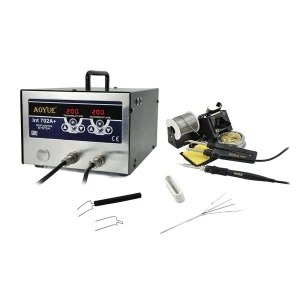
Aoyue Int 702a+ Lötstation mit Lötkolben und Pinzette für PCB-Reparatur
Ihre zuletzt angesehenen Artikel