




7,14€
Auf Lager
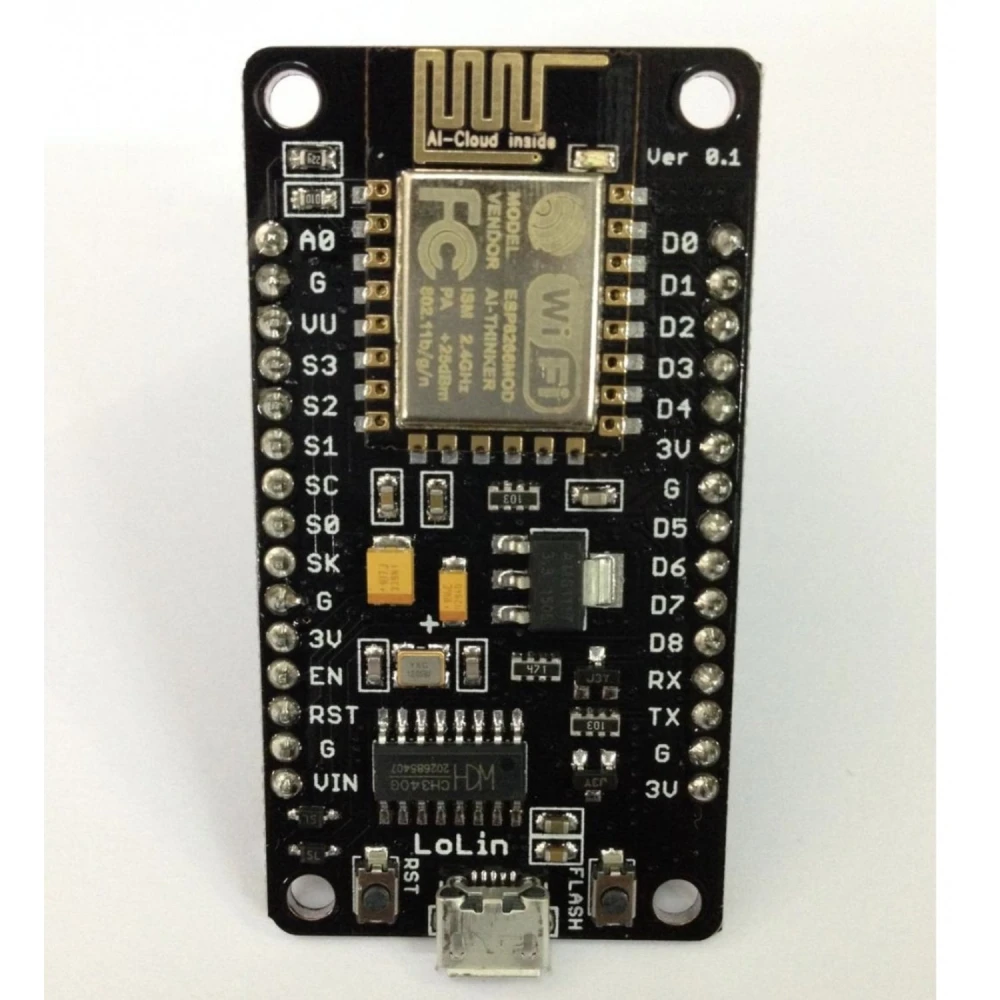
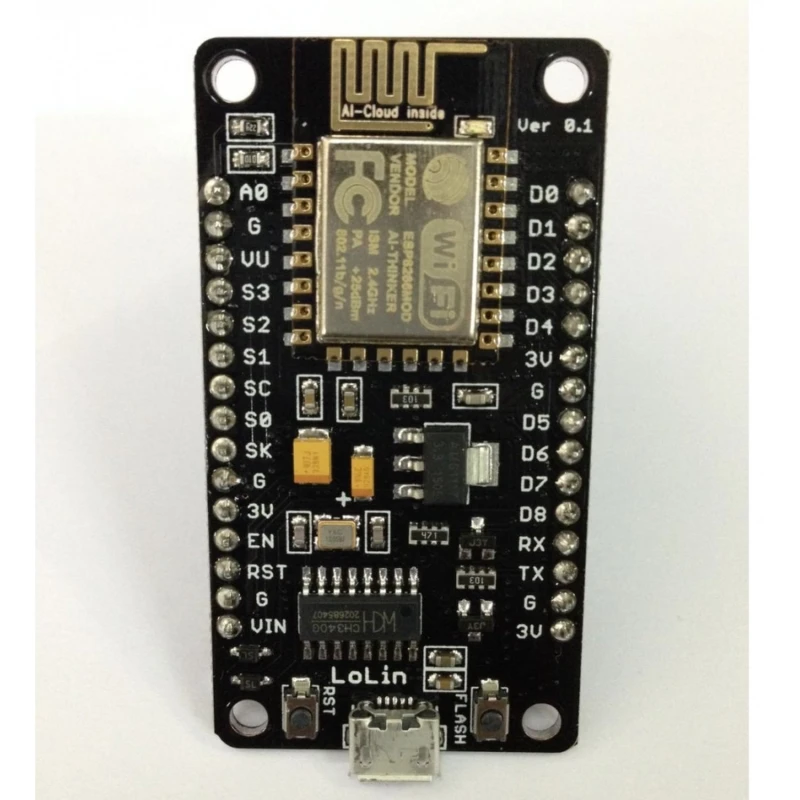
NodeMCU ESP8266 – WiFi-Entwicklungsboard auf ESP8266-Basis für IoT
Marke: satkit
7,14€
Inkl. MwSt. (Exkl. MwSt.: 6,00€)
Begrenzter Vorrat
Standardlieferung
Mi, Apr 22 - Fr, Apr 24
Expresslieferung
Mo, Apr 20 - Di, Apr 21
30 Tage Rückgaberecht
Kostenlose Rücksendung innerhalb von 30 Tagen
Sichere Transaktion






Share:
Kostenlose Lieferung
Bei Bestellungen ab 300€
Einfache Rücksendung
30 Tage Rückgaberecht
Sichere Zahlung
100% sicherer Checkout
Qualitätsgarantie
Nur Originalprodukte
Das NodeMCU ESP8266 ist ein Entwicklungsboard auf Basis des Controllers ESP8266-12E, mit dem Entwickler und IoT-Enthusiasten vernetzte Geräte einfach und kostengünstig erstellen können. Dieses Board integriert einen stromsparenden Mikrocontroller mit WiFi-Konnektivität und bietet damit eine komplette Lösung für Projekte, die drahtlose Kommunikation erfordern.
Dank seines kompakten Designs und der USB-Serial-Schnittstelle erleichtert das NodeMCU ESP8266 die Programmierung und die Verbindung mit anderen Geräten ohne zusätzliche Komponenten. Es verfügt über eine große Anzahl an GPIO-Pins, an die Sensoren, Aktoren und andere elektronische Module angeschlossen werden können, um die Funktionen zu erweitern.
Hauptmerkmale:
- WiFi-Protokoll 802.11 b/g/n kompatibel mit Wi-Fi Direct (P2P) und soft-AP.
- Integrierter TCP/IP-Stack zur einfachen Netzwerkkommunikation.
- Integrierte Komponenten: TR switch, balun, LNA, Leistungsverstärker, PLL, Regler und Energieverwaltungs-Einheiten.
- Ausgangsleistung von +19.5dBm im 802.11b-Modus.
- Integrierter Temperatursensor zur internen Überwachung.
- Geringer Energieverbrauch mit Leckstrom unter 10uA.
- Aktivierungs- und Paketübertragungszeit unter 2 ms.
- Kommunikationsschnittstellen: SDIO 2.0, SPI und UART.
- 32-Bit-CPU mit geringem Stromverbrauch, die als Anwendungsprozessor verwendet werden kann.
Typische Einsatzbereiche:
- Entwicklung von IoT-Geräten für Hausautomation, Umweltsensoren und Automatisierung.
- Projekte, die integrierte WiFi-Konnektivität und Fernsteuerung erfordern.
- Bildungsanwendungen und Rapid Prototyping dank Kompatibilität mit Lua und offenem SDK.
Kompatibilität und Software:
Das NodeMCU ESP8266 verfügt über eine große Entwickler-Community und verfügbare Dokumentation auf GitHub NodeMCU. Die Software basiert auf Lua und erleichtert die Programmierung für Nutzer mit unterschiedlichen Erfahrungsstufen.
Für die USB-Verbindung wird empfohlen, den offiziellen Treiber von der offiziellen CH341-Website zu installieren. Außerdem gibt es eine detaillierte Installationsanleitung für den Treiber auf Instructables.
Dieses Produkt ist ideal für alle, die ein WiFi-Entwicklungsboard ESP8266 mit erweiterten Funktionen, Community-Support und einfacher Handhabung für IoT- und Automatisierungsprojekte suchen.
- Basierend auf dem Modul ESP8266-12E mit integriertem Mikrocontroller
- WiFi-Konnektivität 802.11 b/g/n mit Unterstützung für Wi-Fi Direct und soft-AP
- Viele GPIO-Pins für den Anschluss von Sensoren und Aktoren
- USB-Serial-Schnittstelle für einfache Programmierung und Kommunikation
- Geringer Energieverbrauch mit Leckstrom < 10uA
- Ausgangsleistung von +19.5dBm im 802.11b-Modus
- Integrierter Temperatursensor zur Überwachung
- Kompatibel mit offenem SDK und Lua
- Unterstützt SDIO 2.0, SPI und UART
- Große Community und Dokumentation auf GitHub
Kundenfragen & Antworten
Quins són els principals avantatges del NodeMCU ESP8266-12E en comparació amb altres mòduls WiFi similars?
El NodeMCU ESP8266-12E destaca per integrar un microcontrolador de 32 bits, connectivitat WiFi 802.11 b/g/n i una comunitat de suport molt sòlida. A diferència de mòduls bàsics com l’ESP-01, el NodeMCU afegeix interfície USB-Serial i una major quantitat de pins GPIO (fins a 11 utilitzables), cosa que facilita el desenvolupament. Tanmateix, la seva mida és una mica més gran i el consum, tot i ser baix, supera mòduls exclusivament WiFi com el CC3000.
Quin és el corrent màxim que pot subministrar pels pins GPIO sense risc de dany?
Cada pin GPIO pot lliurar fins a 12 mA de manera segura. El corrent total de tots els pins junts no ha de superar els 70 mA. Superar aquests límits pot degradar el microcontrolador o reduir-ne la vida útil.
Quines mesures de protecció inclou davant pics de voltatge, i compleix alguna norma de seguretat?
El NodeMCU no integra protecció activa contra sobretensions a les línies GPIO ni al microUSB. No està certificat sota normes com CE/FCC per si mateix; per a aplicacions crítiques es recomana muntar proteccions externes i revisar la normativa aplicable a cada país.
What are the main advantages of the NodeMCU ESP8266-12E compared with other similar WiFi modules?
The NodeMCU ESP8266-12E stands out by integrating a 32-bit microcontroller, 802.11 b/g/n WiFi connectivity and a strong support community. Unlike basic modules such as the ESP-01, the NodeMCU adds a USB-to-Serial interface and a greater number of GPIO pins (up to 11 usable), making development easier. However, its size is somewhat larger and its power consumption, although low, is higher than WiFi-only modules such as the CC3000.
What is the maximum current it can supply through the GPIO pins without risk of damage?
Each GPIO pin can safely supply up to 12 mA. The total current across all pins should not exceed 70 mA. Exceeding these limits may damage the microcontroller or reduce its service life.
What protection measures does it include against voltage spikes, and does it comply with any safety standard?
The NodeMCU does not include active protection against surges on the GPIO lines or microUSB. It is not certified to standards such as CE/FCC in its own right; for critical applications, external protection is recommended and the applicable regulations for each country should be checked.
What are the main advantages of the NodeMCU ESP8266-12E compared with other similar WiFi modules?
The NodeMCU ESP8266-12E stands out for integrating a 32-bit microcontroller, 802.11 b/g/n WiFi connectivity and a strong support community. Unlike basic modules such as the ESP-01, the NodeMCU adds a USB-to-Serial interface and a larger number of GPIO pins (up to 11 usable), making development easier. However, its size is somewhat larger and its power consumption, although low, is higher than WiFi-only modules such as the CC3000.
What is the maximum current it can supply through the GPIO pins without risk of damage?
Each GPIO pin can safely deliver up to 12 mA. The total current across all pins together should not exceed 70 mA. Exceeding these limits may degrade the microcontroller or reduce its service life.
What protection measures does it include against voltage spikes, and does it comply with any safety standard?
The NodeMCU does not integrate active protection against surges on the GPIO lines or the microUSB. It is not certified under standards such as CE/FCC in its own right; for critical applications, external protection should be fitted and the applicable regulations for each country checked.
Vilka är de främsta fördelarna med NodeMCU ESP8266-12E jämfört med andra liknande WiFi-moduler?
NodeMCU ESP8266-12E utmärker sig genom att integrera en 32-bitars mikrokontroller, WiFi 802.11 b/g/n och en stark supportcommunity. Till skillnad från enklare moduler som ESP-01 lägger NodeMCU till USB-Serial-gränssnitt och fler GPIO-pinnar (upp till 11 användbara), vilket förenklar utveckling. Däremot är den något större och förbrukar, även om den är låg, mer än enbart WiFi-moduler som CC3000.
Kundenbewertung schreiben
Kunden, die diesen Artikel gekauft haben, kauften auch
Ihre zuletzt angesehenen Artikel


 NodeMCU ESP8266 – WiFi-Entwicklungsboard auf ESP8266-Basis für IoT
7,14€