

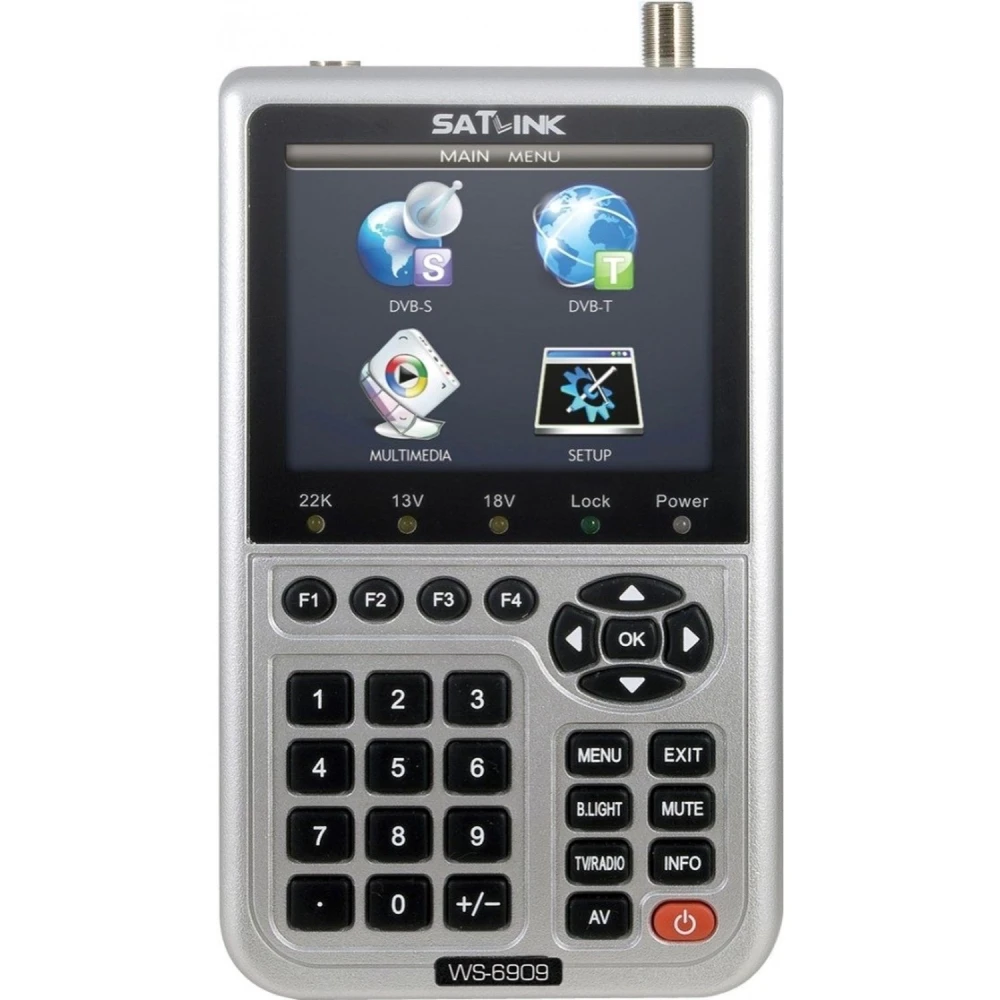
Satlink WS-6909 Digitaler TV-Messanalysator für DVB-T und DVB-S
Marke: Satlink
Inkl. MwSt. (Exkl. MwSt.: 164,00€)






Der Digitale TV-Messanalysator Satlink WS-6909 ist ein professionelles Werkzeug für die Messung und Analyse digitaler Signale in DVB-T- (Digitales terrestrisches Fernsehen) und DVB-S-Systemen (Satellitenfernsehen). Dieses Gerät ist ideal für Techniker und Installateure, die die Qualität und die einwandfreie Funktion von digitalen Fernsehsignalen sicherstellen müssen.
Hauptmerkmale:
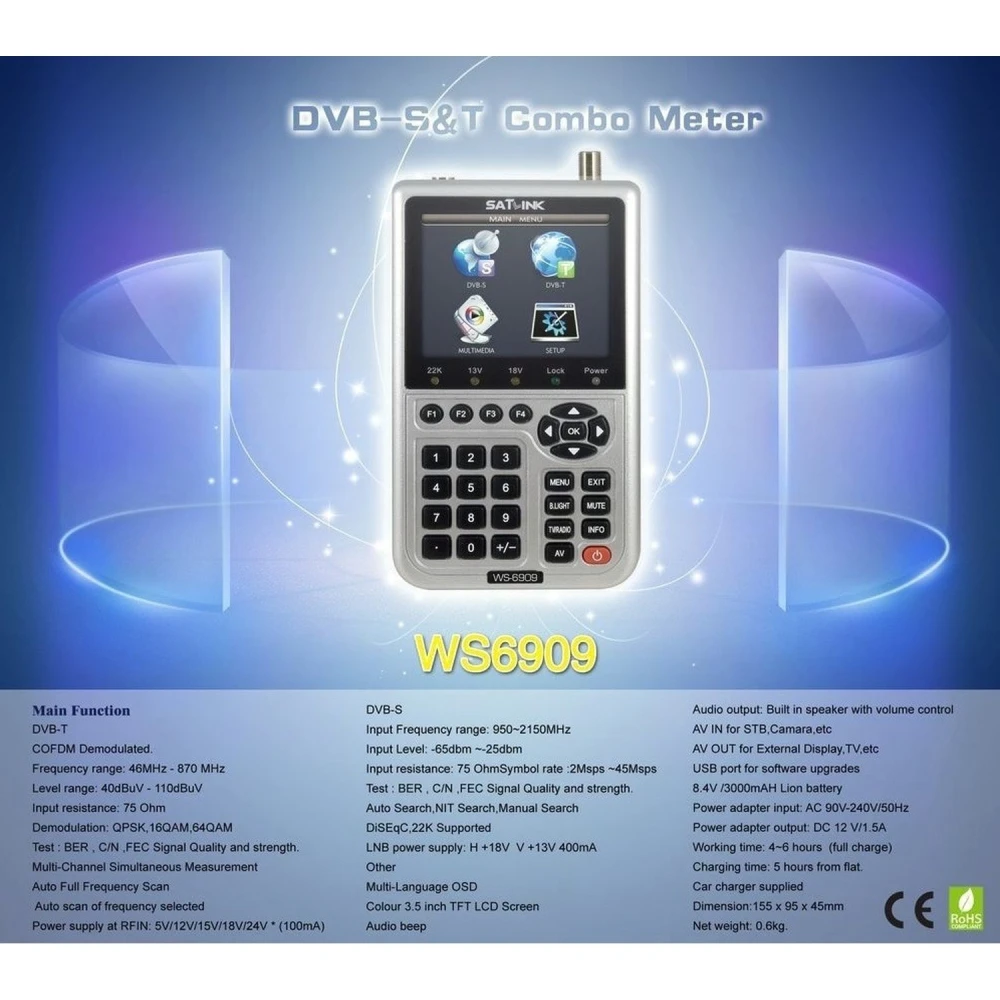
- DVB-T-Frequenzbereich: 46-870 MHz, mit Signalpegel von 40-110 dBuV und einer Eingangsimpedanz von 75 ohmios.
- DVB-T-Demodulation: Kompatibel mit QPSK, 16QAM und 64QAM, unterstützt 2K- und 8K-Modi.
- DVB-T-Messungen: BER (Bit Error Rate), C/N (Träger-Rausch-Verhältnis), Signalqualität, FEC (Forward Error Correction) und Signalstärke.
- DVB-S-Frequenzbereich: 950-2150 MHz, mit Eingangspegel von -65 dBm bis -25 dBm und einer Eingangsimpedanz von 75 ohmios.
- DVB-S-Demodulation: QPSK mit Symbolrate von 2 Msps bis 45 Msps.
- DVB-S-Messungen: BER, C/N, Signalqualität, FEC und Stärke.
- Zusatzfunktionen: Automatische und manuelle NIT-Suche, Kompatibilität mit DiSEqC 1.0, 1.1, 1.2 und USALS, LNB-Stromversorgung (13/18 V, 400 mA) sowie RFIN-Stromversorgung mit mehreren Spannungen (5V bis 24V).
- Wiederaufladbarer Akku: Lithium-Ionen-Akku mit 3000 mAh und einer Spannung von 8.4V, Laufzeit von 4-6 Stunden und Ladezeit von 5 Stunden. Inklusive Autoladegerät und AC 90-240 V-Adapter.
- Speicher: 16 MB SDRAM und 8 MB Flash für Speicherung und Verarbeitung.
- Serielle Verbindung: USB für Datenübertragung und Updates.
- Kompakte Abmessungen: 155 x 95 x 45 mm, erleichtern Transport und Einsatz vor Ort.
Typische Anwendungen:
- Installation und Ausrichtung von Antennen für terrestrisches und Satelliten-Digitalfernsehen.
- Diagnose und Fehlerbehebung bei DVB-T- und DVB-S-Signalen.
- Gleichzeitige Messung mehrerer Kanäle für eine effiziente Analyse.
- Überprüfung der Signalqualität in professionellen Installationen und bei Wartungsarbeiten.
Kompatibilität: Kompatibel mit digitalen TV-Systemen DVB-T (TDT) und DVB-S, einschließlich der Modulationstechnologien COFDM und QPSK. Geeignet für die Signalanalyse in privaten und professionellen Umgebungen.
Dieser Messanalysator ist ein unverzichtbares Werkzeug für Techniker, die bei der Messung digitaler Signale für terrestrisches und Satellitenfernsehen Präzision und Funktionalität benötigen und optimale Installationen sowie eine hohe Empfangsqualität sicherstellen möchten.
- DVB-T-Frequenzbereich: 46-870 MHz mit Signalpegel 40-110 dBuV
- DVB-T-Demodulation kompatibel mit QPSK, 16QAM und 64QAM
- Präzise Messungen: BER, C/N, Signalqualität, FEC und Stärke
- DVB-S-Frequenzbereich: 950-2150 MHz mit Eingangspegel -65 bis -25 dBm
- Automatische und manuelle NIT-Suche für DVB-S
- Kompatibel mit DiSEqC 1.0, 1.1, 1.2 und USALS
- Wiederaufladbarer Lithium-Ionen-Akku 3000 mAh mit 4-6 Stunden Laufzeit
- Interner Speicher: 16 MB SDRAM und 8 MB Flash
- USB-Anschluss für Datenübertragung und Updates
- Kompakte Abmessungen: 155 x 95 x 45 mm, leicht zu transportieren
Kundenfragen & Antworten
Quins tipus de senyals pot mesurar i analitzar el Satlink WS-6909 i quins avantatges aporta davant de mesuradors només terrestres o només satel·litals?
El Satlink WS-6909 permet mesurar i analitzar senyals tant de TV digital terrestre DVB-T (TDT, COFDM) com de satèl·lit DVB-S, cosa que facilita la feina en instal·lacions mixtes sense necessitat de dos equips. Admet demodulació QPSK, 16QAM i 64QAM, amb rang de freqüència de 46–870 MHz en terrestre i 950–2150 MHz en satèl·lit, cobrint la majoria d’estàndards actuals. En comparació amb mesuradors dedicats, aporta versatilitat, tot i que pot mancar de funcions avançades específiques de models professionals molt enfocats a un sol tipus de senyal.
Quines són les dimensions, el pes i el contingut exacte de la caixa del producte?
El Satlink WS-6909 té unes dimensions aproximades de 180 × 95 × 48 mm i un pes d’uns 0.5 kg. El paquet sol incloure: el mesurador WS-6909, carregador de corrent, cable coaxial curt de prova, corretja o funda de transport i manual d’usuari. Pot variar segons el distribuïdor, per la qual cosa es recomana revisar el llistat d’accessoris en comprar-lo.
Necessita font d’alimentació externa per funcionar i quina compatibilitat elèctrica ofereix amb LNB de satèl·lit?
El mesurador incorpora bateria recarregable per a ús portàtil. Pot subministrar alimentació directa des de l’entrada RFIN a dispositius com LNB, admetent 5V, 12V, 15V, 18V o 24V (màxim 100 mA), compatible amb la majoria de LNB estàndard i dispositius actius d’antena. És important verificar que la càrrega no superi el corrent màxim especificat per evitar sobrecàrregues.
L’equip permet mesurar paràmetres tècnics com BER, relació C/N i força de senyal, i quins són els seus rangs operatius?
Sí, el WS-6909 mesura paràmetres clau com BER (Bit Error Rate), relació portadora-soroll (C/N), força i qualitat de senyal tant en DVB-T com en DVB-S. Opera eficaçment en un rang de nivell d’entrada de 40–110 dBμV en terrestre i de -65 dBm a -25 dBm en satèl·lit, cobrint les necessitats d’instal·lació i ajust fi en entorn residencial i semiprofessional.
Quins elements de seguretat i normativa incorpora, i com es compara amb dispositius de gamma superior en robustesa i protecció?
El WS-6909 compleix amb estàndards elèctrics bàsics CE per a equips electrònics, però, per la seva categoria portàtil i preu, no disposa de blindatges reforçats contra EMI ni de proteccions avançades contra descàrrega per sobretensió a les entrades. Els dispositius de gamma superior poden incloure més robustesa, protecció ESD i certificacions addicionals d’entorn professional. Es recomana manipular el mesurador seguint bones pràctiques i evitar connexions en entorns sense descàrrega adequada.
What types of signals can the Satlink WS-6909 measure and analyse, and what advantages does it offer over terrestrial-only or satellite-only meters?
The Satlink WS-6909 can measure and analyse both digital terrestrial TV DVB-T (DTT, COFDM) and satellite DVB-S signals, making it easier to work on mixed installations without needing two devices. It supports QPSK, 16QAM and 64QAM demodulation, with a frequency range of 46–870 MHz for terrestrial and 950–2150 MHz for satellite, covering most current standards. Compared with dedicated meters, it offers versatility, although it may lack some advanced functions specific to professional models focused on just one signal type.
What are the dimensions, weight and exact contents of the box?
The Satlink WS-6909 has approximate dimensions of 180 × 95 × 48 mm and weighs around 0.5 kg. The package usually includes: the WS-6909 meter, mains charger, short test coaxial cable, strap or carry case and user manual. This may vary by distributor, so it is recommended to check the accessories list when purchasing.
Does it need an external power supply to operate and what electrical compatibility does it offer with satellite LNBs?
The meter includes a rechargeable battery for portable use. It can supply power directly from the RFIN input to devices such as LNBs, supporting 5V, 12V, 15V, 18V or 24V (maximum 100 mA), compatible with most standard LNBs and active antenna devices. It is important to check that the load does not exceed the specified maximum current to avoid overload.
Can the unit measure technical parameters such as BER, C/N ratio and signal strength, and what are its operating ranges?
Yes, the WS-6909 measures key parameters such as BER (Bit Error Rate), carrier-to-noise ratio (C/N), signal strength and signal quality in both DVB-T and DVB-S. It operates effectively with an input level range of 40–110 dBμV for terrestrial and -65 dBm to -25 dBm for satellite, covering residential and semi-professional installation and fine-tuning needs.
What safety features and standards does it include, and how does it compare with higher-end devices in robustness and protection?
The WS-6909 complies with basic CE electrical standards for electronic equipment, but due to its portable category and price, it does not have reinforced EMI shielding or advanced overvoltage protection on the inputs. Higher-end devices may include greater robustness, ESD protection and additional professional-grade certifications. It is recommended to handle the meter following good practice and avoid connections in environments without proper discharge protection.
Kundenbewertung schreiben
Kunden, die diesen Artikel gekauft haben, kauften auch


Victor 6243 LCR-Messgerät für präzise Messung von Induktivität, Kapazität und Widerstand

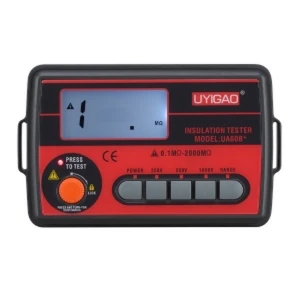
Uyigao UA60B+ Isolationsmessgerät CAT III 1000 V für Widerstände bis 2000 MΩ

Ihre zuletzt angesehenen Artikel