


51,17€
Auf Lager


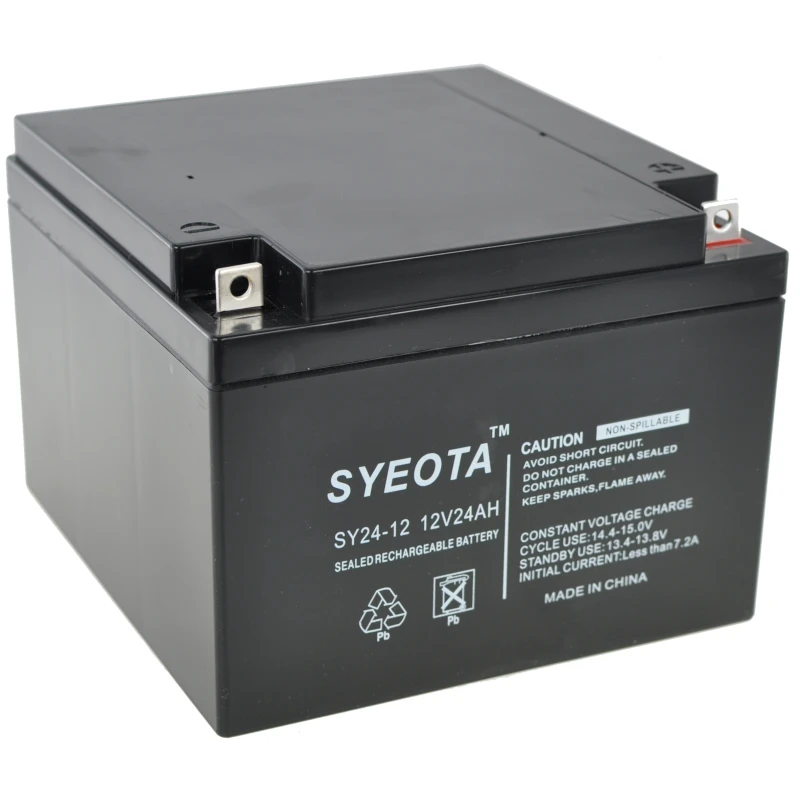
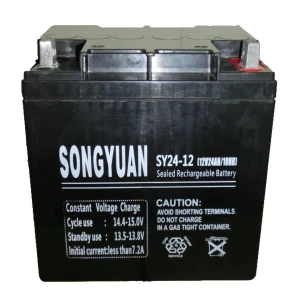
Versiegelter Bleiakku 12V 24Ah SY24-12, wiederaufladbar
Marke: Songyuan
51,17€
Inkl. MwSt. (Exkl. MwSt.: 43,00€)
Begrenzter Vorrat
Standardlieferung
Mi, Apr 22 - Fr, Apr 24
Expresslieferung
Mo, Apr 20 - Di, Apr 21
30 Tage Rückgaberecht
Kostenlose Rücksendung innerhalb von 30 Tagen
Sichere Transaktion






Share:
Kostenlose Lieferung
Bei Bestellungen ab 300€
Einfache Rücksendung
30 Tage Rückgaberecht
Sichere Zahlung
100% sicherer Checkout
Qualitätsgarantie
Nur Originalprodukte
Versiegelter Bleiakku SY24-12 12V/24Ah, wiederaufladbar
Dieser versiegelte Bleiakku 12V 24Ah SY24-12 ist eine leistungsstarke Lösung für verschiedene elektronische und elektrische Anwendungen. Hergestellt aus hochwertigen Materialien und mit AGM-Technologie (Absorbent Glass Mat) bietet er eine lange Lebensdauer und stabile Leistung ohne Wartungsaufwand.
Wichtige Merkmale:
- Nennspannung: 12V
- Kapazität: 24Ah
- Technologie: SLA - AGM, wiederaufladbar
- Anschlüsse: T10 mit Polanordnung Plus rechts
- Abmessungen: 175 x 124 x 165 mm
- Gewicht: 7,5 kg
- Versiegelter und wartungsfreier Akku
Typische Anwendungen:
- Alarmanlagen und Sicherheitssysteme
- USV und SAI zur Stromversorgung als Backup
- Elektrische Transportwagen
- Elektrorollstühle
- Elektrische Scooter
- Verschiedene elektronische Anwendungen
Kompatibilität:
Der Akku SY24-12 ist kompatibel mit Modellen wie CSB HR12120W, NX HR 12V-24Ah FR, Powersonic PG12V28, Powersonic PS12280 HGB, Steco Saphir 240 und Panasonic LC-X1224PG/APG sowie mit jedem anderen Akku mit ähnlichen Abmessungen und Eigenschaften.
Dieser wiederaufladbare Akku ist ideal für alle, die eine zuverlässige und langlebige Energiequelle für ihre elektrischen und elektronischen Geräte suchen, mit dem Vorteil, dass keine regelmäßige Wartung erforderlich ist.
- Nennspannung 12V für Standardanwendungen
- Kapazität 24Ah für lange Laufzeit
- Versiegelte AGM-Technologie, wartungsfrei
- T10-Anschlüsse mit Pluspol rechts
- Kompakte Abmessungen: 175x124x165 mm
- Geringes Gewicht von 7,5 kg für einfache Montage
- Kompatibel mit mehreren gängigen Akku-Referenzen
- Ideal für Alarmanlagen, USV, Transportwagen und Elektrorollstühle
Kundenfragen & Antworten
En quins casos és preferible usar una bateria de plom segellada AGM com la SY24-12 en lloc d’una bateria de liti?
La bateria de plom segellada AGM SY24-12 és preferible quan es requereix robustesa, baix cost per amper-hora, tolerància a cicles de càrrega variables i compatibilitat directa amb sistemes existents dissenyats per a aquest tipus de bateries. En comparació amb les bateries de liti, el seu pes és més gran i la seva vida útil una mica menor, però té menys requisits electrònics de protecció i pot funcionar millor en ambients de temperatura moderada a baixa.
Quin tipus de terminal té la SY24-12 i és compatible amb connectors T10 estàndard?
La bateria SY24-12 incorpora terminals de tipus T10, que són de cargol/faston de 10 mm d’amplada i àmpliament utilitzats en sistemes d’alimentació ininterrompuda, cadires elèctriques i equips similars. És compatible amb connectors d’aquesta mida, tot i que sempre es recomana comprovar l’orientació i la polaritat dels cables existents.
Quin és el rang òptim de temperatura per operar i emmagatzemar la SY24-12, i com afecta això el seu rendiment?
El rang recomanat de temperatura per a l’operació és de 0 °C a 40 °C, i per a l’emmagatzematge, entre -15 °C i 40 °C. Les temperatures superiors a 25 °C acceleren l’autodescàrrega i poden reduir la vida útil, mentre que les temperatures per sota de 0 °C afecten la capacitat instantània i el rendiment en descàrregues profundes.
In which cases is it preferable to use a sealed AGM lead-acid battery such as the SY24-12 rather than a lithium battery?
The sealed AGM lead-acid battery SY24-12 is preferable when robustness, low cost per amp-hour, tolerance to variable charge cycles, and direct compatibility with existing systems designed for this type of battery are required. Compared with lithium batteries, it is heavier and has a somewhat shorter service life, but it has fewer electronic protection requirements and can perform better in moderate to low temperature environments.
What type of terminal does the SY24-12 have, and is it compatible with standard T10 connectors?
The SY24-12 battery incorporates T10 terminals, which are 10 mm screw/faston terminals and are widely used in uninterruptible power supplies, electric wheelchairs and similar equipment. It is compatible with connectors of that size, although it is always advisable to check the orientation and polarity of the existing cables.
What is the optimum temperature range for operating and storing the SY24-12, and how does this affect its performance?
The recommended operating temperature range is 0 °C to 40 °C, and for storage, between -15 °C and 40 °C. Temperatures above 25 °C accelerate self-discharge and can reduce service life, while temperatures below 0 °C affect instant capacity and deep-discharge performance.
In which cases is it preferable to use a sealed AGM lead-acid battery such as the SY24-12 rather than a lithium battery?
The SY24-12 sealed AGM lead-acid battery is preferable when robustness, low cost per amp-hour, tolerance to variable charge cycles, and direct compatibility with existing systems designed for this type of battery are required. Compared with lithium batteries, it is heavier and has a somewhat shorter service life, but it has fewer electronic protection requirements and can perform better in moderate to low temperature environments.
What type of terminal does the SY24-12 have, and is it compatible with standard T10 connectors?
The SY24-12 battery features T10 terminals, which are 10 mm wide screw/faston terminals and are widely used in uninterruptible power supplies, electric wheelchairs, and similar equipment. It is compatible with connectors of that size, although it is always advisable to check the orientation and polarity of the existing cables.
What is the optimum temperature range for operating and storing the SY24-12, and how does this affect performance?
The recommended operating temperature range is 0 °C to 40 °C, and for storage, between -15 °C and 40 °C. Temperatures above 25 °C accelerate self-discharge and can reduce service life, while temperatures below 0 °C affect instant capacity and deep-discharge performance.
När är det bättre att använda ett förseglat AGM-blybatteri som SY24-12 framför ett litiumbatteri?
Det förseglade AGM-blybatteriet SY24-12 är att föredra när man behöver robusthet, låg kostnad per amperetimme, tålighet mot varierande laddcykler och direkt kompatibilitet med befintliga system som är avsedda för denna typ av batteri. Jämfört med litiumbatterier är det tyngre och har något kortare livslängd, men det har färre elektroniska skyddskrav och fungerar ofta bättre i miljöer med måttlig till låg temperatur.
Kundenbewertung schreiben
Kunden, die diesen Artikel gekauft haben, kauften auch
Ihre zuletzt angesehenen Artikel

 Versiegelter Bleiakku 12V 24Ah SY24-12, wiederaufladbar
51,17€