




5,95€
Auf Lager


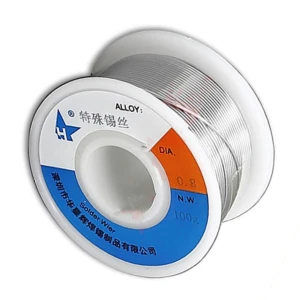
Bleifreies Lötzinn 0.3 mm Sn99 Ag0.3 Cu0.7, 100 g Spule
Marke: Mlink
5,95€
Inkl. MwSt. (Exkl. MwSt.: 5,00€)
Begrenzter Vorrat
Standardlieferung
Mi, Apr 22 - Fr, Apr 24
Expresslieferung
Mo, Apr 20 - Di, Apr 21
30 Tage Rückgaberecht
Kostenlose Rücksendung innerhalb von 30 Tagen
Sichere Transaktion






Share:
Kostenlose Lieferung
Bei Bestellungen ab 300€
Einfache Rücksendung
30 Tage Rückgaberecht
Sichere Zahlung
100% sicherer Checkout
Qualitätsgarantie
Nur Originalprodukte
Dieses bleifreie Lötzinn mit 0.3 mm ist ideal für präzise Lötarbeiten in der Elektronik. Es besteht aus der Legierung Sn99 Ag0.3 Cu0.7 und verfügt über einen Harzflusskern, der ein effizientes, sauberes Löten ermöglicht und RoHS-konform ist.
Hauptmerkmale
- Hochwertige Legierung: Sn99 Ag0.3 Cu0.7 für starke und langlebige Verbindungen.
- Harzflusskern: erleichtert das Löten und minimiert Rückstände.
- Präziser Durchmesser: 0.3 mm, ideal für feine Arbeiten und kleine Bauteile.
- Standardverpackung: wird auf einer Standardspule geliefert, leicht zu handhaben.
Vorteile
- Umweltfreundlich: bleifrei und RoHS-konform.
- Niedrige Schmelztemperatur: 215°C, geeignet für empfindliche Bauteile.
- Hervorragende elektrische Leitfähigkeit: sorgt für eine optimale Signalübertragung.
Technische Daten
- Drahtdurchmesser: 0.3 mm
- Gewicht: 100 g
- Zusammensetzung: Sn99 Ag0.3 Cu0.7
- Flussmittelanteil: 2.5%
- Schmelzpunkt: 215°C
Anwendungen/Einsatzbereiche: Ideal für präzise Lötarbeiten an Drohnen, Fernsehern, Laptops, Monitoren, Smartwatches, Mobiltelefonen und anderen elektronischen Geräten. Geeignet sowohl für DIY-Projekte als auch für professionelle Reparaturen.
Vergleich mit ähnlichen Produkten: Überzeugt durch die hochwertige bleifreie Legierung, den Harzflusskern und den präzisen Durchmesser für feine Lötarbeiten.
Fazit: Das bleifreie Lötzinn 0.3 mm Sn99 Ag0.3 Cu0.7 ist eine ausgezeichnete Wahl für alle, die bei ihren Elektronik-Lötprojekten Präzision, Leistung und Umweltbewusstsein suchen.
- Sn99 Ag0.3 Cu0.7 Legierung für starke und langlebige Lötverbindungen
- Harzflusskern erleichtert das Löten und reduziert Rückstände
- 0.3 mm Durchmesser ideal für präzise Lötarbeiten an kleinen Bauteilen
- 100 g Spule, leicht zu handhaben und zu lagern
- Bleifrei und RoHS-konform
- Schmelzpunkt von 215°C zum Schutz empfindlicher Bauteile
- Hervorragende elektrische Leitfähigkeit für optimale Signalübertragung
Kundenfragen & Antworten
Quin és el principal avantatge d’utilitzar fil de soldadura sense plom Sn99 Ag0.3 Cu0.7 davant d’opcions convencionals amb plom?
El principal avantatge del fil sense plom Sn99 Ag0.3 Cu0.7 és el seu menor impacte ambiental i el compliment amb normatives com RoHS, sense comprometre significativament la conductivitat elèctrica. El seu alt contingut d’estany (99%) i la presència de plata i coure milloren la resistència mecànica en comparació amb altres aliatges sense plom, tot i que el punt de fusió és una mica més alt (aprox. 217 °C davant de 183 °C dels aliatges amb plom).
Què conté exactament la bobina i quin és el diàmetre real i la tolerància del fil?
La bobina inclou 100 grams de fil de soldadura d’aliatge Sn99 Ag0.3 Cu0.7 amb un diàmetre nominal de 0.3 mm. La tolerància típica de fabricació per a aquest tipus de fil és ±0.02 mm, de manera que el diàmetre real pot situar-se entre 0.28 mm i 0.32 mm.
Aquest fil de soldadura de 0.3 mm és compatible amb estacions de soldadura electròniques estàndard i quines són les recomanacions de temperatura?
Sí, és compatible amb la majoria de les estacions de soldadura electròniques estàndard, tant manuals com automatitzades. Es recomana una temperatura del soldador entre 340 °C i 370 °C per obtenir soldadures netes i evitar oxidació, atesa la temperatura de fusió del fil (217-221 °C).
Hi ha consideracions especials per al manteniment o l’emmagatzematge d’aquest fil de soldadura per conservar-ne les propietats?
Es recomana emmagatzemar la bobina en un lloc sec, a temperatura ambient i protegida de la pols per evitar l’oxidació superficial. El fil s’ha de mantenir en el seu envàs original quan no s’utilitzi i manipular-se amb les mans netes. Si apareix òxid superficial, s’ha de descartar aquest tram.
Quin tipus d’aplicacions electròniques es beneficien més d’aquest diàmetre de 0.3 mm i aliatge sense plom?
El fil de 0.3 mm és ideal per a soldadura fina en components SMD, circuits d’alta densitat i reparació de plaques on la precisió és crucial i es vol complir amb normatives lliures de plom. És adequat per a prototips, treballs escolars i producció electrònica on es requereixen unions petites i netes.
What is the main advantage of using Sn99 Ag0.3 Cu0.7 lead-free solder wire compared with conventional leaded options?
The main advantage of Sn99 Ag0.3 Cu0.7 lead-free solder wire is its lower environmental impact and compliance with regulations such as RoHS, without significantly compromising electrical conductivity. Its high tin content (99%) and the presence of silver and copper improve mechanical strength compared with other lead-free alloys, although its melting point is slightly higher (approx. 217 °C versus 183 °C for leaded alloys).
What exactly does the spool contain and what is the actual diameter and tolerance of the wire?
The spool includes 100 grams of Sn99 Ag0.3 Cu0.7 solder wire with a nominal diameter of 0.3 mm. The typical manufacturing tolerance for this type of wire is ±0.02 mm, so the actual diameter may be between 0.28 mm and 0.32 mm.
Is this 0.3 mm solder wire compatible with standard electronic soldering stations and what are the temperature recommendations?
Yes, it is compatible with most standard electronic soldering stations, both manual and automated. A soldering iron temperature between 340 °C and 370 °C is recommended to achieve clean joints and avoid oxidation, given the wire's melting temperature (217-221 °C).
Are there any special maintenance or storage considerations for this solder wire to preserve its properties?
It is recommended to store the spool in a dry place, at room temperature and protected from dust to prevent surface oxidation. The wire should be kept in its original packaging when not in use and handled with clean hands. If surface rust appears, that section should be discarded.
What types of electronic applications benefit most from this 0.3 mm diameter and lead-free alloy?
The 0.3 mm wire is ideal for fine soldering on SMD components, high-density circuits and board repair where precision is crucial and lead-free compliance is required. It is suitable for prototypes, school projects and electronic production where small, clean joints are needed.
Kundenbewertung schreiben
Kunden, die diesen Artikel gekauft haben, kauften auch

Ihre zuletzt angesehenen Artikel

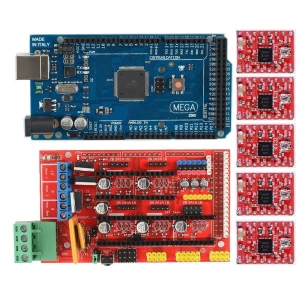
Reprap RAMPS 1.4 + Arduino Mega + 5 A4988 Stepper-Treiber für 3D-Drucker
31,29€
Nur noch 6 auf Lager
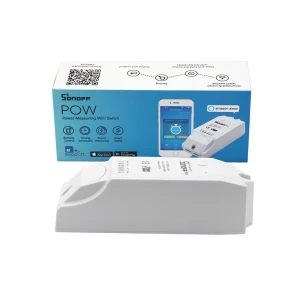
Sonoff Pow WLAN-Schalter mit intelligenter Energieverbrauchsmessung und Fernsteuerung
14,29€
Nicht auf Lager
Bleifreies Lötzinn 0.3 mm Sn99 Ag0.3 Cu0.7, 100 g Spule
5,95€