



5,95€
Auf Lager
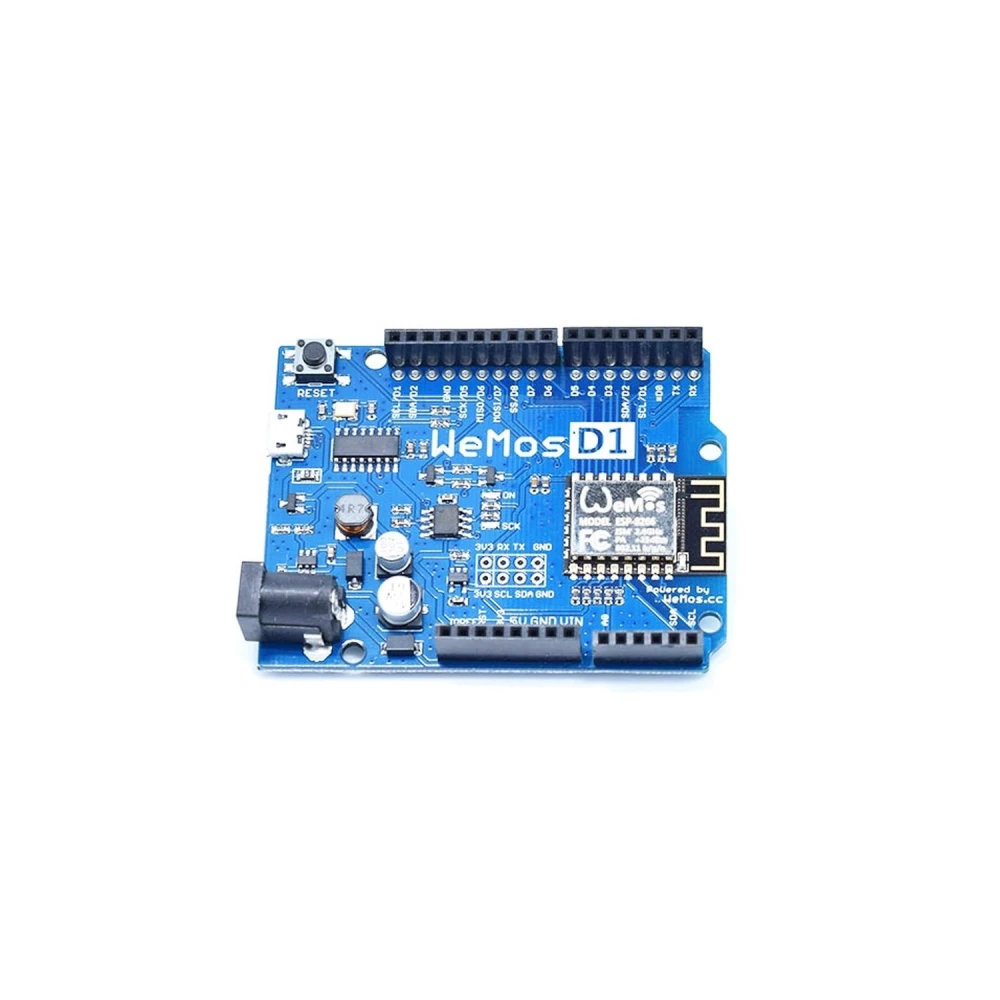
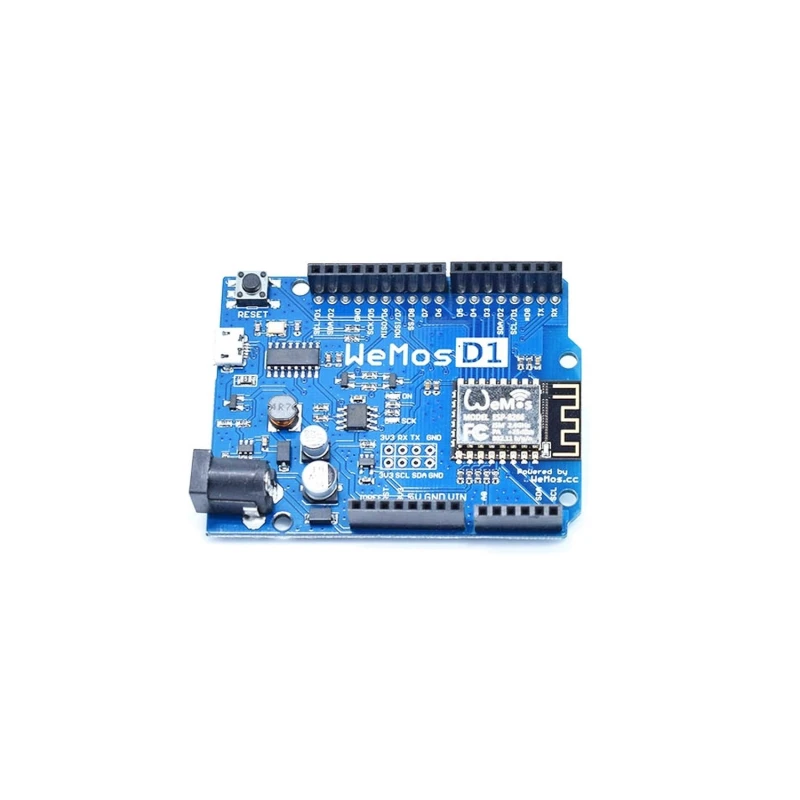
Wemos D1 R2 WiFi ESP8266 - Kompatibles Entwicklungsboard für Arduino Uno
Marke: satkit
5,95€
Inkl. MwSt. (Exkl. MwSt.: 5,00€)
Begrenzter Vorrat
Standardlieferung
Mi, Apr 22 - Fr, Apr 24
Expresslieferung
Mo, Apr 20 - Di, Apr 21
30 Tage Rückgaberecht
Kostenlose Rücksendung innerhalb von 30 Tagen
Sichere Transaktion






Share:
Kostenlose Lieferung
Bei Bestellungen ab 300€
Einfache Rücksendung
30 Tage Rückgaberecht
Sichere Zahlung
100% sicherer Checkout
Qualitätsgarantie
Nur Originalprodukte
Die Wemos D1 R2 Wifi Esp8266 ist ein Mini-Entwicklungsboard auf Basis des Mikrocontrollers ESP-8266EX, das integrierte WiFi-Konnektivität und Kompatibilität mit der Arduino Uno-Umgebung bietet. Dieses Board ist ideal für Entwickler und Hobbyanwender, die eine kompakte und effiziente Lösung für Internet-of-Things-(IoT), Smart-Home- und allgemeine Elektronikprojekte suchen.
Hauptmerkmale:
- Mikrocontroller: ESP-8266EX mit integrierter WiFi-Funktion.
- Betriebsspannung: 3.3V.
- Digitale Ein-/Ausgangspins: 11, alle mit Unterstützung für Interrupt, PWM, I2C und One-Wire, außer D0.
- Analogeingang: 1 Pin mit maximal 3.2V.
- Anschluss: Micro USB für Programmierung und Stromversorgung.
- Externe Stromversorgung: Anschluss für Eingangsspannung von 9-24V.
- Taktfrequenz: 80MHz oder 160MHz, konfigurierbar.
- Flash-Speicher: 4M bytes für die Speicherung von Programmen.
- Abmessungen: 68.6 mm Länge x 53.4 mm Breite.
- Gewicht: 25 Gramm.
Pinbelegung und Funktionen:
- TX (TXD)
- RX (RX)
- A0: Analogeingang (maximal 3.3V)
- D0 (GPIO16)
- D1 (GPIO5, SCL)
- D2 (GPIO4, SDA)
- D3 (GPIO0, 10k Pull-up)
- D4 (GPIO2, BUILTIN_LED)
- D5 (GPIO14, SCK)
- D6 (GPIO12, MISO)
- D7 (GPIO13, MOSI)
- D8 (GPIO15, 10k Pull-down, SS)
- GND, 5V, 3.3V und Reset-Pin (RST)
Alle IO-Pins unterstützen Interrupt, PWM, I2C und One-Wire, außer dem Pin D0.
Programmierung und Kompatibilität:
Das Board lässt sich einfach über ein Micro-USB-Kabel programmieren, das eine automatische Programmierung ermöglicht. Es ist mit der Arduino IDE kompatibel und erleichtert so die Integration in bestehende Projekte sowie die Entwicklung neuer Anwendungen. Außerdem ist es mit NodeMCU kompatibel, einer auf Lua basierenden Firmware für ESP8266.
Typische Einsatzbereiche:
- Entwicklung von IoT-Projekten mit WiFi-Konnektivität.
- Automatisierung und Smart Home.
- Schnelles Prototyping elektronischer Geräte.
- Ausbildung in Elektronik und Programmierung.
Ressourcen und nützliche Links:
- Offizielle Produktseite Wemos D1 R2
- ESP8266 Wiki
- GitHub-Repository für das ESP8266 Arduino IDE
- ESP8266 Community-Forum
- NodeMCU-Software
- CH340 USB-Treiber
- Anleitung zur Installation des CH340G-Treibers
Lieferumfang:
- 1 x Wemos D1 R2 Board
- 1 x 40-polige Stiftleiste zum Anschluss
- ESP-8266EX Mikrocontroller mit integriertem WiFi
- Kompatibel mit Arduino IDE und NodeMCU
- 11 digitale Pins mit Interrupt-, PWM- und I2C-Unterstützung
- 1 Analogeingang mit maximal 3.2V
- Anschluss und Programmierung über Micro USB
- Externe Stromversorgung von 9-24V
- Konfigurierbare Taktfrequenz 80/160 MHz
- 4M bytes Flash-Speicher
- Kompakte Abmessungen: 68.6 x 53.4 mm
- Leichtes Gewicht von 25 Gramm
Kundenfragen & Antworten
Quines són les principals diferències funcionals entre la Wemos D1 R2 i una placa Arduino Uno convencional?
La Wemos D1 R2 integra connectivitat WiFi (basada en el xip ESP8266EX), cosa que permet desenvolupar aplicacions d’IoT directament sense hardware addicional. A més, funciona a 3.3V en lloc de 5V, té un sol pin analògic (màxim 3.2V), i ofereix 11 pins digitals amb suport per a PWM, interrupcions i comunicació I2C (excepte el D0). Tot i que comparteix un factor de forma similar al Arduino Uno i és compatible a nivell de programació a través de l’IDE de Arduino, la D1 R2 no és compatible a nivell elèctric amb tots els shields a causa dels diferents voltatges de funcionament.
Hi ha alguna consideració especial respecte a la durabilitat i el manteniment del Wemos D1 R2 en ambients exigents?
La placa està dissenyada per a desenvolupament en interiors; no té protecció IP ni encapsulat contra humitat o pols. En ambients industrials o exteriors s’ha de col·locar en una caixa estanca. Les soldadures estan fetes amb estany estàndard; variacions extremes de temperatura (>40°C, <0°C) poden afectar-ne la longevitat. Es recomana netejar la pols ocasionalment i evitar l’exposició continuada a vibracions o atmosferes corrosives.
Quines normatives de seguretat o certificacions compleix la placa Wemos D1 R2 i quines podrien ser rellevants en una aplicació professional?
El mòdul ESP8266, inclòs a la placa, acostuma a comptar amb certificacions FCC (EUA), CE (Unió Europea) i RoHS (restricció de substàncies perilloses). Tanmateix, la placa Wemos D1 R2 com a conjunt s’ha de considerar com a prototip o component, no com a producte acabat certificat. Per a aplicacions comercials o certificades, cal validar la certificació del sistema final muntat.
What are the main functional differences between the Wemos D1 R2 and a standard Arduino Uno board?
The Wemos D1 R2 integrates WiFi connectivity (based on the ESP8266EX chip), allowing IoT applications to be developed directly without additional hardware. It also runs at 3.3V instead of 5V, has a single analogue pin (maximum 3.2V), and offers 11 digital pins with support for PWM, interrupts and I2C communication (except D0). Although it shares a similar form factor to the Arduino Uno and is programming-compatible via the Arduino IDE, the D1 R2 is not electrically compatible with all shields due to the different operating voltages.
Are there any special considerations regarding durability and maintenance of the Wemos D1 R2 in demanding environments?
The board is designed for indoor development; it has no IP protection or enclosure against moisture or dust. In industrial or outdoor environments it should be placed in a sealed box. The solder joints use standard solder; extreme temperature variations (>40°C, <0°C) may affect longevity. It is recommended to clean off dust occasionally and avoid continuous exposure to vibration or corrosive atmospheres.
What safety standards or certifications does the Wemos D1 R2 board comply with, and which may be relevant in a professional application?
The ESP8266 module included on the board usually carries FCC (US), CE (European Union) and RoHS (restriction of hazardous substances) certifications. However, the Wemos D1 R2 board as a whole should be considered a prototype or component, not a certified finished product. For commercial or certified applications, the certification of the final assembled system must be validated.
What are the main functional differences between the Wemos D1 R2 and a conventional Arduino Uno board?
The Wemos D1 R2 integrates WiFi connectivity (based on the ESP8266EX chip), allowing IoT applications to be developed directly without additional hardware. It also runs at 3.3V instead of 5V, has a single analogue pin (maximum 3.2V), and offers 11 digital pins with support for PWM, interrupts and I2C communication (except D0). Although it shares a similar form factor to the Arduino Uno and is programming-compatible via the Arduino IDE, the D1 R2 is not electrically compatible with all shields due to the different operating voltages.
Are there any special considerations regarding durability and maintenance of the Wemos D1 R2 in demanding environments?
The board is designed for indoor development; it has no IP protection or enclosure against moisture or dust. In industrial or outdoor environments it should be placed in a sealed enclosure. The solder joints use standard solder; extreme temperature variations (>40°C, <0°C) may affect longevity. It is recommended to clean off dust occasionally and avoid continuous exposure to vibration or corrosive atmospheres.
What safety standards or certifications does the Wemos D1 R2 board comply with, and which may be relevant in a professional application?
The ESP8266 module included on the board usually carries FCC (US), CE (European Union) and RoHS (restriction of hazardous substances) certifications. However, the Wemos D1 R2 board as a whole should be considered a prototype or component, not a certified finished product. For commercial or certified applications, the certification of the final assembled system must be validated.
Vilka är de viktigaste funktionella skillnaderna mellan Wemos D1 R2 och en vanlig Arduino Uno-platta?
Wemos D1 R2 har inbyggd WiFi-anslutning (baserad på chipet ESP8266EX), vilket gör det möjligt att utveckla IoT-applikationer direkt utan extra hårdvara. Den arbetar dessutom med 3,3 V i stället för 5 V, har en enda analog ingång (max 3,2 V) och erbjuder 11 digitala pinnar med stöd för PWM, avbrott och I2C-kommunikation (förutom D0). Även om den har liknande formfaktor som Arduino Uno och är programmeringsmässigt kompatibel via Arduino IDE, är D1 R2 inte elektriskt kompatibel med alla shields på grund av de olika driftspänningarna.
Kundenbewertung schreiben
Kunden, die diesen Artikel gekauft haben, kauften auch
Ihre zuletzt angesehenen Artikel

 Wemos D1 R2 WiFi ESP8266 - Kompatibles Entwicklungsboard für Arduino Uno
5,95€