

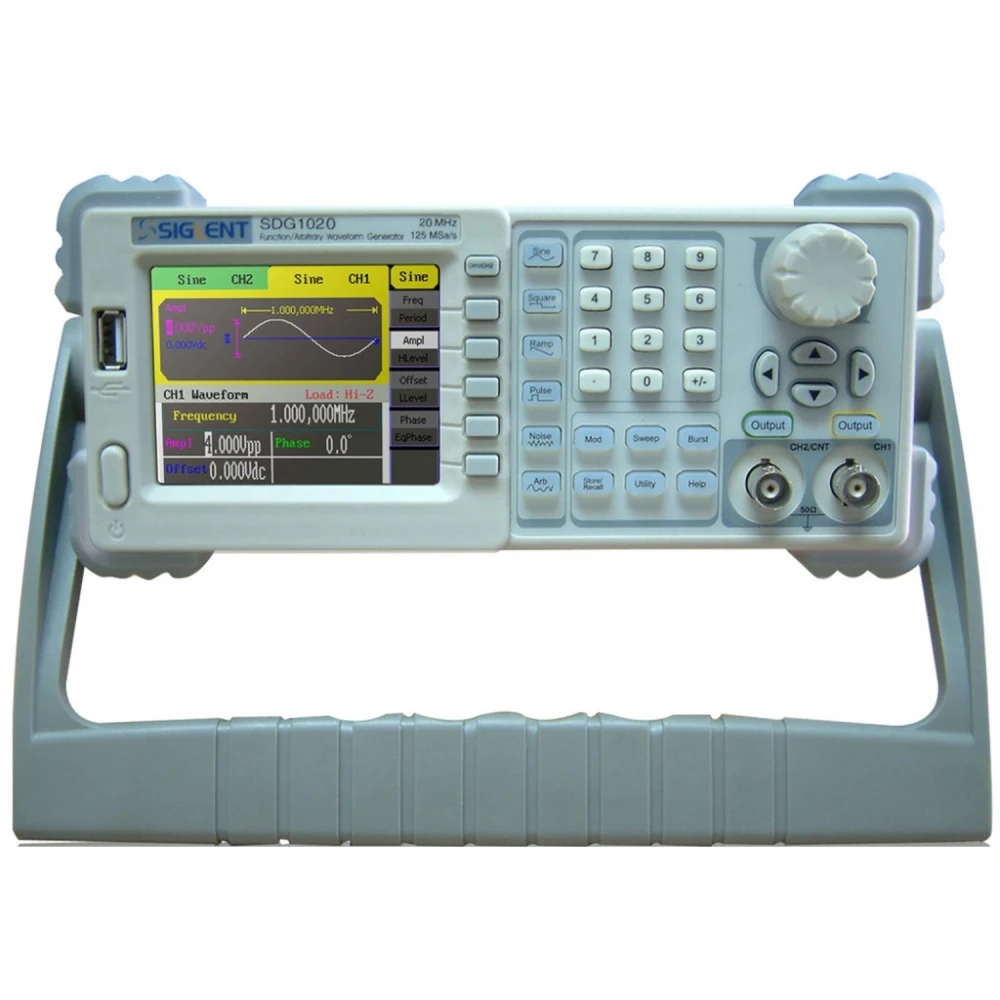
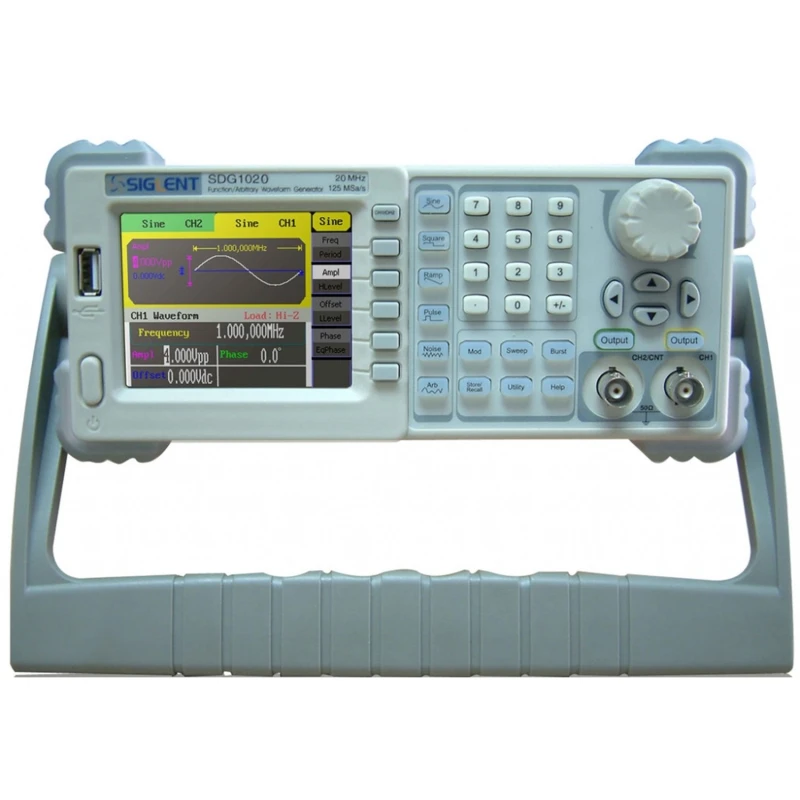
Siglent SDG1020 Arbiträr-Funktionsgenerator 20MHz für Elektronikanwendungen
Marke: Siglent
Inkl. MwSt. (Exkl. MwSt.: 239,00€)






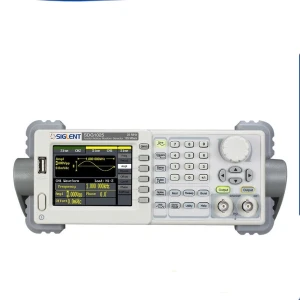
Siglent SDG1020 Arbiträr-Funktionsgenerator 20MHz ist ein fortschrittliches Messgerät für elektronische Anwendungen, die präzise und vielfältige Signale erfordern. Dieser Generator nutzt DDS-Technologie (Direct Digital Synthesis), um eine maximale Ausgangsfrequenz von 20MHz mit hoher Auflösung und Stabilität zu bieten.
Wichtige Merkmale:
- Maximale Ausgangsfrequenz: 20MHz, geeignet für eine breite Palette elektronischer Tests.
- Zweikanal-Ausgang: Ermöglicht die gleichzeitige Erzeugung von zwei Signalen und erleichtert Vergleiche sowie komplexe Tests.
- Abtastrate: 125 MSa/s mit 14 Bit vertikaler Auflösung für präzise und detaillierte Signale.
- Wellenformlänge: 16 kpts für detaillierte und konfigurierbare Wellenformen.
- Standard- und Arbiträr-Wellenformen: Enthält 5 Standardformen (Sinus, Rechteck, Rampe, Puls, weißes gaußsches Rauschen) und 48 integrierte Arbiträrformen für maximale Flexibilität.
- Modulationsfunktionen: AM, FM, PM, DSB-AM, FSK, ASK, PWM, Sweep und Burst für komplexe und vielseitige Simulationen.
- Frequenzzähler: Bereich von 100 mHz bis 200 MHz für präzise Messungen.
- Konnektivität: USB Host und Device für Speicherung und Steuerung, mit optionalem USB-GPIB-Anschluss für erweiterte Integration.
- Kompatibilität: Kompatibel mit digitalen Oszilloskopen der SDS1000-Serie und Fernsteuerung für eine integrierte Laborumgebung.
Typische Anwendungen:
- Tests und Entwicklung elektronischer Schaltungen.
- Signal-Simulation für Analyse und Diagnose.
- Ausbildung und Schulung in Elektronik und Telekommunikation.
- Forschung und Entwicklung in technischen Laboren.
Technische Daten:
- Modell: SDG1020
- Maximale Ausgangsfrequenz: 20MHz
- Ausgangskanäle: 2
- Abtastrate: 125 MSa/s
- Wellenformlänge: 16 kpts
- Frequenzauflösung: 1 μHz
- Vertikale Auflösung: 14 bits
- Wellenformen: Sinus, Rechteck, Rampe, Puls, weißes gaußsches Rauschen, 48 Arbiträrformen
- Bereich für Sinus- und Rechteckwellen: 1 μHz bis 20MHz
- Pulsbereich: 500 μHz bis 5MHz
- Rampenbereich: 1 μHz bis 300 KHz
- Bandbreite des weißen gaußschen Rauschens: 20MHz (-3dB)
- Modulationsfunktionen: AM, FM, PM, DSB-AM, FSK, ASK, PWM, Sweep, Burst
- Frequenzzähler: 100 mHz bis 200 MHz
- Standardanschlüsse: USB Host und Device
- Optionaler Anschluss: USB-GPIB-Adapter
- Größe: 229mm × 105mm × 281mm
Hinweis zur Verfügbarkeit: Dieses Produkt ist derzeit nicht auf Lager. Bitte wenden Sie sich an unser Team für Informationen zur Wiederverfügbarkeit oder zu Alternativen.
- DDS-Technologie für präzise und stabile Signale
- Zweikanal-Ausgang für mehr Flexibilität
- 125 MSa/s Abtastrate und 14-Bit-Auflösung
- 48 integrierte Arbiträr-Wellenformen zusätzlich zu 5 Standardformen
- Erweiterte Modulationsfunktionen: AM, FM, PM, DSB-AM, FSK, ASK, PWM, Sweep, Burst
- Integrierter Frequenzzähler bis 200 MHz
- USB Host- und Device-Konnektivität, optional USB-GPIB
- Kompatibel mit digitalen SDS1000-Oszilloskopen und Fernsteuerung
Kundenfragen & Antworten
Quin tipus de connectors i ports hi ha disponibles per a la connexió i el control del generador?
L’SDG1020 inclou sortides frontals tipus BNC per a senyals i entrades/sortides de sincronització. Per a comunicació i control, ofereix ports USB Device i USB Host com a estàndard, permetent la connexió a PC i l’emmagatzematge extern. El port GPIB està disponible com a opció addicional.
Quina precisió i resolució té el generador tant en freqüència com en amplitud de sortida?
La resolució de freqüència és d’1 µHz i la resolució vertical en amplitud és de 14 bits, cosa que permet generar senyals amb alta precisió tant en el domini temporal com en el d’amplitud. La precisió real de sortida depèn de la calibració i de l’entorn d’operació, però aquestes xifres són representatives del seu maquinari.
Quin manteniment requereix l’equip i quina és la seva expectativa de durabilitat en ús intensiu?
El manteniment bàsic consisteix a mantenir les ventilacions lliures de pols i comprovar periòdicament les connexions i els cables. El generador està dissenyat per a ús continu en entorn de laboratori; la durabilitat esperada supera els 5 anys amb un ús adequat, sense exposició a humitat excessiva ni cops, tot i que la vida útil pot variar segons les condicions específiques.
What are the key specifications regarding resolution and accuracy that affect the quality of the generated signals?
The generator uses a sampling rate of 125 MSa/s, 14-bit vertical resolution and 1 µHz frequency resolution. This provides a suitable level of detail for demanding laboratory applications, although with very complex signals or at maximum frequencies there may be slight artefacts typical of the DDS architecture.
What is required to get it up and running and what is included in the box when buying the SDG1025?
The unit usually includes the generator, power cable, manual, two BNC cables and associated software. Basic installation requires connection to the mains supply (typically 100–240 V AC) and linking to measurement equipment via the front BNC connectors.
How does the SDG1025 compare with competing arbitrary function generators in the 25 MHz range?
Compared objectively, the SDG1025 stands out for its value for money, 14-bit resolution and range of built-in waveforms. Against similarly priced models (e.g. Tektronix AFG1022), it offers a slightly higher output frequency range and more arbitrary waveforms, although higher-priced units may have better stability or advanced functions.
What types of connectors and ports are available for connecting and controlling the generator?
The SDG1020 includes front BNC outputs for signals and sync input/output. For communication and control, it offers USB Device and USB Host ports as standard, allowing connection to a PC and external storage. The GPIB port is available as an additional option.
What accuracy and resolution does the generator have in both frequency and output amplitude?
Frequency resolution is 1 μHz and vertical amplitude resolution is 14 bits, allowing signals to be generated with high precision in both the time and amplitude domains. Actual output accuracy depends on calibration and operating environment, but these figures are representative of its hardware.
What maintenance does the equipment require and what is its expected durability under intensive use?
Basic maintenance consists of keeping the vents free of dust and periodically checking connections and cables. The generator is designed for continuous use in a laboratory environment; expected durability exceeds 5 years under proper use, without excessive humidity or impacts, although service life may vary depending on specific conditions.
Vilka typer av kontakter och portar finns för anslutning och styrning av generatorn?
SDG1020 har BNC-utgångar på fronten för signaler samt in-/utgångar för synkronisering. För kommunikation och styrning finns USB Device och USB Host som standard, vilket möjliggör anslutning till PC och extern lagring. GPIB-porten finns som tillval.
Kundenbewertung schreiben
Kunden, die diesen Artikel gekauft haben, kauften auch
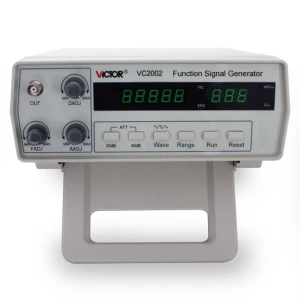
Victor VC2002 Funktionsgenerator mit 8-stelligem Display und hoher Sicherheit
Ihre zuletzt angesehenen Artikel
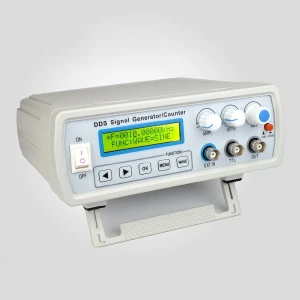
DDS-Funktionsgenerator FY2112S 12 MHz mit Frequenzzähler und USB-PC-Anschluss
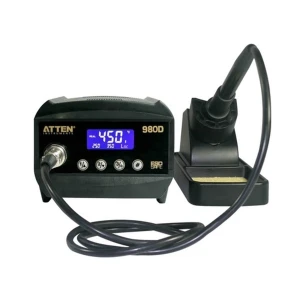
Regelbare 80W Lötstation Atten At980d mit digitaler Steuerung und 3 Speichern