



4,77€
Auf Lager


12V DC Magnetventil für Flüssigkeiten, normalerweise geschlossen, ideal für Aquarium und Arduino
Marke: satkit
4,77€
Inkl. MwSt. (Exkl. MwSt.: 4,01€)
Auf Lager - Sofort versandfertig
Standardlieferung
Mi, Apr 22 - Fr, Apr 24
Expresslieferung
Mo, Apr 20 - Di, Apr 21
30 Tage Rückgaberecht
Kostenlose Rücksendung innerhalb von 30 Tagen
Sichere Transaktion






Share:
Kostenlose Lieferung
Bei Bestellungen ab 300€
Einfache Rücksendung
30 Tage Rückgaberecht
Sichere Zahlung
100% sicherer Checkout
Qualitätsgarantie
Nur Originalprodukte
Das 12V DC Magnetventil für Flüssigkeiten ist ein wichtiges Bauteil zur Steuerung des Flüssigkeitsflusses in verschiedenen Anwendungen wie Aquarien, Hydrokultursystemen und Projekten mit Arduino. Dieses Ventil ist normalerweise geschlossen, was bedeutet, dass es geschlossen bleibt, bis ein elektrisches 12V DC-Signal angelegt wird, um es zu öffnen und den Durchfluss der Flüssigkeit zu ermöglichen.
Es verfügt über Standardgewinde von 1/2" für eine einfache Installation in vorhandene Rohrleitungen und Systeme. Das Design umfasst einen Schmutzfilter am Eingang, der Verstopfungen verhindert und einen zuverlässigen sowie langlebigen Betrieb gewährleistet.
- Ein- und Auslassdurchmesser: 21 mm
- Gesamtlänge: 85 mm
- Stromversorgung: 12V DC
- Stromaufnahme: 0.4 A
- Leistungsaufnahme: 4.8 W
- Betriebsdruck: 0.02 a 0.8 MPa
- Gewicht: 110 gramos
Dieses Magnetventil ist ideal für:
- Die Steuerung des Wasserflusses in Aquarien, um eine stabile Umgebung für Wasserlebewesen zu gewährleisten.
- Die Automatisierung von Bewässerungssystemen in der Hydrokultur, um die Versorgung der Pflanzen mit Nährstoffen und Wasser zu erleichtern.
- Die Integration in Arduino-Projekte zur Automatisierung und Fernsteuerung von Flüssigkeiten.
Die Funktionsweise ist einfach: Wird 12V DC an die Anschlüsse angelegt, aktiviert die elektromagnetische Spule das Öffnen des Ventils und ermöglicht den Durchfluss der Flüssigkeit. Wird die Stromversorgung unterbrochen, schließt das Ventil automatisch und verhindert Leckagen oder unerwünschten Durchfluss.
Das Magnetventil ist auf Langlebigkeit und Widerstandsfähigkeit ausgelegt und verfügt über einen integrierten Filter, damit schädliche Partikel den internen Mechanismus nicht blockieren. Dadurch eignet es sich für saubere Flüssigkeiten und Anwendungen, bei denen eine präzise und zuverlässige Steuerung erforderlich ist.
Kompatibel mit elektronischen Steuerungssystemen und DIY-Projekten ist dieses Magnetventil eine praktische und effiziente Lösung für die Handhabung von Flüssigkeiten in verschiedenen technischen und privaten Anwendungen.
- Normalerweise geschlossenes Magnetventil mit 12V DC-Spule
- Standardgewinde 1/2" für einfache Installation
- Integrierter Schmutzfilter gegen Verstopfungen
- Ein- und Auslassdurchmesser 21 mm
- Leistungsaufnahme 4.8 W und Stromaufnahme 0.4 A
- Betriebsdruck von 0.02 bis 0.8 MPa
- Leichtes Gewicht von 110 gramos, ideal für Arduino-Projekte
- Ideal für Aquarien, Hydrokultur und Flüssigkeitssteuerung mit Arduino
Kundenfragen & Antworten
Quins són els límits de pressió i cabal que suporta aquesta electrovàlvula per a aplicacions comunes en hidroponia o aquaris?
L’electrovàlvula està dissenyada per treballar amb pressions de 0,02 a 0,8 MPa (aproximadament 0,2 a 8 bar). Això cobreix la majoria d’aplicacions domèstiques i de petita escala en hidroponia i aquaris, on generalment es treballa entre 0,05 i 0,5 MPa. El cabal màxim depèn del sistema, però els connectors de 1/2'' permeten un pas d’aigua típic sense restricció considerable fins a uns 10 L/min a pressió màxima.
Quin tipus de connector elèctric requereix la bobina de 12VDC de l’electrovàlvula i hi ha risc de sobreescalfament?
La bobina utilitza terminals tipus Faston de 4,8 mm (femella) per a 12VDC i s’ha d’operar amb una font estable, preferentment regulada. El consum és de 0,4 A (4,8 W). Si es manté energitzada durant períodes llargs, la temperatura superficial pot augmentar fins a 40–50 °C, dins del que és habitual per a aquest tipus d’electrovàlvules i sense risc si hi ha una ventilació adequada.
Quins materials componen la carcassa i el mecanisme intern, i són aptes per a líquids no agressius diversos?
Generalment, la carcassa està fabricada en plàstic ABS i els components interns en acer inoxidable/acer amb segells de cautxú sintètic. Aquests materials són compatibles amb aigua potable, solucions hidropòniques i líquids no corrosius a temperatura ambient (màx. 60°C recomanats). Per a líquids agressius o àcids es recomana consultar la compatibilitat específica.
Com es recomana instal·lar la vàlvula i quin manteniment requereix per assegurar-ne la durabilitat?
Es recomana instal·lar la vàlvula en posició horitzontal, amb el filtre cap a l’entrada, i sempre abans de l’equip a protegir. Cal netejar periòdicament el filtre d’impureses integrat i evitar sobrepressions o residus sòlids que puguin bloquejar el mecanisme. Així es maximitza la seva vida útil, estimada en més de 100.000 cicles d’obertura/tancament en condicions normals.
En què es diferencia aquesta electrovàlvula d’altres alternatives com les de 220V o models NO (normalment obertes)?
Aquest model funciona a baix voltatge (12VDC), cosa que redueix els riscos de descàrrega elèctrica i facilita la integració amb controladors com Arduino. En comparació, les de 220VCA requereixen més precaució en la manipulació. A més, el seu tipus NC (normalment tancada) assegura que, davant d’una caiguda d’energia, el flux s’aturi, a diferència de les NO, que permeten el pas. L’elecció depèn de la seguretat, la compatibilitat i el mode de control requerit.
What pressure and flow limits can this solenoid valve handle for common hydroponics or aquarium applications?
The solenoid valve is designed to operate at pressures from 0.02 to 0.8 MPa (approximately 0.2 to 8 bar). This covers most domestic and small-scale hydroponics and aquarium applications, which generally operate between 0.05 and 0.5 MPa. Maximum flow depends on the system, but the 1/2'' connectors allow typical water flow with no significant restriction up to around 10 L/min at maximum pressure.
What type of electrical connector does the 12VDC coil of the solenoid valve require, and is there a risk of overheating?
The coil uses 4.8 mm Faston terminals (female) for 12VDC and should be operated with a stable, preferably regulated, power supply. Consumption is 0.4 A (4.8 W). If kept energised for long periods, the surface temperature may rise to 40–50 °C, which is normal for this type of solenoid valve and not a risk if adequately ventilated.
What materials make up the housing and internal mechanism, and are they suitable for various non-aggressive liquids?
Generally, the housing is made from ABS plastic and the internal components from stainless steel/steel with synthetic rubber seals. These materials are compatible with drinking water, hydroponic solutions and non-corrosive liquids at room temperature (60°C max recommended). For aggressive or acidic liquids, specific compatibility should be checked.
How is the valve recommended to be installed and what maintenance is required to ensure durability?
It is recommended to install the valve in a horizontal position, with the filter facing the inlet, and always before the equipment to be protected. The integrated impurity filter should be cleaned regularly, and overpressure or solid residues that could block the mechanism should be avoided. This maximises its service life, estimated at more than 100,000 open/close cycles under normal conditions.
How does this solenoid valve differ from alternatives such as 220V or NO (normally open) models?
This model operates at low voltage (12VDC), which reduces the risk of electric shock and makes integration with controllers such as Arduino easier. In comparison, 220V AC models require greater care when handling. In addition, its NC (normally closed) type ensures that, in the event of a power failure, the flow stops, unlike NO models, which allow flow. The choice depends on the required safety, compatibility and control mode.
Kundenbewertung schreiben
Kunden, die diesen Artikel gekauft haben, kauften auch

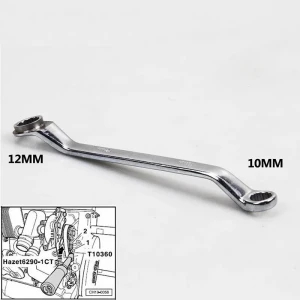
Wasserpumpen-Riemenscheiben-Schlüssel T10360 12mm für Volkswagen Audi EA888
17,26€
Nur noch 9 auf Lager
Ihre zuletzt angesehenen Artikel

 12V DC Magnetventil für Flüssigkeiten, normalerweise geschlossen, ideal für Aquarium und Arduino
4,77€