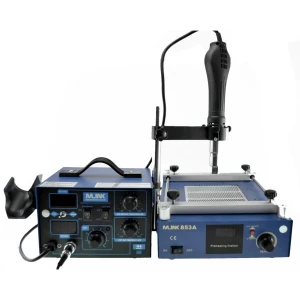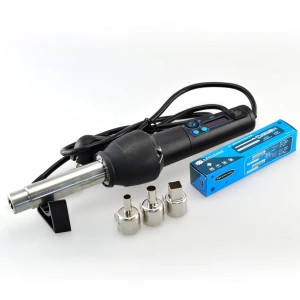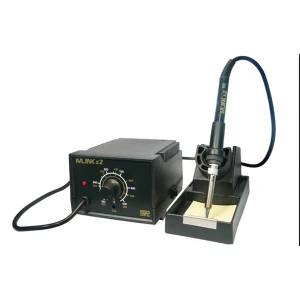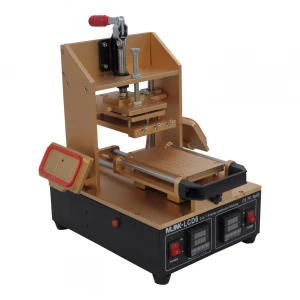


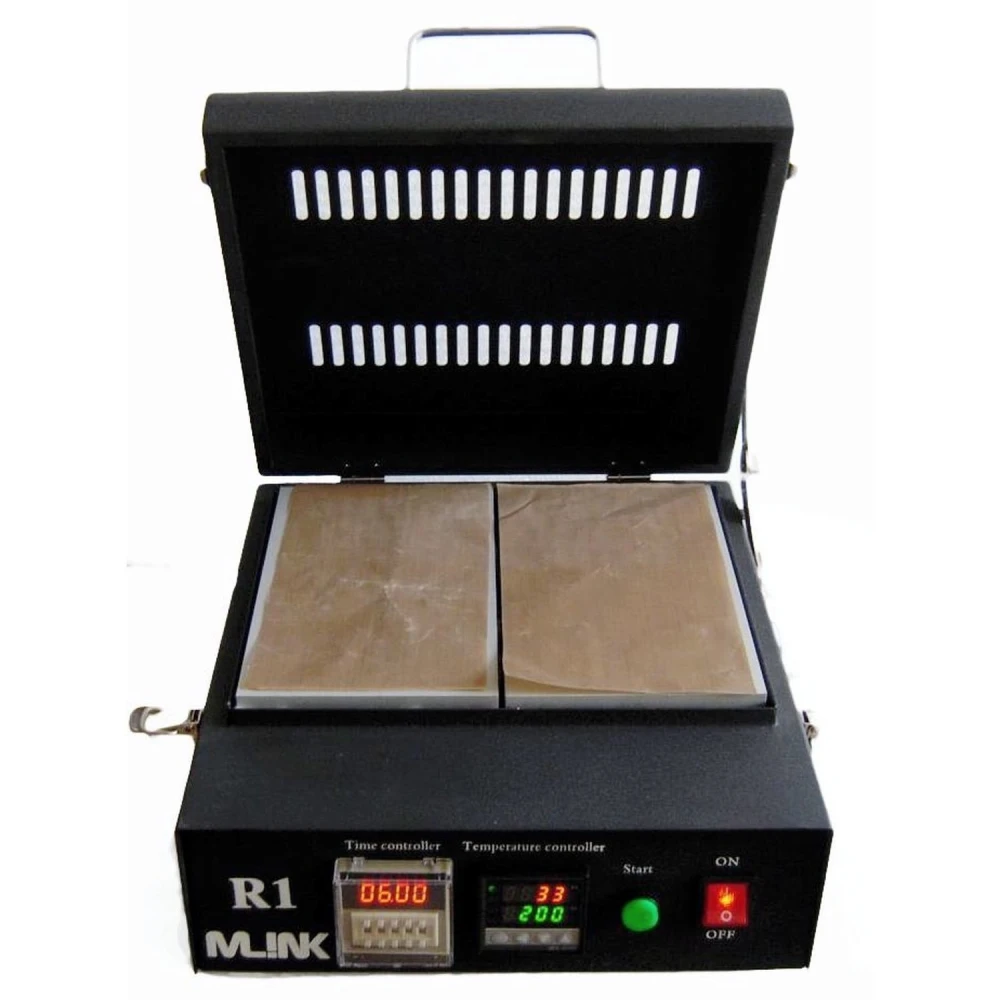

Mlink R1 BGA-Reballing-Station mit PID-Temperaturregelung
Marke: Mlink
Inkl. MwSt. (Exkl. MwSt.: 169,00€)






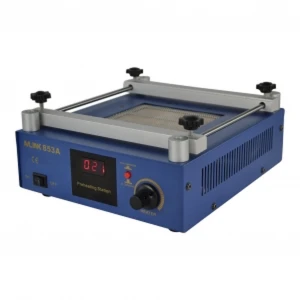
Die Mlink R1 BGA-Reballing-Station ist eine spezialisierte Lötstation für den Reballing-Prozess von BGA-Chips (Ball Grid Array). Dieses Werkzeug ist ideal für Techniker und Fachleute, die bei der Reparatur und Wartung integrierter elektronischer Bauteile Präzision und Zuverlässigkeit benötigen.
Sie verfügt über eine präzise Temperaturregelung mit PID-Technologie, wodurch sich die Temperatur in einem Bereich von 20 bis 300 degrees Celsius einstellen lässt und eine gleichmäßige und sichere Erwärmung der BGA-Chips gewährleistet wird. Die Station umfasst zwei Platten: eine zum Erwärmen und eine zum Abkühlen, was einen effizienten und kontrollierten Prozess ermöglicht.
Hauptmerkmale:
- Heizfläche von 120 mm x 200 mm, geeignet für verschiedene Größen von BGA-Chips.
- Leistung von 600 W für schnelles und stabiles Aufheizen.
- Temperaturregelung einstellbar zwischen 20 und 300 degrees mit PID-Regelung für maximale Präzision.
- Arbeitszeit einstellbar von 0,1 bis 9,9 Minuten, passend für unterschiedliche Reballing-Prozesse.
- Stromversorgung AC220V, kompatibel mit Standardinstallationen.
- Kompakte Abmessungen: 310 mm Länge, 280 mm Breite und 145 mm Höhe, mit einem Gewicht von 7,7 kg für einfache Handhabung und Transport.
Diese Lötstation ist mit einer Vielzahl von BGA-ICs kompatibel und damit ein unverzichtbares Werkzeug für Elektronik-Reparaturwerkstätten und Fachleute, die mit Hightech-Geräten arbeiten.
Typische Anwendungen der Mlink R1 umfassen das Reballing von BGA-Chips auf Mainboards, Grafikkarten und anderen elektronischen Geräten, bei denen unter dem Ball-Grid-Array verlötete Bauteile ersetzt oder repariert werden müssen.
Dank ihres robusten Designs und ihrer fortschrittlichen Funktionen ermöglicht die Mlink R1 bei jedem Reballing-Vorgang professionelle und zuverlässige Ergebnisse, optimiert die Arbeitszeit und reduziert das Risiko von Schäden an den Bauteilen.
- Heizfläche: 120 mm x 200 mm für verschiedene BGA-Chips
- 600 W Leistung für schnelles und stabiles Aufheizen
- PID-Temperaturregelung einstellbar zwischen 20 und 300 °C
- Arbeitszeit einstellbar von 0,1 bis 9,9 Minuten
- Standard-Stromversorgung AC220V
- Abmessungen: 310 x 280 x 145 mm und Gewicht von 7,7 kg
- Inklusive zwei Platten: Heizen und Kühlen
Kundenfragen & Antworten
Quins avantatges té disposar d'una planxa específica per a refredament a més de la de calefacció a la Mlink R1?
La doble planxa (calefacció i refredament) permet controlar millor el cicle tèrmic durant el rebolejat de BGA, minimitzant tensions tèrmiques als xips i millorant la qualitat del reballing respecte a equips d'una sola superfície. Això redueix el risc de microfissures i deformacions en components sensibles.
Quines dimensions i pes té la Mlink R1, i què inclou exactament la caixa en comprar aquest producte?
La Mlink R1 fa 310 mm de llarg, 280 mm d'ample i 145 mm d'alt, amb un pes de 7,7 kg. A la caixa s'inclou la unitat principal amb les dues planxes, cable d'alimentació i manual d'usuari. Normalment no inclou accessoris consumibles com boles de soldadura o plantilles, que s'han d'adquirir a part.
Requereix algun tipus especial de presa elèctrica o protecció per operar la Mlink R1 de manera segura?
Opera amb corrent altern de 220 V i consumeix fins a 600 W. Es recomana una presa amb connexió a terra i protegir-la amb interruptor diferencial i fusible adequat (mínim 5 A). No és compatible amb xarxes de 110 V sense transformador.
Quins són els límits de temperatura i la precisió del control PID en treballs de rebolejat exigents?
La Mlink R1 permet ajustar la temperatura de 20 °C a 300 °C amb control PID, oferint una precisió típica de ±2 °C en condicions estables. Aquest rang cobreix la major part de processos de reballing de soldadura amb plom i sense plom, però per a aliatges especials fora d'aquest rang es recomana una verificació addicional amb termoparell extern.
Quin manteniment requereix la Mlink R1 i quina és la seva vida útil estimada en un taller professional?
El seu manteniment bàsic implica la neteja regular de les planxes, la verificació mecànica dels contactes elèctrics i la calibració anual del sensor de temperatura. La vida útil típica és superior a 3 anys en ús professional freqüent, tot i que components com sensors o resistències poden requerir substitució depenent de l'ús i el manteniment.
What are the advantages of having a dedicated cooling plate as well as a heating plate in the Mlink R1?
The dual plate system (heating and cooling) allows better control of the thermal cycle during BGA reballing, minimising thermal stress on chips and improving reballing quality compared with single-surface equipment. This reduces the risk of microcracks and deformation in sensitive components.
What are the dimensions and weight of the Mlink R1, and what exactly is included in the box when buying this product?
The Mlink R1 measures 310 mm long, 280 mm wide and 145 mm high, with a weight of 7.7 kg. The box includes the main unit with the two plates, power cable and user manual. Consumables such as solder balls or stencils are not usually included and must be purchased separately.
Does it require any special mains socket or protection to operate the Mlink R1 safely?
It operates on 220 V AC and consumes up to 600 W. A socket with earth connection is recommended, protected by a residual current device and a suitable fuse (minimum 5 A). It is not compatible with 110 V networks without a transformer.
What are the temperature limits and PID control accuracy for demanding reballing work?
The Mlink R1 allows the temperature to be adjusted from 20 °C to 300 °C with PID control, offering typical accuracy of ±2 °C under stable conditions. This range covers most leaded and lead-free solder reballing processes, but for special alloys outside this range, additional verification with an external thermocouple is recommended.
What maintenance does the Mlink R1 require and what is its estimated lifespan in a professional workshop?
Basic maintenance involves regular cleaning of the plates, mechanical checking of electrical contacts and annual calibration of the temperature sensor. Typical lifespan is over 3 years in frequent professional use, although components such as sensors or heating elements may need replacing depending on use and maintenance.
Kundenbewertung schreiben
Kunden, die diesen Artikel gekauft haben, kauften auch