



1,79€
Auf Lager

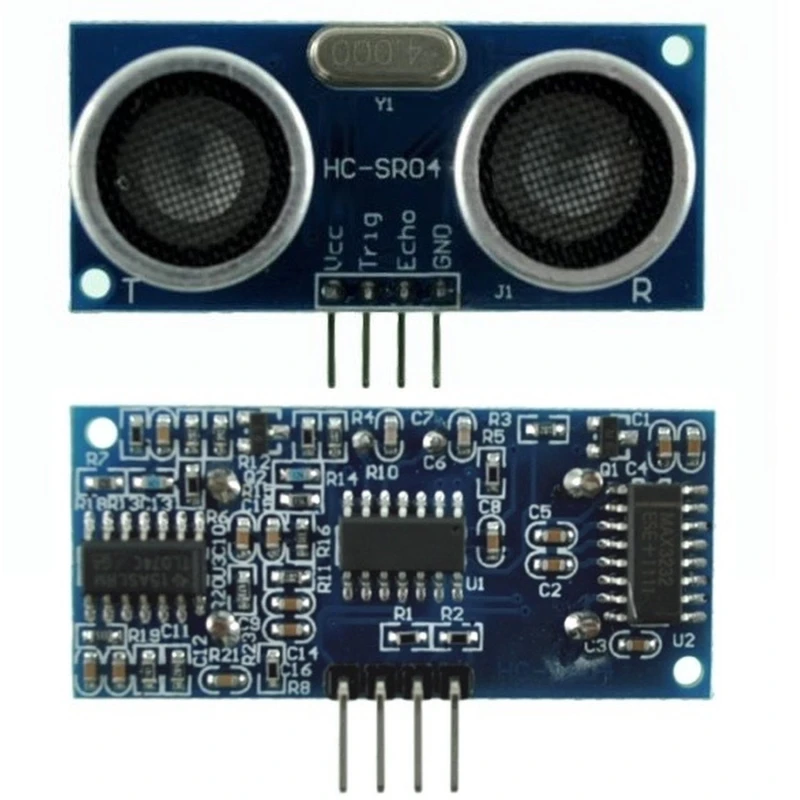
HC-SR04 Ultraschallsensor-Modul für Arduino - Präzise Distanzmessung
Marke: satkit
1,79€
Inkl. MwSt. (Exkl. MwSt.: 1,50€)
Auf Lager - Sofort versandfertig
Standardlieferung
Mi, Apr 22 - Fr, Apr 24
Expresslieferung
Mo, Apr 20 - Di, Apr 21
30 Tage Rückgaberecht
Kostenlose Rücksendung innerhalb von 30 Tagen
Sichere Transaktion






Share:
Kostenlose Lieferung
Bei Bestellungen ab 300€
Einfache Rücksendung
30 Tage Rückgaberecht
Sichere Zahlung
100% sicherer Checkout
Qualitätsgarantie
Nur Originalprodukte
Das HC-SR04 Ultraschallsensor-Modul für Arduino ist ein unverzichtbares Bauteil für jedes Robotik- oder Elektronikprojekt, das eine präzise und zuverlässige Distanzmessung erfordert. Der Sensor funktioniert wie ein Sonar, indem er Ultraschallwellen aussendet und die Zeit misst, bis das Echo nach dem Reflektieren an einem Objekt zurückkehrt. So lassen sich Hindernisse von 2 Zentimetern bis 3 Metern erkennen.
Das kompakte und einfache Design erleichtert die Integration in Prototypenboards oder direkt in Roboter. Eine LED-Anzeige zeigt an, wann eine Messung durchgeführt wird, und für den Betrieb sind nur drei Pins erforderlich: VCC, GND und das Ausgangssignal.
Hauptmerkmale
- Messbereich: 2 cm bis 3 Meter, ideal zur Erkennung von Objekten auf kurze und mittlere Distanz.
- Betriebsspannung: 5V +/-10% (mindestens 4.5V, maximal 6V), kompatibel mit den meisten Mikrocontrollern.
- Stromverbrauch: typisch 30 mA, maximal 35 mA.
- Interface: 3 Pins (VCC, GND, Signal) für eine einfache Verbindung.
- Kommunikation: Verwendet "pulse in / pulse out"-Signale zur Distanzmessung über PWM-Pulsbreite.
- LED-Anzeige: Zeigt an, wenn der Sensor eine Messung durchführt.
- TTL-Puls: Mindestpuls von 2 µs (typisch 5 µs) und positiver Echo-Puls von 115 µs bis 18.5 ms.
- Burstsfrequenz: 40 kHz für 200 µs.
- Kompakte Größe: 22 mm x 46 mm x 16 mm, einfach in jedes Projekt zu integrieren.
Typische Einsatzbereiche
Dieser Sensor wird häufig in Robotikprojekten zur Hindernisvermeidung, zur Distanzmessung in automatisierten Systemen und in Prototypen eingesetzt, die eine präzise Objekterkennung erfordern. Durch die Kompatibilität mit Arduino, PIC und anderen Mikrocontrollern ist er ein vielseitiges Werkzeug für Maker und Entwickler.
Kompatibilität
Der HC-SR04 ist kompatibel mit Arduino-Boards und anderen Mikrocontrollern, die digitale Ein- und Ausgangssignale unterstützen. Dank der einfachen Schnittstelle lässt er sich schnell und unkompliziert in DIY-, Bildungs- oder professionelle Projekte integrieren.
Mit diesem Modul können Sie Ultraschall-Distanzmesssysteme einfach und zuverlässig umsetzen und Ihre Elektronik- und Robotikprojekte optimieren.
- Messbereich: 2 cm bis 3 Meter
- Betriebsspannung: 5V +/-10% (4.5V bis 6V)
- Typischer Stromverbrauch: 30 mA (max. 35 mA)
- 3-Pin-Interface: VCC, GND, Signal
- Kommunikation per PWM-Puls (pulse in / pulse out)
- LED-Anzeige für aktive Messung
- Ultraschallfrequenz: 40 kHz
- Kompakte Abmessungen: 22 x 46 x 16 mm
Kundenfragen & Antworten
Quins són els avantatges i limitacions de l’HC-SR04 davant dels sensors infrarojos per mesurar distància?
L’HC-SR04 ofereix un rang de mesura més ampli (2 cm a 3 m) i sol ser més precís en superfícies planes i dures. Tanmateix, presenta limitacions amb materials tous o absorbents de so i pot veure’s afectat per interferències acústiques. Els sensors infrarojos funcionen millor en condicions de poca llum i en objectes foscos, però el seu abast és menor i la precisió varia segons el color i la reflectivitat de l’objecte.
Quines són les dimensions i el pes del mòdul HC-SR04? Inclou cables o components addicionals a la caixa?
El mòdul mesura 46 mm x 22 mm x 16 mm i el seu pes és aproximadament de 10 g. Generalment, el paquet inclou només la placa del sensor; els cables o suports no solen estar inclosos tret que s’especifiqui el contrari pel proveïdor.
Quina precisió i tolerància de mesura té el sensor HC-SR04 en el seu rang operatiu?
La precisió típica és de ±3 mm en la majoria de distàncies, suposant condicions òptimes de temperatura (20–25 °C) i superfícies reflectants rígides. Les toleràncies poden augmentar davant objectes tous, petits, inclinats o amb condicions acústiques adverses.
What are the advantages and limitations of the HC-SR04 compared with infrared sensors for distance measurement?
The HC-SR04 offers a wider measuring range (2 cm to 3 m) and is usually more accurate on flat, hard surfaces. However, it has limitations with soft or sound-absorbing materials and can be affected by acoustic interference. Infrared sensors work better in low light and on dark objects, but their range is shorter and accuracy varies depending on the object’s colour and reflectivity.
What are the dimensions and weight of the HC-SR04 module? Does it include cables or additional components in the box?
The module measures 46 mm x 22 mm x 16 mm and weighs approximately 10 g. The package generally includes only the sensor board; cables or mounts are not usually included unless otherwise specified by the supplier.
What measurement accuracy and tolerance does the HC-SR04 sensor have within its operating range?
Typical accuracy is ±3 mm at most distances, assuming optimal temperature conditions (20–25 °C) and rigid reflective surfaces. Tolerances may increase with soft, small or angled objects, or under poor acoustic conditions.
What are the advantages and limitations of the HC-SR04 compared with infrared sensors for distance measurement?
The HC-SR04 offers a wider measurement range (2 cm to 3 m) and is usually more accurate on flat, hard surfaces. However, it has limitations with soft or sound-absorbing materials and can be affected by acoustic interference. Infrared sensors work better in low light and on dark objects, but their range is shorter and accuracy varies depending on the object’s colour and reflectivity.
What are the dimensions and weight of the HC-SR04 module? Does it include cables or additional components in the box?
The module measures 46 mm x 22 mm x 16 mm and weighs approximately 10 g. The package generally includes only the sensor board; cables or mounts are usually not included unless otherwise specified by the supplier.
What measurement accuracy and tolerance does the HC-SR04 sensor have within its operating range?
Typical accuracy is ±3 mm at most distances, assuming optimal temperature conditions (20–25 °C) and rigid reflective surfaces. Tolerances may increase with soft, small, angled objects or adverse acoustic conditions.
Vilka fördelar och begränsningar har HC-SR04 jämfört med infraröda sensorer för avståndsmätning?
HC-SR04 erbjuder ett större mätområde (2 cm till 3 m) och är oftast mer exakt på plana och hårda ytor. Den har dock begränsningar med mjuka eller ljudabsorberande material och kan påverkas av akustiska störningar. Infraröda sensorer fungerar bättre i svagt ljus och på mörka objekt, men deras räckvidd är kortare och precisionen varierar beroende på objektets färg och reflektivitet.
Kundenbewertung schreiben
Kunden, die diesen Artikel gekauft haben, kauften auch




Ihre zuletzt angesehenen Artikel



Variac Stelltransformator 40 A 0-250V (TDGC2-10KVA) für Labor und Industrie
236,82€
Nur noch 10 auf Lager
HC-SR04 Ultraschallsensor-Modul für Arduino - Präzise Distanzmessung
1,79€