


0,60€
Auf Lager


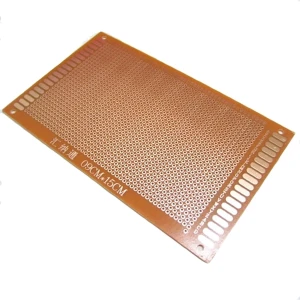
Bakelit-Prototypenplatine 7x9 für Elektronik- und Arduino-Projekte
Marke: satkit
0,60€
Inkl. MwSt. (Exkl. MwSt.: 0,50€)
Auf Lager - Sofort versandfertig
Standardlieferung
Mi, Apr 22 - Fr, Apr 24
Expresslieferung
Mo, Apr 20 - Di, Apr 21
30 Tage Rückgaberecht
Kostenlose Rücksendung innerhalb von 30 Tagen
Sichere Transaktion






Share:
Kostenlose Lieferung
Bei Bestellungen ab 300€
Einfache Rücksendung
30 Tage Rückgaberecht
Sichere Zahlung
100% sicherer Checkout
Qualitätsgarantie
Nur Originalprodukte
Die Bakelit-Prototypenplatine 7x9 ist ein unverzichtbares Bauteil für Elektronik-Hobbyisten und Profis, die eine stabile und zuverlässige Basis für den Aufbau ihrer Schaltungen suchen. Hergestellt aus Bakelit-Kunststoffplatte bietet diese Platine eine ausgezeichnete Steifigkeit und Wärmebeständigkeit, ideal zum Löten und für Prototypentests.
- Tamaño: 9 x 7 cm mit einseitigen Pads, geeignet für kompakte Projekte.
- Grosor: 1.2 mm, was für Stabilität und Haltbarkeit beim Aufbau sorgt.
- Distancia entre agujeros: 2,54 mm, Standard für elektronische Bauteile und kompatibel mit den meisten Steckverbindern und Pins.
- Diámetro del agujero: 1.0 mm, ideal zum Löten von Bauteilen mit Standard-Pins.
- Material: Bakelit-Kunststoffplatte, die elektrische Isolierung und mechanische Festigkeit bietet.
Diese elektronische Lochrasterplatine 7x9 ist perfekt für elektronische Prototypen, Reparaturen oder DIY-Projekte mit Arduino und anderen Mikrocontrollern. Ihre Kompatibilität mit Standardbauteilen und das handliche Format machen sie zu einem vielseitigen Werkzeug für das Entwerfen und Testen von Schaltungen.
Außerdem ist sie eine wirtschaftliche Option für alle, die eine günstige Bakelit-Testplatine suchen, ohne auf Qualität zu verzichten. Ideal für Studenten, Maker und Techniker, die eine sichere Basis für ihre elektronischen Entwicklungen benötigen.
Usos típicos:
- Montage individueller elektronischer Schaltungen.
- Arduino- und Mikrocontroller-Projekte.
- Reparatur und Wartung elektronischer Geräte.
- Entwurf und Test elektronischer Prototypen.
Dank des einseitigen Pad-Designs und der Standardbohrungen ist diese Platine mit einer breiten Palette elektronischer Bauteile und Lötwerkzeuge kompatibel und erleichtert so den Aufbau und das Experimentieren.
Zusammengefasst ist die Bakelit-Prototypenplatine 7x9 eine praktische und wirtschaftliche Lösung für Ihre Elektronikprojekte und bietet Qualität, Kompatibilität und einfache Handhabung.
- Kompaktes Format von 9 x 7 cm, ideal für kleine und mittlere Projekte.
- 1.2 mm Stärke für mehr Stabilität und Robustheit.
- 1.0 mm Bohrungen, kompatibel mit Standardbauteilen.
- 2,54 mm Lochabstand, Standard in der Elektronik.
- Bakelit-Material für elektrische Isolierung und Langlebigkeit.
- Ideal für Prototypen, Reparaturen und Arduino-Projekte.
- Elektronische Lochrasterplatine für Aufbau und Tests.
- Günstige und hochwertige Option für Maker und Techniker.
Kundenfragen & Antworten
Quant pes pot suportar la placa sense deformar-se durant el muntatge de components?
Atès el gruix d'1,2 mm, la placa té una resistència a la flexió limitada. Pot allotjar components convencionals de baixa massa (<50 g per punt de suport), però no es recomana instal·lar transformadors pesants ni sotmetre-la a torsió; es pot esquerdar sota càrregues puntuals elevades.
És compatible amb tots els components d'electrònica estàndard o hi ha restriccions pel diàmetre dels forats?
Els forats d'1,0 mm de diàmetre i pas de 2,54 mm són compatibles amb la majoria de components THT (Through-Hole Technology) estàndard. Tanmateix, pins de més de 0,8 mm de diàmetre poden requerir perforació addicional.
Quines pràctiques s'han de seguir per garantir durabilitat i bon rendiment elèctric en soldar en aquesta placa?
Es recomana fer servir soldadura de temperatura moderada (<350°C), evitar sobreescalfar la baquelita i netejar el flux residual després de soldar per assegurar bones connexions i evitar delaminacions. Un excés de calor pot danyar les pistes.
La placa inclou algun tipus de serigrafia, numeració o referència per facilitar el muntatge i la documentació de circuits?
Aquesta placa de baquelita no té serigrafia ni numeració impresa; és completament genèrica i d'una sola cara, de manera que l'usuari ha d'identificar manualment les posicions durant el muntatge.
How much weight can the board support without bending during component assembly?
Given its 1.2 mm thickness, the board has limited bending strength. It can hold conventional low-mass components (<50 g per support point), but heavy transformers should not be mounted and it should not be subjected to torsion; it may crack under high point loads.
Is it compatible with all standard electronics components, or are there restrictions due to the hole diameter?
The 1.0 mm diameter holes and 2.54 mm pitch are compatible with most standard THT (Through-Hole Technology) components. However, pins larger than 0.8 mm in diameter may require additional drilling.
What practices should be followed to ensure durability and good electrical performance when soldering on this board?
It is recommended to use moderate-temperature soldering (<350°C), avoid overheating the bakelite, and clean off residual flux after soldering to ensure good connections and prevent delamination. Excess heat can damage the tracks.
Does the board include any silkscreen, numbering or reference markings to make assembly and circuit documentation easier?
This bakelite board has no printed silkscreen or numbering; it is completely generic and single-sided, so the user must identify the positions manually during assembly.
How much weight can the board support without deforming during component assembly?
Given its 1.2 mm thickness, the board has limited bending strength. It can accommodate conventional low-mass components (<50 g per support point), but heavy transformers are not recommended and it should not be subjected to torsion; it may crack under high point loads.
Is it compatible with all standard electronics components or are there restrictions due to the hole diameter?
The 1.0 mm diameter holes and 2.54 mm pitch are compatible with most standard THT (Through-Hole Technology) components. However, pins larger than 0.8 mm in diameter may require additional drilling.
Kundenbewertung schreiben
Kunden, die diesen Artikel gekauft haben, kauften auch
Ihre zuletzt angesehenen Artikel
 Bakelit-Prototypenplatine 7x9 für Elektronik- und Arduino-Projekte
0,60€