


38,08€
Auf Lager

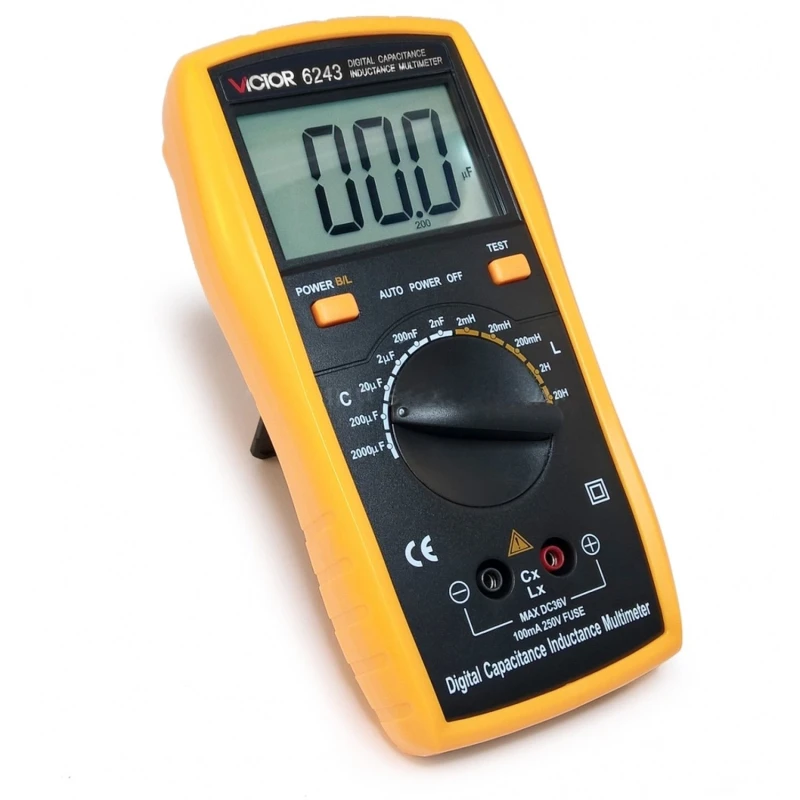
Victor 6243 LCR-Messgerät für präzise Messung von Induktivität, Kapazität und Widerstand
Marke: Victor
38,08€
Inkl. MwSt. (Exkl. MwSt.: 32,00€)
Nur noch 1 auf Lager - jetzt bald bestellen!
Standardlieferung
Mi, Apr 22 - Fr, Apr 24
Expresslieferung
Mo, Apr 20 - Di, Apr 21
30 Tage Rückgaberecht
Kostenlose Rücksendung innerhalb von 30 Tagen
Sichere Transaktion






Share:
Kostenlose Lieferung
Bei Bestellungen ab 300€
Einfache Rücksendung
30 Tage Rückgaberecht
Sichere Zahlung
100% sicherer Checkout
Qualitätsgarantie
Nur Originalprodukte
Das Victor 6243 LCR-Messgerät ist ein elektronisches Gerät, das zur präzisen Messung von Induktivität (L), Kapazität (C) und Widerstand (R) entwickelt wurde, grundlegenden Komponenten in elektronischen Schaltungen. Dieses Messgerät ist ein unverzichtbares Werkzeug für Techniker, Ingenieure und Hobbyanwender, die an der Reparatur, Entwicklung oder Diagnose elektronischer Geräte arbeiten.
Wichtige Merkmale:
- Induktivitätsmessung: Bereich von 2mH bis 20H mit einer Genauigkeit zwischen ±(2.0%+5d) und ±(5.0%+15d), Auflösung von 1uH bis 10mH und einer ungefähren Messfrequenz von 200Hz.
- Kapazitätsmessung: Bereich von 2nF bis 1000uF mit einer Genauigkeit von ±(1.0%+5d) bis ±(5.0%+25d), Auflösung von 1pF bis 100pF und einer ungefähren Messfrequenz von 200Hz bis 8Hz je nach Bereich.
- Widerstandsmessung: Obwohl im bereitgestellten Inhalt keine Bereiche angegeben sind, ist das Messgerät für die Messung von Widerstand als Teil seiner Grundfunktionen ausgelegt.
- Hohe Auflösung und Genauigkeit: Ermöglicht zuverlässige Ergebnisse für elektronische Bauteile und erleichtert genaue Diagnosen und Anpassungen in Schaltungen.
- Messfrequenz: Ungefähr 200Hz in den meisten Bereichen, bei einigen Kapazitätsmessungen mit niedrigeren Frequenzen für höhere Genauigkeit.
Typische Anwendungen:
- Diagnose und Reparatur elektronischer Bauteile in Werkstätten und Laboren.
- Prüfung von Bauteilen vor dem Einbau in Schaltungen.
- Präzise Messungen bei Elektronikprojekten und Prototypenentwicklung.
- Qualitätskontrolle in der Elektronikproduktion.
Kompatibilität: Kompatibel mit einer breiten Palette passiver elektronischer Bauteile wie Induktivitäten, Kondensatoren und Widerständen. Es ist ein vielseitiges Werkzeug für jede Umgebung, in der präzise elektronische Messungen erforderlich sind.
Das Victor 6243 LCR-Messgerät bietet eine ideale Kombination aus Präzision, einfacher Handhabung und Vielseitigkeit und ist damit eine zuverlässige Investition für Profis, die exakte und effiziente Ergebnisse bei ihren elektronischen Messungen suchen.
- Präzise Messung von Induktivität, Kapazität und Widerstand
- Großer Messbereich: Induktivität von 2mH bis 20H, Kapazität von 2nF bis 1000uF
- Hohe Auflösung: bis zu 1pF und 1uH je nach Bereich
- Ungefähre Messfrequenz von 200Hz für die meisten Funktionen
- Ideal für Diagnose, Reparatur und Elektronikentwicklung
Kundenfragen & Antworten
Quines són les dimensions i el pes del mesurador, i què inclou la caixa en comprar-lo?
El Victor 6243 sol mesurar aproximadament 170 mm x 85 mm x 45 mm i pesa prop de 350 g. Normalment el paquet inclou el mesurador, cables de prova, manual d’usuari i, en alguns casos, una funda protectora. Tanmateix, recomanem confirmar amb el distribuïdor si hi ha accessoris addicionals o variacions.
El dispositiu requereix calibratge periòdic o algun tipus de manteniment especial?
Es recomana calibrar el dispositiu un cop l’any per garantir la precisió, especialment en aplicacions tècniques exigents. El manteniment principal consisteix a mantenir nets els terminals i guardar l’equip en un ambient sec. No requereix lubricació, però sí el canvi de bateries segons l’ús.
Quin tipus d’alimentació utilitza el Medidor LCR Victor 6243 i és compatible amb piles recarregables?
El mesurador sol funcionar amb una pila de 9 V tipus 6F22. Pot utilitzar tant piles alcalines convencionals com recarregables, sempre que siguin del mateix format i voltatge. Fer servir bateries de voltatge inferior o d’un tipus incompatible pot afectar la mesura o danyar l’instrument.
Quines són les principals diferències de precisió i velocitat respecte a altres mesuradors LCR digitals de gamma similar?
El Victor 6243 ofereix una bona precisió per a ús general, tot i que no arriba a l’exactitud de models de laboratori certificats; la seva velocitat de mesura sol ser d’1-2 segons per lectura, lleugerament més ràpida que la de models econòmics. En comparació amb equips professionals, pot tenir un marge d’error més gran en rangs baixos o molt alts, però la seva relació funcionalitat-preu és competitiva.
What are the meter's dimensions and weight, and what is included in the box when purchased?
The Victor 6243 typically measures approximately 170 mm x 85 mm x 45 mm and weighs around 350 g. The package normally includes the meter, test leads, user manual and, in some cases, a protective case. However, we recommend checking with the distributor for any additional accessories or variations.
Does the device require periodic calibration or any special maintenance?
It is recommended to calibrate the device once a year to ensure accuracy, especially in demanding technical applications. The main maintenance is keeping the terminals clean and storing the equipment in a dry environment. It does not require lubrication, but batteries should be replaced as needed.
What type of power supply does the Victor 6243 LCR Meter use, and is it compatible with rechargeable batteries?
The meter usually runs on a 9 V 6F22 battery. It can use either standard alkaline batteries or rechargeable ones, provided they are the same format and voltage. Using batteries with a lower voltage or an incompatible type may affect measurements or damage the instrument.
What are the main differences in accuracy and speed compared with other digital LCR meters in a similar range?
The Victor 6243 offers good accuracy for general use, although it does not match the precision of certified laboratory models; its measurement speed is usually 1-2 seconds per reading, slightly faster than budget models. Compared with professional equipment, it may have a larger error margin at very low or very high ranges, but its functionality-to-price ratio is competitive.
What are the dimensions and weight of the meter, and what is included in the box when purchased?
The Victor 6243 usually measures approximately 170 mm x 85 mm x 45 mm and weighs about 350 g. The package normally includes the meter, test leads, user manual and, in some cases, a protective case. However, we recommend checking with the distributor for any additional accessories or variations.
Does the device require periodic calibration or any special maintenance?
It is recommended to calibrate the device once a year to ensure accuracy, especially in demanding technical applications. The main maintenance consists of keeping the terminals clean and storing the equipment in a dry environment. It does not require lubrication, but batteries should be replaced as needed.
Kundenbewertung schreiben
Kunden, die diesen Artikel gekauft haben, kauften auch


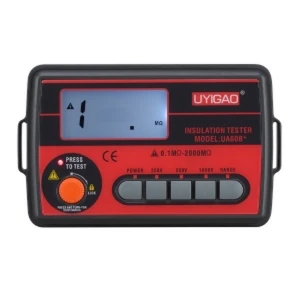
Uyigao UA60B+ Isolationsmessgerät CAT III 1000 V für Widerstände bis 2000 MΩ
40,52€
Nur noch 2 auf Lager


Ihre zuletzt angesehenen Artikel

 Victor 6243 LCR-Messgerät für präzise Messung von Induktivität, Kapazität und Widerstand
38,08€