


226,10€
Auf Lager
Puhui T-962 V2.0 Infrarot-Reflow-Ofen für PCB und SMD-BGA
Marke: Puhui
226,10€
Inkl. MwSt. (Exkl. MwSt.: 190,00€)
Begrenzter Vorrat
Standardlieferung
Mi, Apr 22 - Fr, Apr 24
Expresslieferung
Mo, Apr 20 - Di, Apr 21
30 Tage Rückgaberecht
Kostenlose Rücksendung innerhalb von 30 Tagen
Sichere Transaktion






Share:
Kostenlose Lieferung
Bei Bestellungen ab 300€
Einfache Rücksendung
30 Tage Rückgaberecht
Sichere Zahlung
100% sicherer Checkout
Qualitätsgarantie
Nur Originalprodukte
Produktbeschreibung
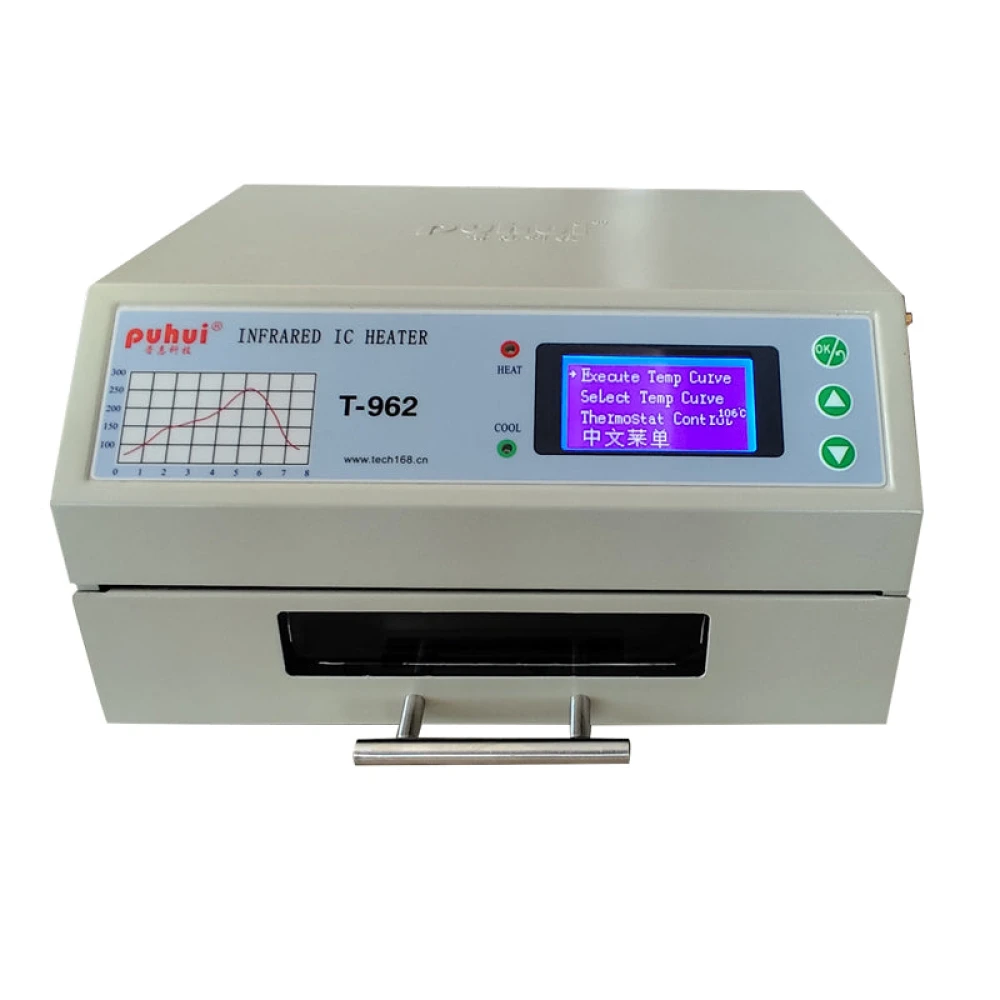
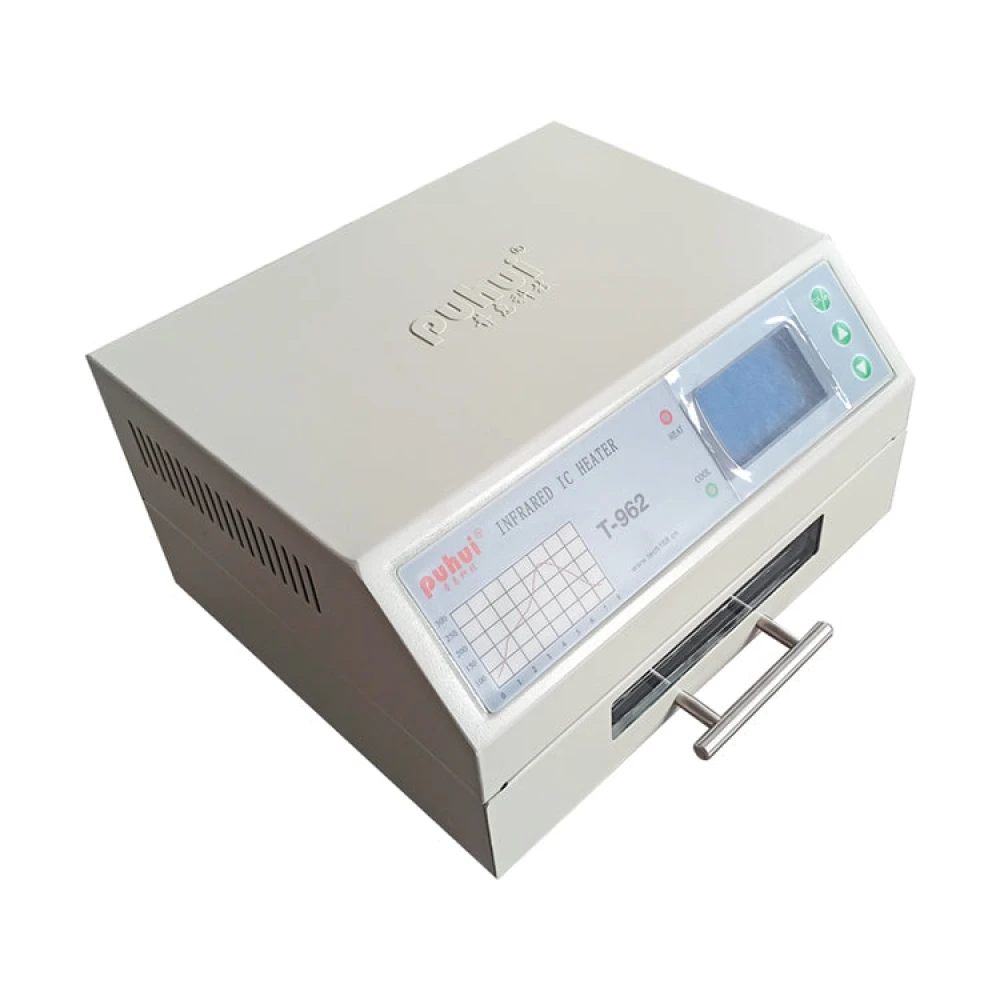
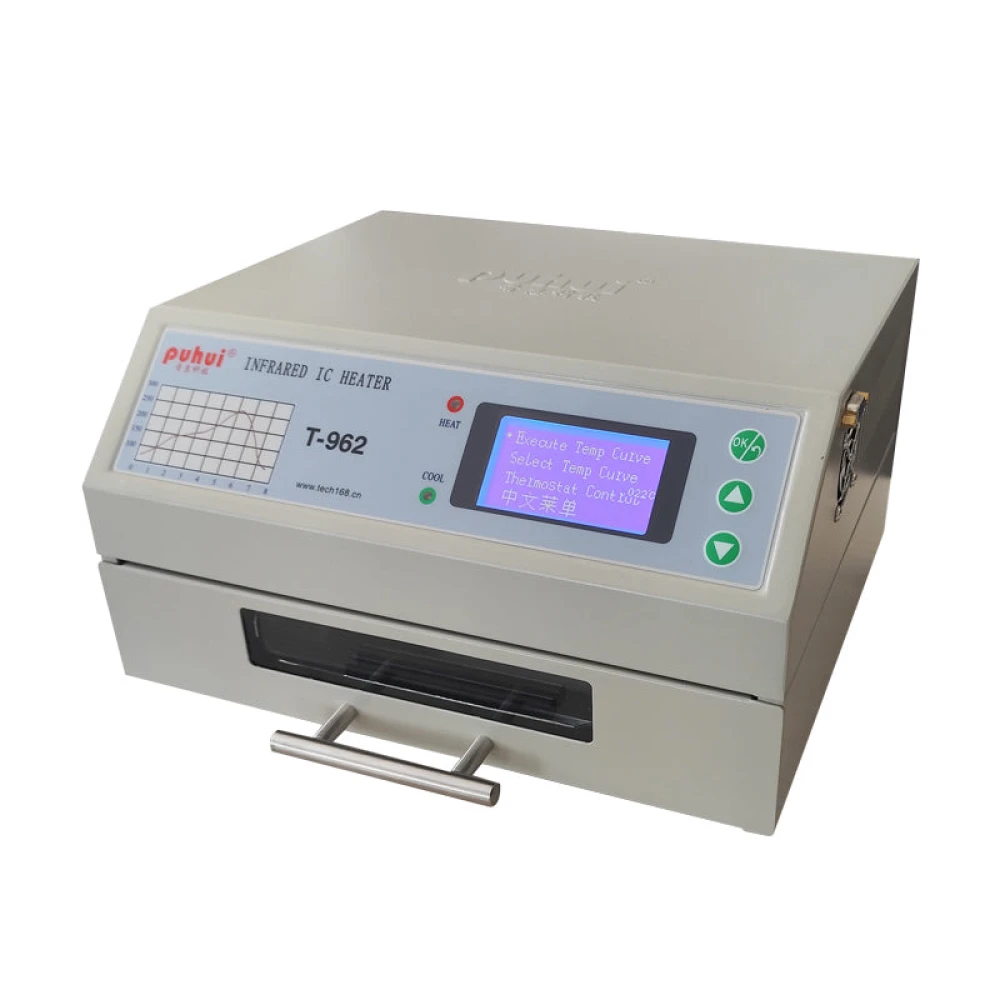
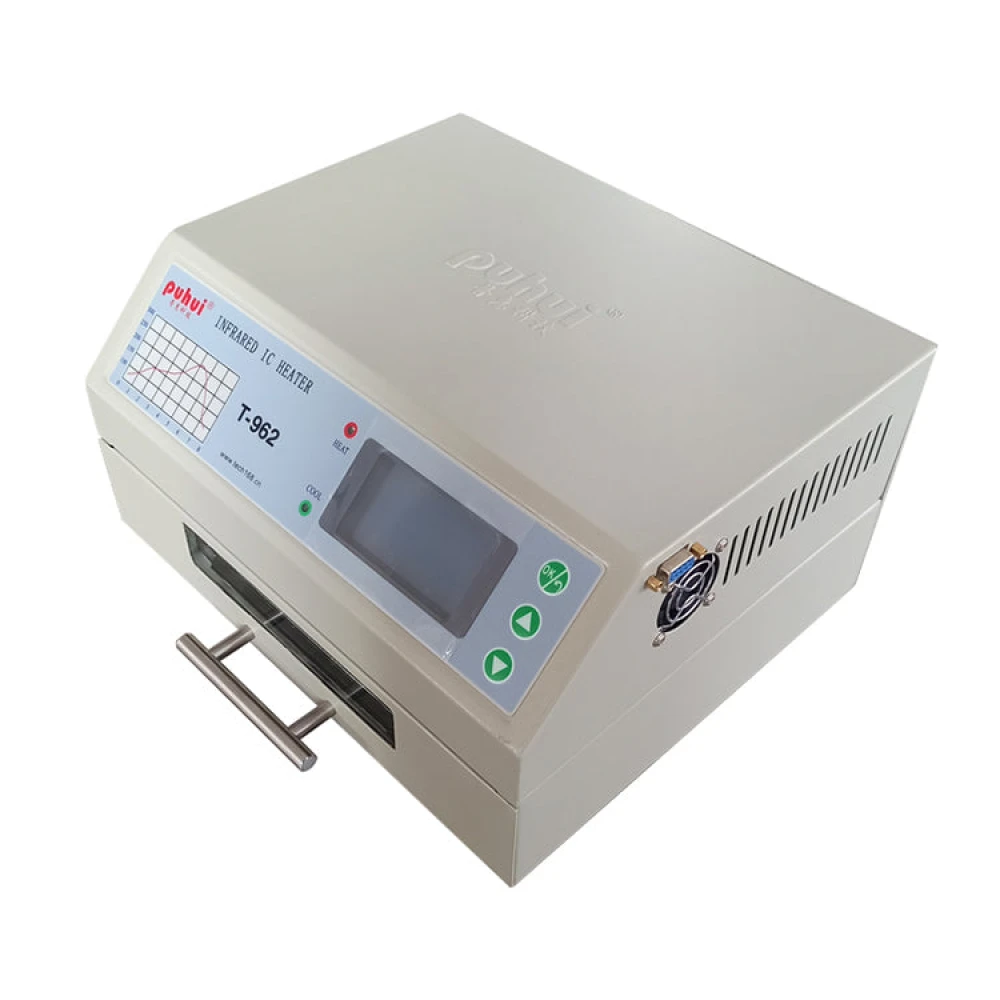
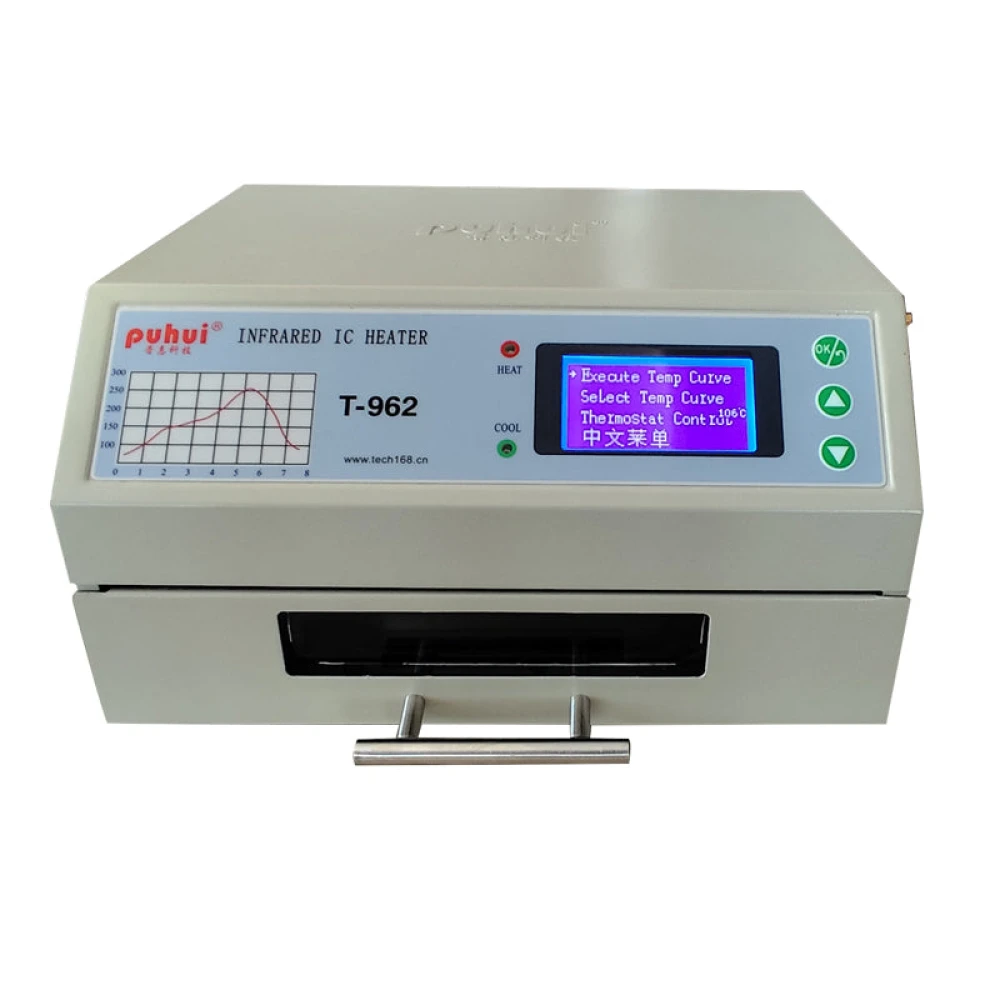
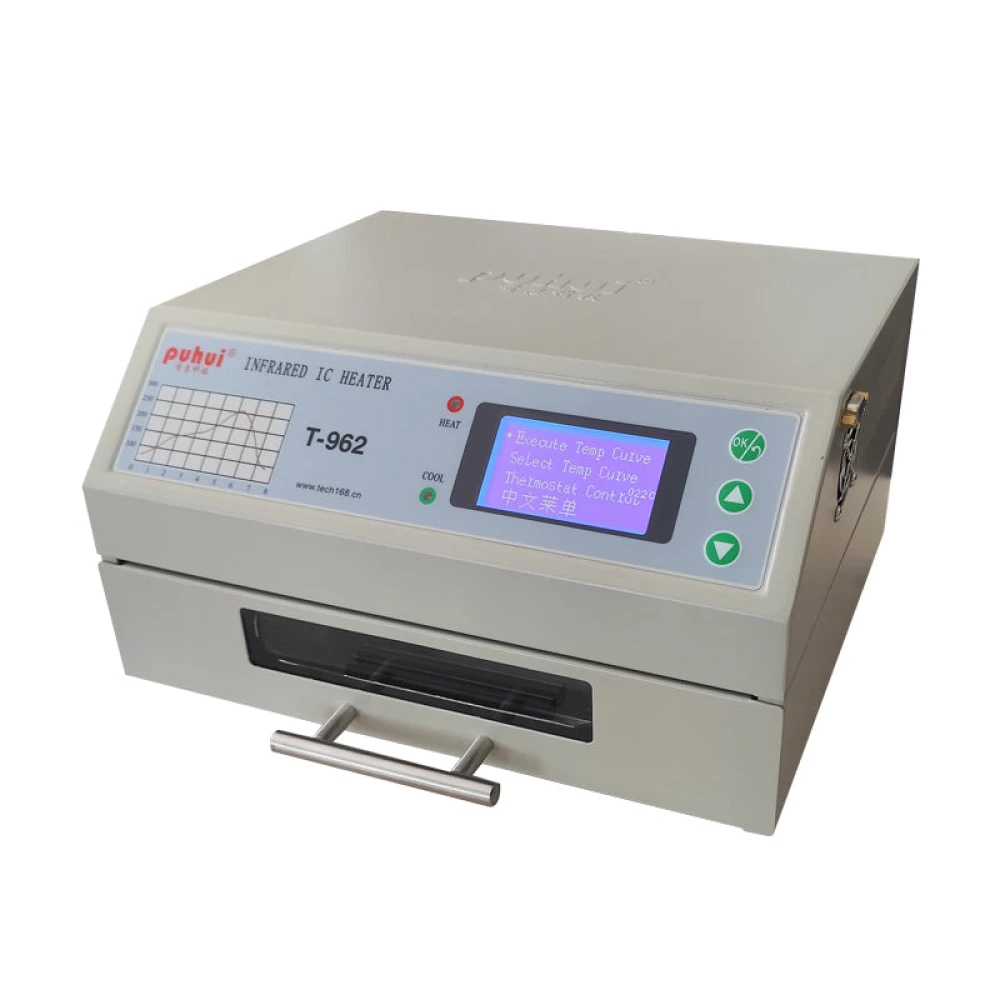
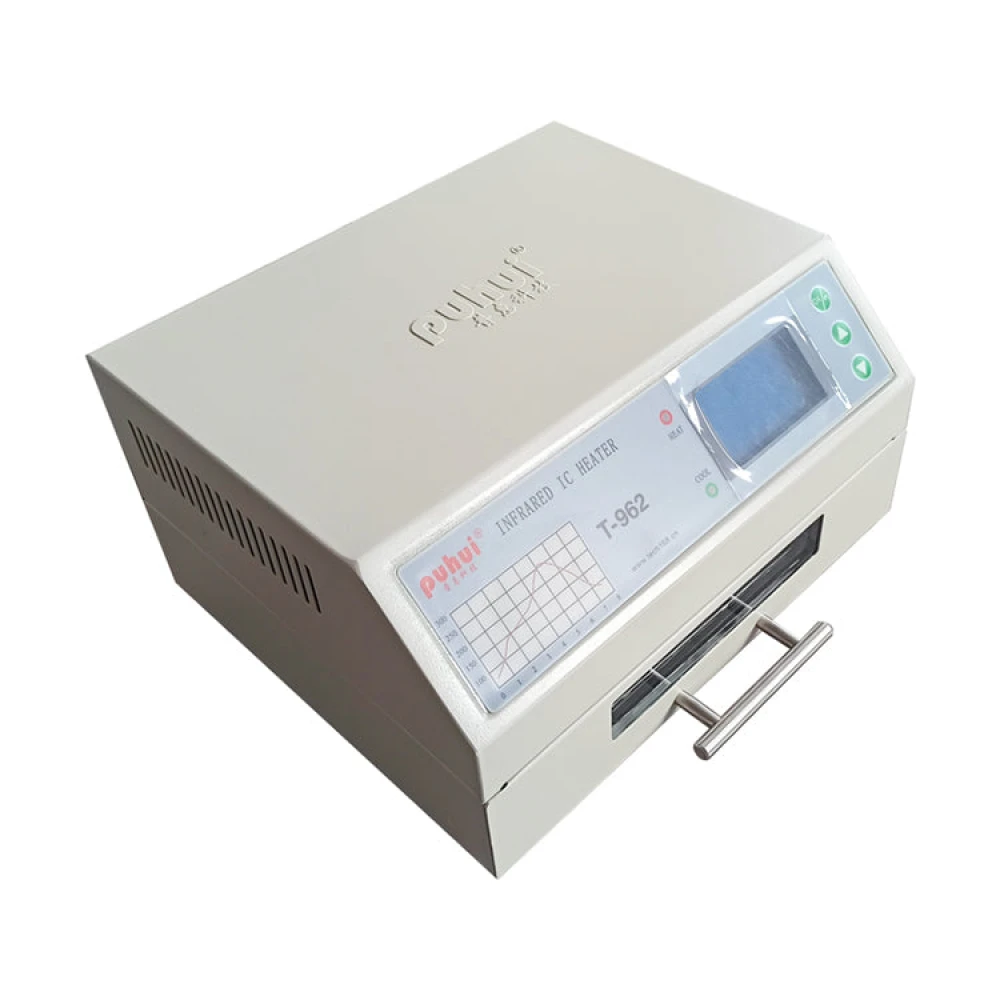
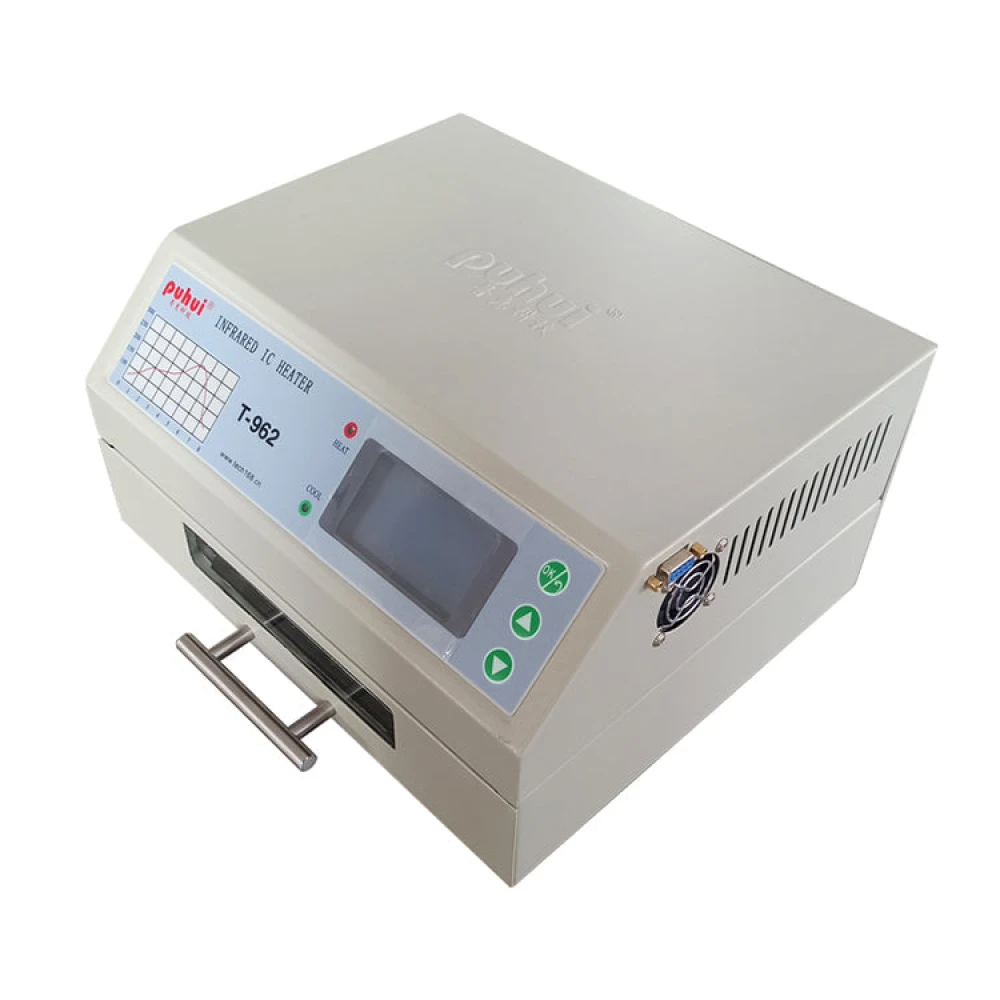
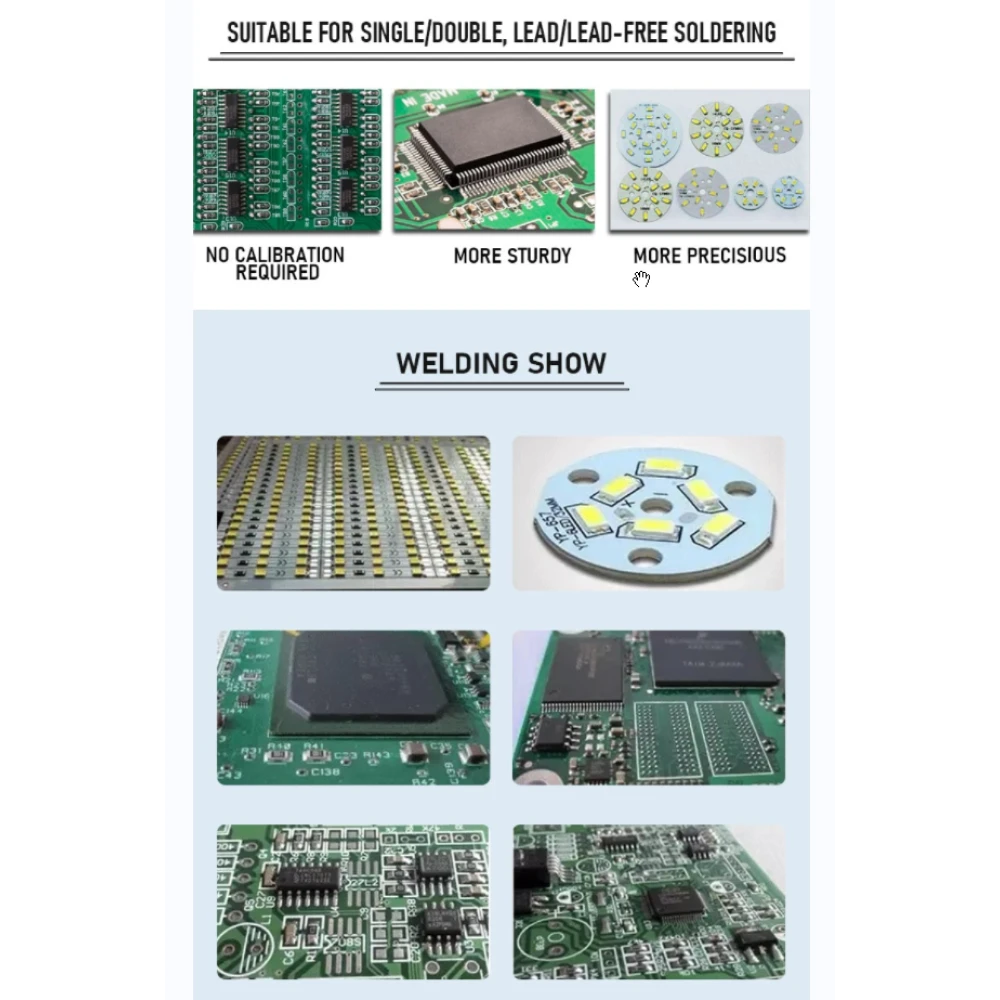
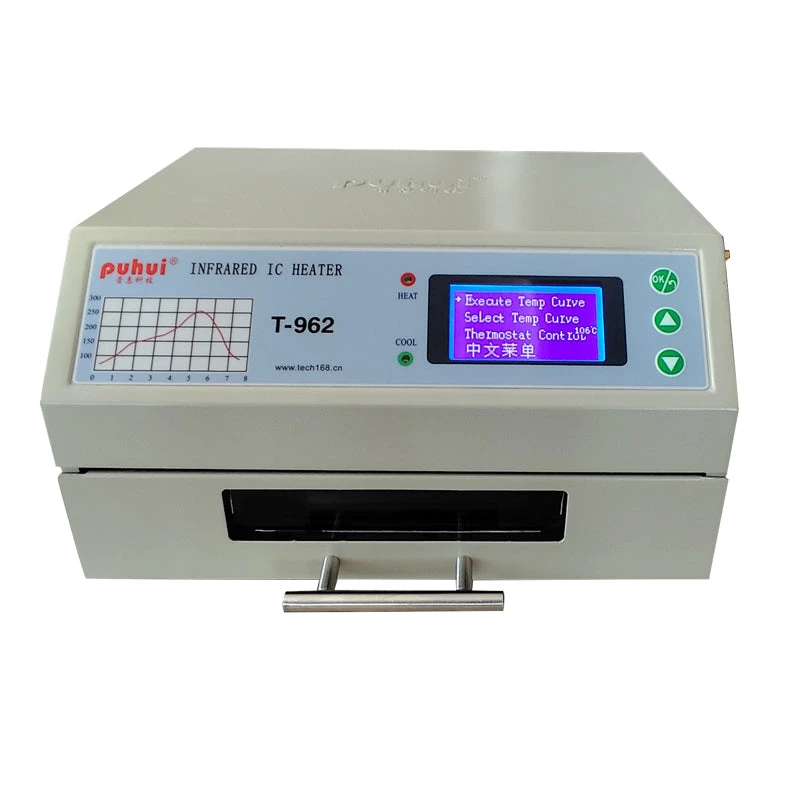
Der Puhui T-962 V2.0 Infrarot-Reflow-Ofen ist ein fortschrittliches Gerät für das präzise und zuverlässige Löten von Leiterplatten (PCB) und oberflächenmontierten Bauteilen (SMD), einschließlich BGA, QFP und PLCC. Seine Arbeitsfläche von 180x230 mm macht ihn ideal für kleine bis mittelgroße Projekte und ist eine ausgezeichnete Wahl für Elektronikreparaturen, Prototypenfertigung und den Einsatz im Bildungsbereich.
Hauptmerkmale
- Kompakte Lötfläche von 180 x 230 mm, geeignet für kleine und mittelgroße PCB.
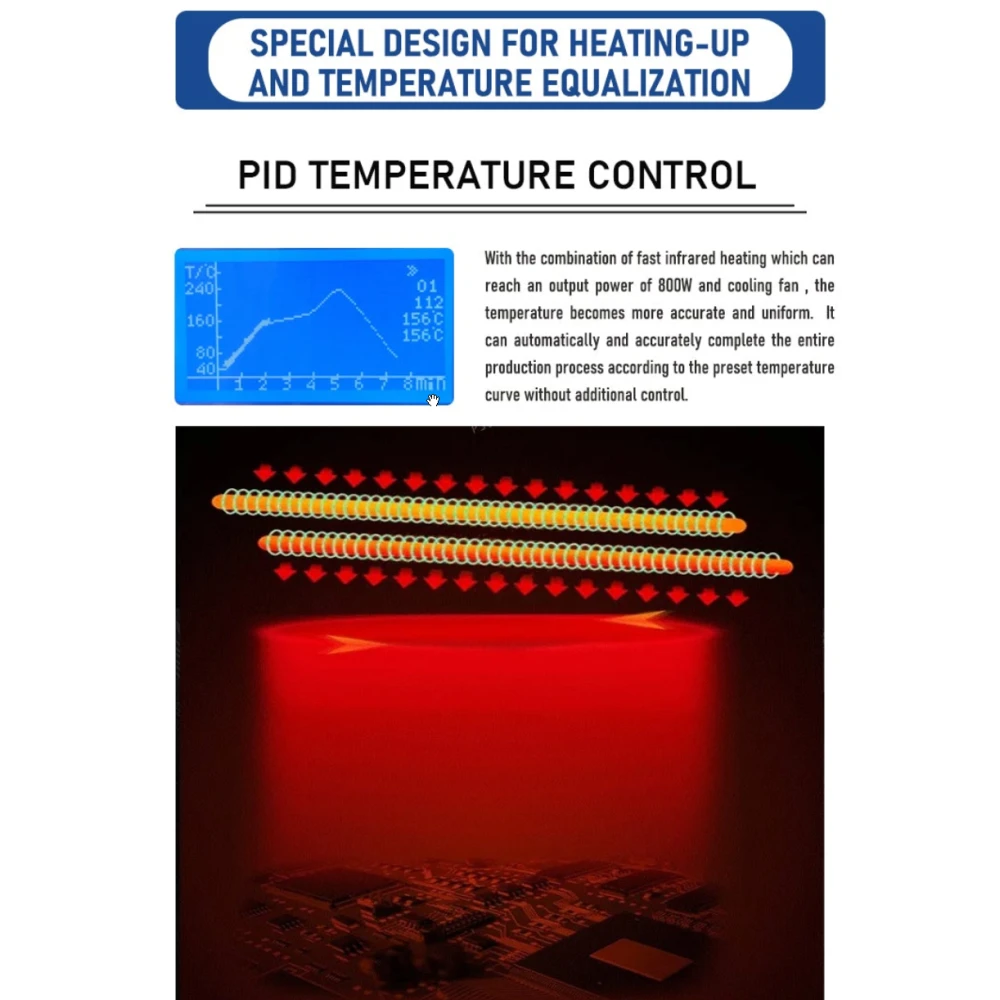
- Mikroprozessor-gesteuertes Heizsystem mit PID-Regelung für gleichmäßige und reproduzierbare Ergebnisse.
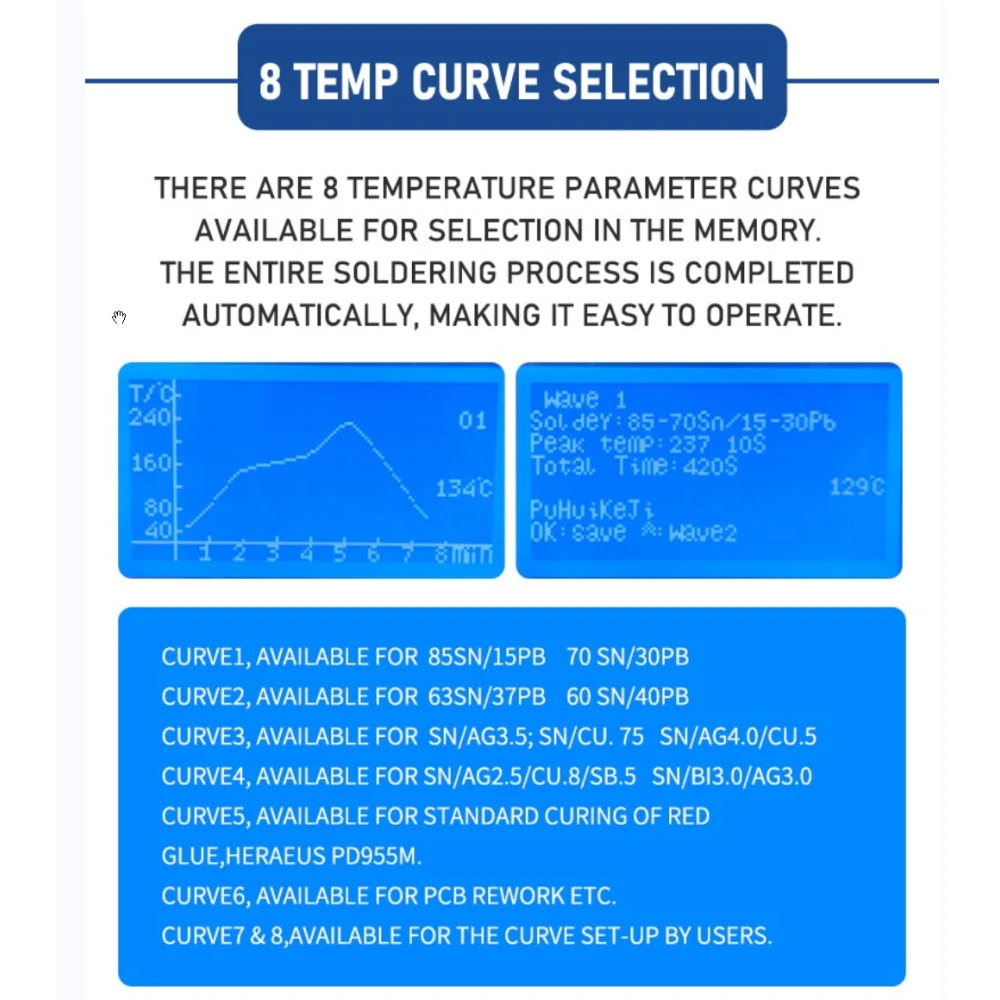
- Acht vorprogrammierte Temperaturprofile für verschiedene SMD- und BGA-Bauteile.
- Intuitive Bedienoberfläche mit hintergrundbeleuchtetem LCD-Display, das die Temperaturkurve in Echtzeit anzeigt.
- Schubladenartige Kammer mit Infrarotstrahlung und Luftzirkulationsheizung für effizientes und gleichmäßiges Aufheizen.
- USB-Konnektivität für den Online-Betrieb über kompatible Windows-Software, was Anpassung und Prozesssteuerung erleichtert.
- CE-Zertifizierung für Qualität und Sicherheit, mit robustem Metallgehäuse und Überhitzungsschutz.
- Plug-and-Play-Konfiguration mit automatischem Lötzyklus, ohne spezielle Schulung erforderlich.
Technische Daten
- Modell: T-962 V2.0
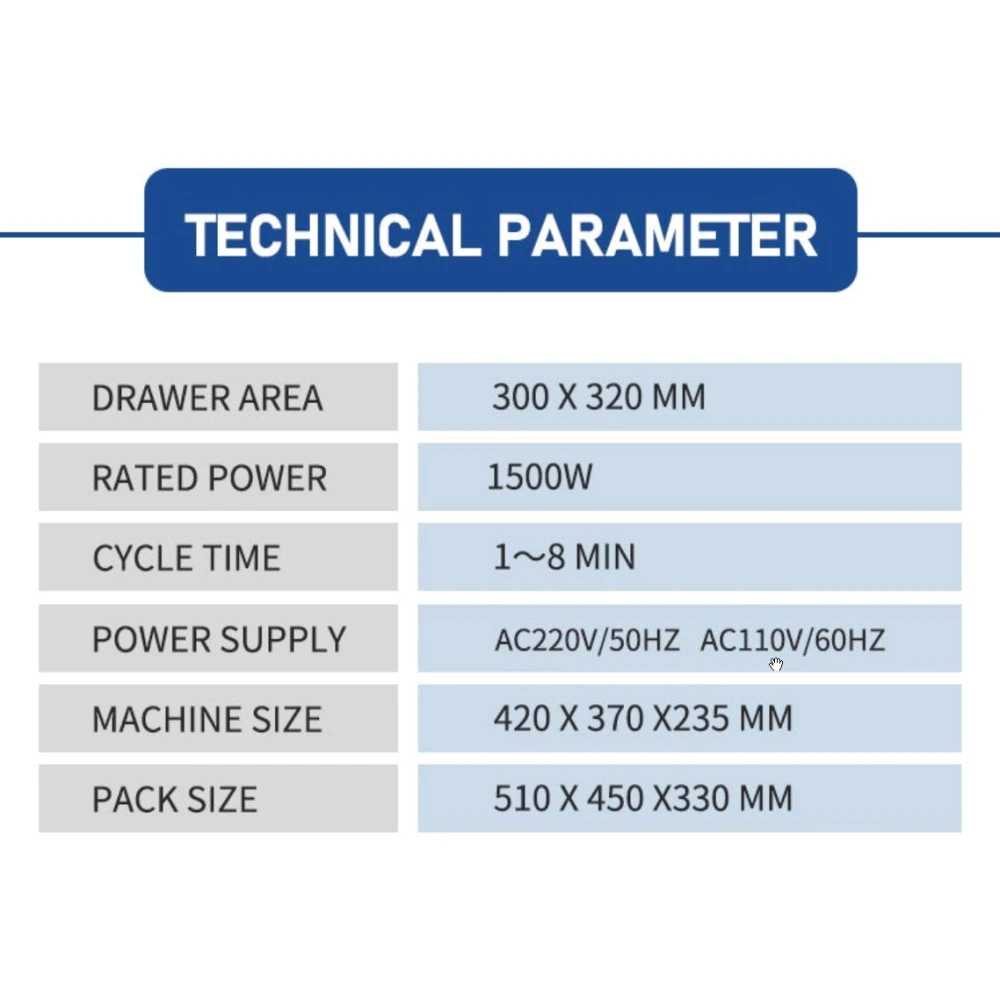
- Lötfläche: 180 x 230 mm
- Stromversorgung: 220V / 50Hz
- Maximale Leistung: 800W
- Temperaturbereich: von Raumtemperatur bis 300°C
- Profile: 8 voreingestellte Temperaturkurven
- Display: hintergrundbeleuchtetes LCD
- Steuerung: mikroprozessorbasierte PID-Regelung
- Kühlsystem: schnelle Kühlung mit Luftzirkulation
- Ungefähre Abmessungen: 320 x 290 x 170 mm
- Ungefähres Gewicht: 9 kg
Typische Anwendungen
Dieser Ofen ist ideal für:
- Löten und Rework von SMD- und BGA-Bauteilen auf PCB.
- Reparatur elektronischer Geräte und technische Wartung.
- Herstellung elektronischer Prototypen in Laboren und Werkstätten.
- Bildungsanwendungen für Schulungen in Elektronik und fortgeschrittenem Löten.
Kompatibilität
Kompatibel mit einer Vielzahl oberflächenmontierter elektronischer Bauteile, einschließlich SMD, BGA, QFP und PLCC. Die Windows-Software ermöglicht die Anpassung von Temperaturprofilen an die spezifischen Anforderungen jedes Projekts.
Verfügbarkeitsstatus
Derzeit ist dieses Produkt ausverkauft. Wir empfehlen, regelmäßig nach Aktualisierungen zur Verfügbarkeit und möglichen Nachlieferungen zu schauen.
- Kompakte Arbeitsfläche von 180x230 mm für kleine und mittelgroße PCB
- PID-Mikroprozessorsteuerung für präzise und reproduzierbare Lötungen
- 8 vorprogrammierte Temperaturprofile für SMD, BGA, QFP und PLCC
- Hintergrundbeleuchtetes LCD-Display mit Temperaturkurve in Echtzeit
- Schubladenkammer mit Infrarotheizung und Luftzirkulation
- USB-Konnektivität für Steuerung und Anpassung per Windows-Software
- CE-Zertifizierung, Metallgehäuse und Überhitzungsschutz
- Plug-and-Play-Konfiguration mit automatischem Zyklus, keine spezielle Schulung nötig
Kundenfragen & Antworten
Quines són les dimensions i el pes de l’helicòpter, i què inclou exactament la caixa?
L’helicòpter fa 19 x 4,2 x 9,8 cm (llarg x ample x alt). El pes típic per a un model d’aquestes dimensions ronda els 60-80 g, tot i que el valor exacte pot variar lleugerament. A la caixa s’hi inclou l’helicòpter, el transmissor/infraroig, el cable de càrrega USB i el manual; cal verificar si s’inclouen recanvis d’hèlix segons el lot.
Quins materials componen el fuselatge i com afecten la seva resistència a caigudes o cops?
El fuselatge està elaborat majoritàriament en aliatge d’alumini de baixa densitat, cosa que ofereix una bona relació entre resistència estructural i pes reduït. Aquest material aporta més durabilitat davant impactes lleus en interiors, tot i que cops severs o caigudes des de més alçada poden danyar peces de plàstic o hèlixs.
Quins problemes de funcionament són més freqüents i com es poden prevenir o corregir?
Els problemes comuns són la desestabilització per cops (es corregeix realineant el giroscopi), la pèrdua de potència (causada per bateria esgotada; es resol carregant-la completament) i les fallades de connexió (cal assegurar connectors nets i l’aplicació actualitzada). Revisar les hèlixs per danys després d’impactes i evitar fer servir l’helicòpter quan la bateria està gairebé esgotada ajuda a prevenir avaries més greus.
Quines són les funcions clau i els principals avantatges de la font KPS3030DA davant d’una font tradicional no regulable?
La KPS3030DA ofereix regulació precisa i contínua tant de voltatge (0-30 V) com de corrent (0-30 A), cosa que la diferencia de les fonts no regulables que només ofereixen valors fixos. A més, disposa d’una pantalla LED digital que facilita el monitoratge en temps real i de mètodes de protecció avançats (contra sobrecàrrega, sobreescalfament i curtcircuit), cosa que millora la seguretat i la versatilitat per a laboratoris, producció i ensenyament.
What is the operating temperature range and thermal control accuracy of the oven?
The oven typically operates in a range from 100°C to 350°C, with a maximum deviation of ±5°C according to the manufacturer's specifications. Microprocessor thermal control allows predefined temperature profiles to be run for lead-free and leaded solder paste, although there may be small deviations under maximum load or with high ambient airflow.
What are the electrical requirements and connector type needed for this reflow oven?
The Puhui T-962 V2.0 requires 220 V AC mains supply ±10% (50 Hz), with a maximum consumption of 800 W during the heating cycle. The unit uses a standard European Schuko mains connector. For other voltages or plugs, an adapter/conversion in line with local regulations is required.
What common problems can arise during operation and how can they be resolved?
Among the most reported issues are inconsistent temperatures due to poor insulation, odour from solder paste fumes, and internal fan failures. It is recommended to check the thermal sensor regularly, clean residues, improve room ventilation and, in the event of a fault, contact the distributor for spare parts. Checking for cold or incomplete solder joints may require adjustments to the thermal profile.
What periodic maintenance is recommended to extend the oven's service life?
It is advisable to clean the oven internally after each use to remove flux residue and prevent the build-up of corrosive vapours; check the condition of the fan and cables; and verify thermal adjustment every six months. Following these steps improves durability and reduces the risk of premature faults.
What is the operating temperature range and thermal control accuracy of the oven?
The oven typically operates in a range from 100°C to 350°C, with a maximum deviation of ±5°C according to the manufacturer's specifications. Microprocessor thermal control allows predefined temperature profiles to be run for lead-free and leaded solder paste, although small deviations may occur under maximum load conditions or with high ambient airflow.
What electrical requirements and connector type does this reflow oven need?
The Puhui T-962 V2.0 requires 220 V AC mains power ±10% (50 Hz), with a maximum consumption of 800 W during the heating cycle. The unit uses a standard European Schuko mains connector. For other voltages or plugs, an adapter/conversion in line with local regulations is required.
Kundenbewertung schreiben
Kunden, die diesen Artikel gekauft haben, kauften auch

Ihre zuletzt angesehenen Artikel
 Puhui T-962 V2.0 Infrarot-Reflow-Ofen für PCB und SMD-BGA
226,10€