


2,14€
Auf Lager


I2C-Modul PCF8574T für Arduino – E/A-Port-Erweiterung
Marke: satkit
2,14€
Inkl. MwSt. (Exkl. MwSt.: 1,80€)
Begrenzter Vorrat
Standardlieferung
Mi, Apr 22 - Fr, Apr 24
Expresslieferung
Mo, Apr 20 - Di, Apr 21
30 Tage Rückgaberecht
Kostenlose Rücksendung innerhalb von 30 Tagen
Sichere Transaktion






Share:
Kostenlose Lieferung
Bei Bestellungen ab 300€
Einfache Rücksendung
30 Tage Rückgaberecht
Sichere Zahlung
100% sicherer Checkout
Qualitätsgarantie
Nur Originalprodukte
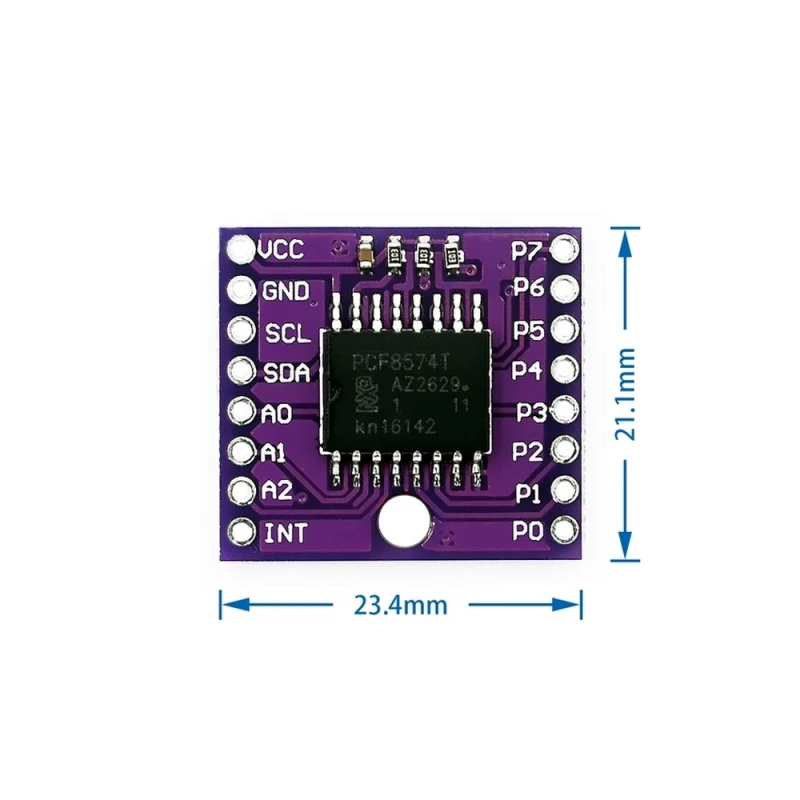
Das I2C-Modul PCF8574T für Arduino ist ein Ein-/Ausgangs-Portexpander, der entwickelt wurde, um die Möglichkeiten Ihrer Arduino-Projekte über die I2C-Schnittstelle zu erweitern. Dieses Modul ermöglicht das Hinzufügen mehrerer zusätzlicher digitaler E/A-Pins, ohne weitere Pins des Mikrocontrollers zu belegen, und erleichtert so die Ansteuerung externer Geräte wie Sensoren, Aktoren oder Displays.
Hauptmerkmale:
- Erweiterung von E/A-Ports über die I2C-Schnittstelle.
- Ermöglicht den Anschluss von bis zu 8 Modulen in Reihe und erweitert so auf bis zu 64 digitale E/A-Ports.
- Adresskonfiguration über Kippschalter zur Vermeidung von Konflikten auf dem I2C-Bus.
- Kompatibel mit den meisten Arduino-Boards und anderen Mikrocontrollern mit I2C-Unterstützung.
- Kompaktes Design und einfache Integration in Elektronikprojekte.
Technische Daten:
- Schnittstellentyp: I2C.
- Maximale Erweiterung: 8 Module (64 E/A).
- Adresskonfiguration: Kippschalter.
- Typische Verwendung: Erweiterung digitaler Ports für Arduino.
Typische Anwendungen:
- Projekte, die mehr digitale Ein-/Ausgangspins benötigen, als auf dem Arduino-Board verfügbar sind.
- Automatisierung und Steuerung mehrerer Geräte.
- Schnittstellen zu Sensoren, Relais, Displays und anderen Elektronikmodulen.
- Entwicklung fortgeschrittener Elektronikprototypen.
Kompatibilität:
Dieses Modul ist kompatibel mit Arduino-Boards und anderen Mikrocontrollern, die I2C-Kommunikation unterstützen. Es ist ideal für Anwender, die die Anzahl der digitalen Ports erweitern möchten, ohne die Verdrahtung unnötig zu verkomplizieren.
Zusammenfassend ist das I2C-Modul PCF8574T für Arduino eine effiziente und skalierbare Lösung zur Erweiterung digitaler E/A-Ports und erleichtert die Entwicklung komplexer Elektronikprojekte mit mehreren angeschlossenen Geräten.
- Erweitert digitale E/A-Ports über die I2C-Schnittstelle.
- Unterstützt bis zu 8 Module in Reihe für 64 E/A-Ports.
- Adressierung per Kippschalter konfigurierbar.
- Kompatibel mit Arduino-Boards und I2C-Mikrocontrollern.
- Ideal für Projekte mit vielen Ein- und Ausgängen.
Kundenfragen & Antworten
Quins són els materials principals del mòdul i quines són les seves dimensions i pes aproximats?
El mòdul està compost principalment per una PCB de fibra de vidre (FR4), pins de llautó banyats i el xip PCF8574T encapsulat en plàstic. Les seves dimensions típiques són 40 mm x 20 mm x 14 mm i el pes aproximat és de 7 g.
Amb quins nivells de voltatge opera el mòdul i quines consideracions he de tenir en usar-lo amb diferents plaques Arduino?
El mòdul funciona en el rang de 2,5 V a 6 V, cosa que el fa compatible amb la majoria de plaques Arduino de 3,3 V i 5 V. És fonamental assegurar-se que el nivell lògic de la placa coincideixi amb el del mòdul per prevenir danys, especialment en configuracions mixtes de 3,3 V i 5 V.
Quines limitacions de velocitat I2C o interferència poden aparèixer en connectar diversos mòduls en cascada?
El PCF8574T admet velocitats estàndard de bus I2C, fins a 100 kHz. En connectar diversos mòduls (fins a 8 en cascada), la capacitat total del bus augmenta, cosa que pot afectar la fiabilitat a llargues distàncies o a velocitats altes. Es recomana mantenir la longitud total del bus per sota d’1 m i considerar resistències pull-up adequades.
Quins passos bàsics s’han de seguir per a la instal·lació i la detecció de problemes de funcionament en aquest mòdul?
Per instal·lar-lo, connecta SDA i SCL al bus I2C i ajusta les adreces mitjançant els interruptors de palanca. Si els pins no responen, verifica la coincidència d’adreça, l’alimentació, els pull-ups al bus, així com possibles curtcircuits al cablejat. El diagnòstic normalment es fa amb escàners I2C utilitzant biblioteques estàndard a Arduino.
What are the main materials of the module and what are its approximate dimensions and weight?
The module is mainly made up of an FR4 fibreglass PCB, plated brass pins and the PCF8574T chip in a plastic package. Its typical dimensions are 40 mm x 20 mm x 14 mm and the approximate weight is 7 g.
What voltage levels does the module operate at and what should I consider when using it with different Arduino boards?
The module works in the 2.5 V to 6 V range, making it compatible with most 3.3 V and 5 V Arduino boards. It is essential to ensure that the board’s logic level matches the module’s to prevent damage, especially in mixed 3.3 V and 5 V setups.
What I2C speed or interference limitations may appear when connecting several modules in cascade?
The PCF8574T supports standard I2C bus speeds of up to 100 kHz. When connecting several modules (up to 8 in cascade), the total bus capacitance increases, which can affect reliability over long distances or at high speeds. It is recommended to keep the total bus length below 1 m and to use appropriate pull-up resistors.
What basic steps should be followed to install and troubleshoot this module?
To install it, connect SDA and SCL to the I2C bus and set the addresses using the toggle switches. If the pins do not respond, check the address match, power supply, bus pull-ups, and any possible short circuits in the wiring. Diagnosis is usually carried out with I2C scanners using standard Arduino libraries.
What are the main materials of the module and what are its approximate dimensions and weight?
The module is mainly composed of a fibreglass PCB (FR4), plated brass pins and the PCF8574T chip housed in plastic. Its typical dimensions are 40 mm x 20 mm x 14 mm and the approximate weight is 7 g.
What voltage levels does the module operate at and what should I bear in mind when using it with different Arduino boards?
The module works in the 2.5 V to 6 V range, making it compatible with most 3.3 V and 5 V Arduino boards. It is essential to ensure that the board’s logic level matches the module’s to prevent damage, especially in mixed 3.3 V and 5 V setups.
Kundenbewertung schreiben
Kunden, die diesen Artikel gekauft haben, kauften auch



Ihre zuletzt angesehenen Artikel
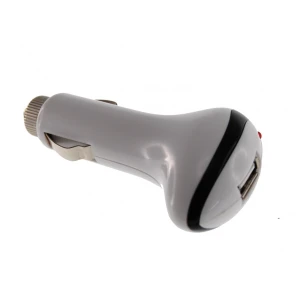
 I2C-Modul PCF8574T für Arduino – E/A-Port-Erweiterung
2,14€