




4,17€
Auf Lager
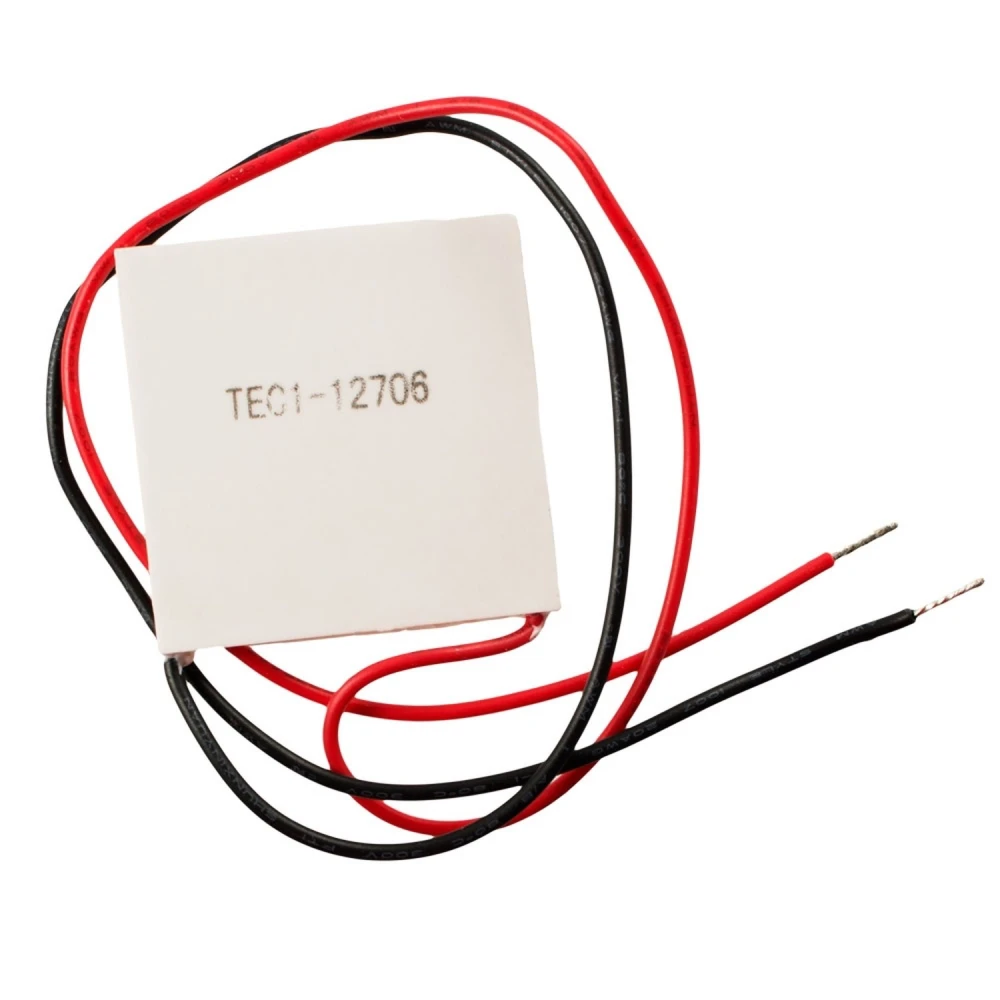
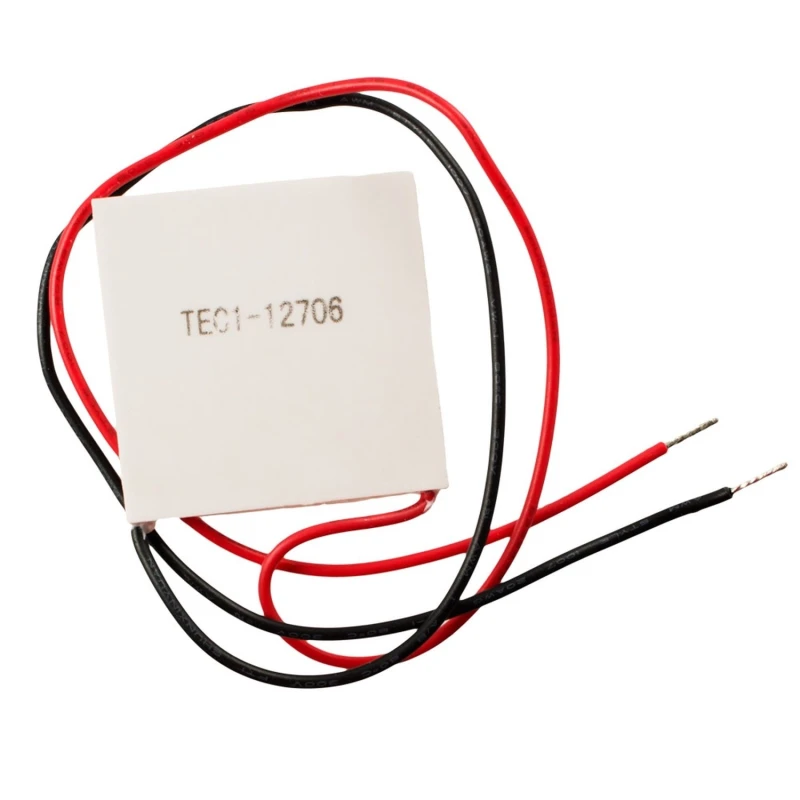
Peltier-Element 12V 60W Tec1-12706 für Elektronikkühlung
Marke: satkit
4,17€
Inkl. MwSt. (Exkl. MwSt.: 3,50€)
Auf Lager - Sofort versandfertig
Standardlieferung
Mi, Apr 22 - Fr, Apr 24
Expresslieferung
Mo, Apr 20 - Di, Apr 21
30 Tage Rückgaberecht
Kostenlose Rücksendung innerhalb von 30 Tagen
Sichere Transaktion






Share:
Kostenlose Lieferung
Bei Bestellungen ab 300€
Einfache Rücksendung
30 Tage Rückgaberecht
Sichere Zahlung
100% sicherer Checkout
Qualitätsgarantie
Nur Originalprodukte
Das Peltier-Element 12V 60W Tec1-12706 ist ein thermoelektrisches Elektronikbauteil, das aus einer angelegten elektrischen Spannung an seinen Anschlüssen einen Temperaturunterschied erzeugt. Beim Fließen von Strom wird Wärme von einer Seite, die abgekühlt wird, zur anderen Seite transportiert, die sich erwärmt, wodurch sich die Temperatur in elektronischen Geräten steuern lässt.
Dieses Modul ist ideal für Kühlanwendungen bei großen Transistoren, Mikroprozessoren, Modding-Projekten und allen Geräten, die eine niedrige Temperatur für einen optimalen Betrieb benötigen. Dabei ist zu beachten, dass sich während eine Seite abkühlt, die andere deutlich erwärmt. Daher wird empfohlen, geeignete Kühlkörper zu verwenden, um Schäden zu vermeiden.
Hauptmerkmale
- Kompakte Abmessungen: 40 x 40 x 3.6 mm, erleichtern die Integration in verschiedene Projekte.
- Kabellänge: 20 cm für flexible Anschlüsse.
- Maximalstrom (Imax): 5A, geeignet für Anwendungen im mittleren Leistungsbereich.
- Maximale Spannung (Umax): 12V, kompatibel mit standardmäßigen 12-Volt-Netzteilen.
- Maximale Wärmeübertragungsleistung (Qcmax): 50W, für effiziente Leistung.
- Maximale Temperatur (Tmax): 60°C, dies gibt die sichere Betriebsgrenze des Moduls an.
Typische Anwendungen
- Kühlung von Mikroprozessoren und elektronischen Chips in DIY-Projekten.
- PC-Modding und individuelle Kühlsysteme.
- Kühlung von Transistoren und elektronischen Bauteilen, die Wärme erzeugen.
- Anwendungen in thermischen Regelungssystemen und thermoelektrischen Geräten.
Kompatibilität und Empfehlungen
Das Peltier-Element Tec1-12706 ist mit jedem System kompatibel, das mit 12V betrieben wird und bis zu 5A liefern kann. Es wird empfohlen, Kühlkörper und Lüfter zu verwenden, um die Effizienz zu maximieren und eine Überhitzung der heißen Seite zu vermeiden. Der Einbau sollte sorgfältig erfolgen, um die richtige Polarität sicherzustellen und Schäden zu vermeiden.
Dieses Produkt ist ideal für Elektronik-Enthusiasten, Techniker und Profis, die kompakte und effiziente Kühllösungen suchen.
- Abmessungen: 40 x 40 x 3.6 mm für einfache Integration
- Kabellänge: 20 cm für flexible Anschlüsse
- Maximalstrom: 5A für passende Leistung
- Maximale Spannung: 12V kompatibel mit Standard-Netzteilen
- Maximale Wärmeübertragungsleistung: 50W
- Maximale Betriebstemperatur: 60°C
- Ideal zur Kühlung von Mikroprozessoren, Transistoren und Modding-Projekten
Kundenfragen & Antworten
Quines són les funcions principals i aplicacions típiques de la cèl·lula Peltier Tec1-12706?
La cèl·lula Peltier Tec1-12706 permet crear una diferència tèrmica en aplicar una diferència de potencial, transferint calor d’un costat (que es refreda) cap a l’altre (que s’escalfa). S’utilitza habitualment en sistemes de refrigeració per a microprocessadors, components electrònics o projectes de modding, on cal mantenir temperatures baixes en superfícies petites.
Quines són les dimensions, el pes i els materials principals d’aquest mòdul?
Té unes dimensions de 40 x 40 x 3.6 mm i cables de 200 mm de longitud. El pes sol estar al voltant de 25 g. Està compost principalment de ceràmica per aïllament i un sandvitx intern de materials semiconductors (entre silici i bismut-tel·lurur), cosa que assegura bona conductivitat tèrmica i elèctrica.
Quines especificacions elèctriques i requisits d’alimentació he de considerar per instal·lar-la correctament?
Aquest model funciona amb una tensió màxima de 12 V DC i un corrent màxim de 5 A. El consum màxim és de 60 W. És important assegurar una font d’alimentació regulada que pugui subministrar almenys 5 A constants a 12 V i controlar la polaritat per evitar danys.
Quines precaucions i requisits d’instal·lació són crítics per evitar danys i assegurar un funcionament fiable?
És crucial instal·lar un dissipador de calor eficient al costat calent per evitar el sobreescalfament i mantenir la vida útil de la cèl·lula. No ha de funcionar en buit ni superar els 60 °C en operació contínua. Fer servir pasta tèrmica de bona qualitat millora la transferència de calor i redueix els riscos de punts calents.
Quines limitacions de rendiment o problemes freqüents poden presentar-se en aquest model, i com es poden mitigar?
Les principals limitacions estan lligades al sobreescalfament del costat calent i a l’eficiència de refrigeració, que dependrà del dissipador i de la càrrega tèrmica. Problemes freqüents inclouen sobrecorrent, mala dissipació i fallada prematura per excés de temperatura. És recomanable monitorar constantment la temperatura i protegir mitjançant controladors de corrent.
What are the main functions and typical applications of the Tec1-12706 Peltier cell?
The Tec1-12706 Peltier cell makes it possible to create a temperature difference by applying a voltage difference, transferring heat from one side (which cools) to the other (which heats up). It is commonly used in cooling systems for microprocessors, electronic components or modding projects where low temperatures need to be maintained on small surfaces.
What are the dimensions, weight and main materials of this module?
It measures 40 x 40 x 3.6 mm and has 200 mm cables. The weight is usually around 25 g. It is mainly made of ceramic for insulation and an internal sandwich of semiconductor materials (between silicon and bismuth telluride), which ensures good thermal and electrical conductivity.
What electrical specifications and power requirements should I consider to install it correctly?
This model operates at a maximum voltage of 12 V DC and a maximum current of 5 A. Maximum power consumption is 60 W. It is important to ensure a regulated power supply capable of delivering at least 5 A continuously at 12 V and to check polarity to avoid damage.
What precautions and installation requirements are critical to avoid damage and ensure reliable operation?
It is crucial to install an efficient heatsink on the hot side to prevent overheating and maintain the cell's service life. It should not be run without a load or exceed 60°C in continuous operation. Using good-quality thermal paste improves heat transfer and reduces the risk of hot spots.
What performance limitations or common issues may occur with this model, and how can they be mitigated?
The main limitations are linked to overheating on the hot side and cooling efficiency, which will depend on the heatsink and thermal load. Common issues include overcurrent, poor heat dissipation and premature failure due to excessive temperature. It is advisable to monitor temperature constantly and protect it with current controllers.
Kundenbewertung schreiben
Kunden, die diesen Artikel gekauft haben, kauften auch
Ihre zuletzt angesehenen Artikel


 Peltier-Element 12V 60W Tec1-12706 für Elektronikkühlung
4,17€