

Reballing-Station Zhenxun ZX-D2 für professionelle BGA-Lötarbeiten
Marke: ZHENXUN
Inkl. MwSt. (Exkl. MwSt.: 1.450,00€)






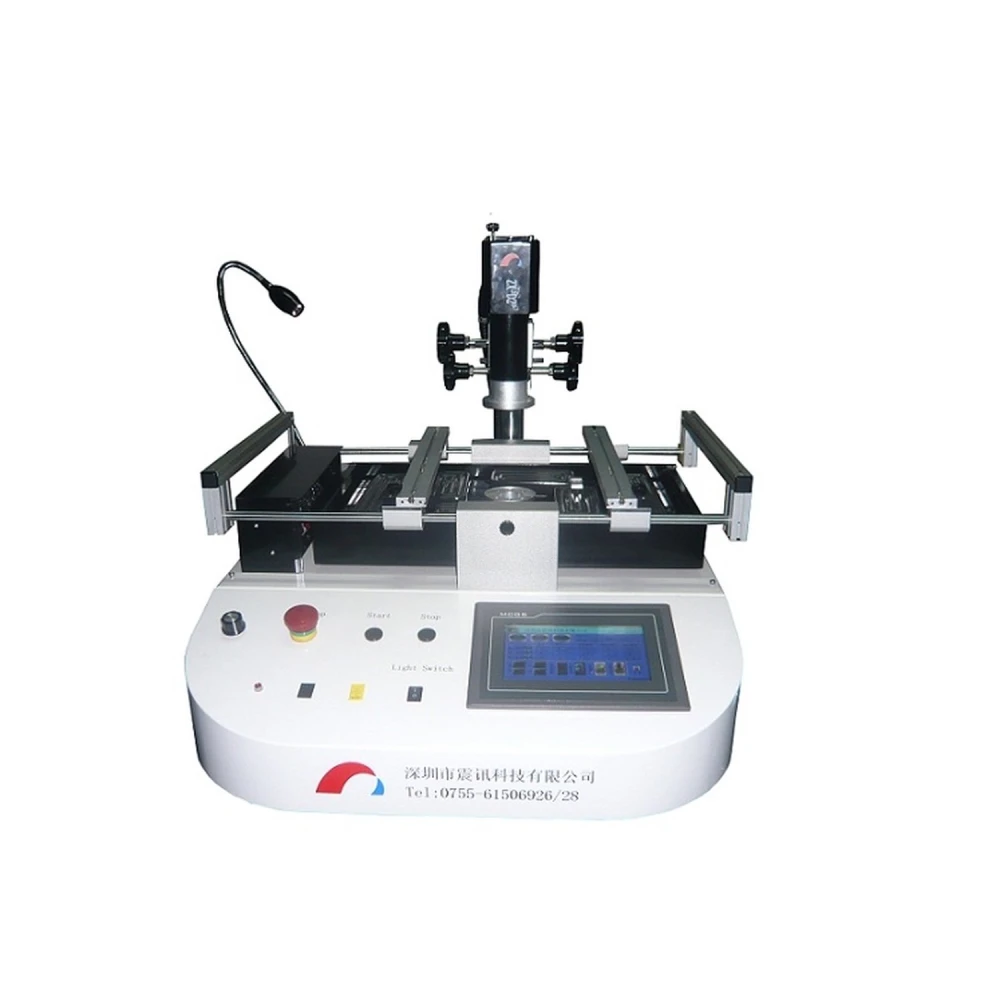
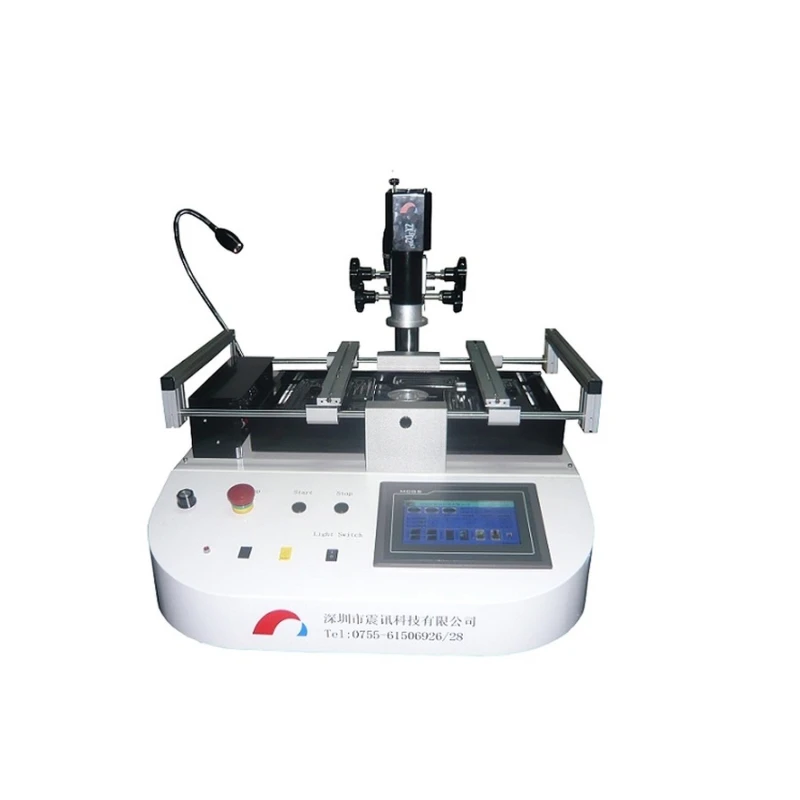
Die Reballing-Station Zhenxun ZX-D2 ist ein professionelles Werkzeug für Reballing und die Reparatur von BGA-Bauteilen auf Leiterplatten (PCB). Diese Station zeichnet sich durch ihr fortschrittliches Temperaturregelsystem und ihr robustes Design aus, das Präzision und Stabilität während des Lötprozesses gewährleistet.
Hauptmerkmale:
- PLC-Benutzeroberfläche, die die tatsächliche Temperatur von drei Zonen anzeigt und das Exportieren von Temperaturprofilen ermöglicht.
- Drei unabhängige Temperaturzonen: oberer und unterer Heizer mit Heißluft sowie eine Infrarot-Vorheizzone.
- Temperaturregelung in 9 auf- und absteigenden Segmenten, mit der Möglichkeit, bis zu 40 Temperaturprofile zu speichern.
- Unabhängiges PID-System für jede Zone, das eine stabilere und präzisere Steuerung des Heizprozesses gewährleistet.
- Halterung im unteren Heiz- und Infrarotbereich, um Verformungen im Lötbereich zu vermeiden.
- Kühlventilator nach dem Löten für ein optimales Ergebnis auf der PCB-Platine.
- Passwortschutz für die Parameter des Temperaturprofils, für mehr Sicherheit und Kontrolle.
- Inklusive verschiedener Heißluftdüsen in mehreren Größen, mit der Möglichkeit zur Anpassung an spezifische Anforderungen.
- Integrierte Vakuumpumpe, sodass keine externen Gasquellen erforderlich sind.
Technische Daten:
- Maximale PCB-Größe: 500 × 300 mm
- PCB-Dicke: 0.1 bis 5 mm
- Temperaturregelung: K-Typ-Thermoelement mit geschlossenem PID-Regelkreis
- PCB-Positionierungsmodus: Außen
- Unteres Vorheizen: Infrarot 2400W
- Hauptheizer (oben und unten): Heißluft 800W + 800W
- Stromversorgung: Einphasig 220V, 50/60Hz, 4.0KVA
- Abmessungen: 650 × 700 × 550 mm
- Gewicht ca.: 47 kg
Typische Anwendungen:
Diese Station ist ideal für Techniker und Fachleute, die an der Reparatur und Wartung elektronischer Platinen mit BGA-Bauteilen arbeiten. Ihre Fähigkeit, die Temperatur in mehreren Zonen präzise zu steuern, macht sie geeignet für Reballing-, Löt- und Entlötprozesse und sorgt für hochwertige Ergebnisse bei gleichzeitig geringem Risiko von Platinenbeschädigungen.
Kompatibilität:
Kompatibel mit PCB-Platinen der angegebenen Größe und Dicke und geeignet für eine breite Palette von BGA-Bauteilen. Die integrierte Vakuumpumpe erleichtert die Handhabung ohne zusätzliche Gasgeräte.
- PLC-Oberfläche mit Temperaturanzeige und -steuerung in drei Zonen
- Drei unabhängige Heizbereiche: Heißluft und Infrarot-Vorheizung
- Speicherung von bis zu 40 Temperaturprofilen mit PID-Regelung
- Halterung zur Vermeidung von Verformungen im Lötbereich
- Kühlventilator für ein besseres Lötfinish
- Integrierte Vakuumpumpe, keine externen Gasquellen erforderlich
- Mehrere Heißluftdüsen im Lieferumfang, anpassbar
- Geeignet für PCB-Platinen bis 500×300 mm und 0.1 bis 5 mm Dicke
- Einphasige Stromversorgung 220V, 4.0KVA
- Kompakte Abmessungen und ein Gewicht von ca. 47 kg
Kundenfragen & Antworten
Quins avantatges ofereix el sistema de control per zones independents respecte a estacions de reballing d’una sola zona?
La Zhenxun ZX-D3 compta amb tres zones d’escalfament controlades de manera independent (superior, inferior i preescalfament per infrarojos), cosa que permet una gestió tèrmica més precisa. Això redueix l’estrès tèrmic i el risc de danys en PCB o components, i ofereix més flexibilitat per ajustar perfils tèrmics en diferents treballs. En comparació, els sistemes d’una sola zona poden presentar variacions de temperatura menys controlades, augmentant el risc de defectes en soldadures BGA.
Quines són les dimensions màximes del PCB que admet l’estació i quines limitacions pràctiques es poden trobar?
L’estació admet PCB de fins a 500 mm de llarg per 300 mm d’ample, i un gruix entre 0,1 i 5 mm. Cal tenir en compte l’espai addicional necessari per al maneig i l’alineació; a més, treballar al límit màxim pot dificultar l’accés visual i augmentar la inèrcia tèrmica, per la qual cosa en plaques grans es recomana optimitzar els perfils de temperatura i utilitzar accessoris de suport.
Quin tipus d’alimentació elèctrica requereix i quines consideracions d’instal·lació elèctrica s’han de tenir en compte?
Funciona amb alimentació monofàsica de 220 V, 50/60 Hz, i un consum màxim de 4,0 kVA. És essencial assegurar-se que la instal·lació elèctrica suporti el corrent nominal (~18,2 A), preferiblement amb línia dedicada i proteccions contra sobrecàrrega. No és apta per a xarxes elèctriques amb tensió diferent, tret d’utilitzar transformadors adequats.
Quins protocols de manteniment es recomanen per a l’estació i quant afecta això la seva vida útil?
El manteniment bàsic inclou la neteja regular dels broquets i filtres d’aire, la revisió del sistema de buit i la verificació periòdica de la calibració dels termoparells PID. El compliment d’aquests protocols minimitza el desgast prematur i ajuda a mantenir la precisió tèrmica, allargant la vida útil de la màquina i reduint incidències durant el reballing.
Quins mecanismes de seguretat incorpora l’estació i compleix alguna normativa reconeguda?
Inclou protecció per contrasenya en paràmetres crítics, refrigeració automàtica posterior al cicle de soldadura i aïllament tèrmic en zones de contacte. No s’especifica certificació CE, UL ni altres normatives internacionals en la documentació proporcionada; per a entorns industrials subjectes a inspecció normativa, pot ser necessària una verificació addicional del fabricant o del distribuïdor.
What advantages does independent three-zone control offer compared with single-zone reballing stations?
Independent control of three zones (top, bottom and IR preheating) allows more precise and even heating, reducing thermal stress on the PCB and minimising the risk of damage or component warping. By comparison, single-zone stations usually have greater thermal variation and less adaptability for complex or multilayer parts.
What are the exact dimensions and weight of the Zhenxun ZX-D2, and what exactly is included in the box?
The Zhenxun ZX-D2 measures 650 mm long, 700 mm wide and 550 mm high; its approximate weight is 47 kg. It normally includes the station, a set of hot air nozzles in different sizes, PCB supports and a user manual. The availability of specific accessories may vary by distribution.
What electrical requirements does the station need to operate correctly, and what tolerances does it offer in terms of voltage and frequency?
The station operates on single-phase 220 V AC supply, accepts 50/60 Hz frequencies and requires a maximum power of 4.0 kVA. Its components tolerate small typical mains variations (±10% voltage), but a stable supply is recommended to avoid heating errors.
What is the recommended regular maintenance to ensure thermal stability and reliable operation of the station?
It is recommended to clean the air nozzles regularly, check the filter and fan condition, and carry out K-type sensor calibrations according to use. Checking cable connections and ensuring there are no obstructions in the ventilation areas guarantees stable thermal ramps and extends the equipment's service life.
Is there compatibility or any limitations when working with PCBs of different thicknesses, and what ranges are supported?
The ZX-D2 can work with PCBs between 0.1 mm and 5 mm thick, covering most consumer and professional boards. The supports and thermal curve need to be adjusted for extreme thicknesses, and you should ensure that the dimensions (up to 500 × 300 mm) do not exceed the usable area.
Kundenbewertung schreiben
Kunden, die diesen Artikel gekauft haben, kauften auch
Ihre zuletzt angesehenen Artikel