

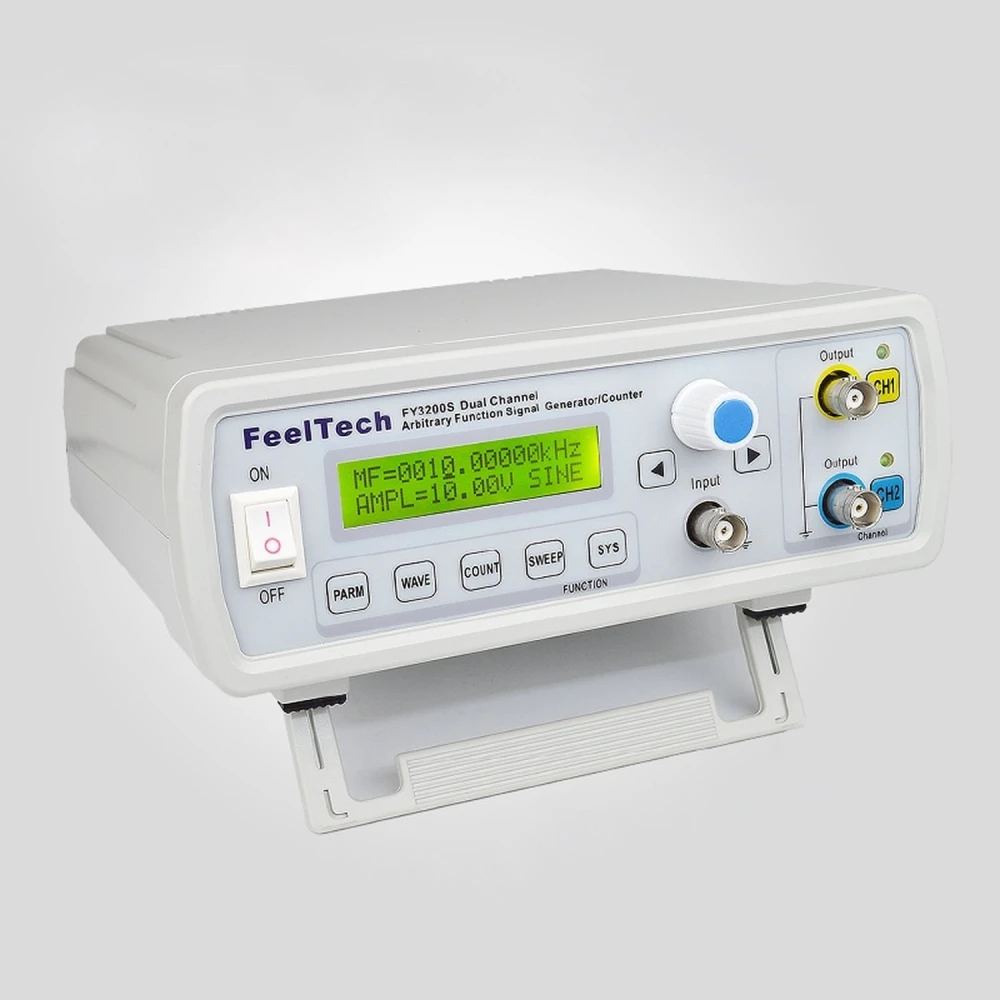
FY3206S FeelTech Funktionsgenerator 6MHz 2 Kanäle
Marke: FeelTech
Inkl. MwSt. (Exkl. MwSt.: 57,00€)






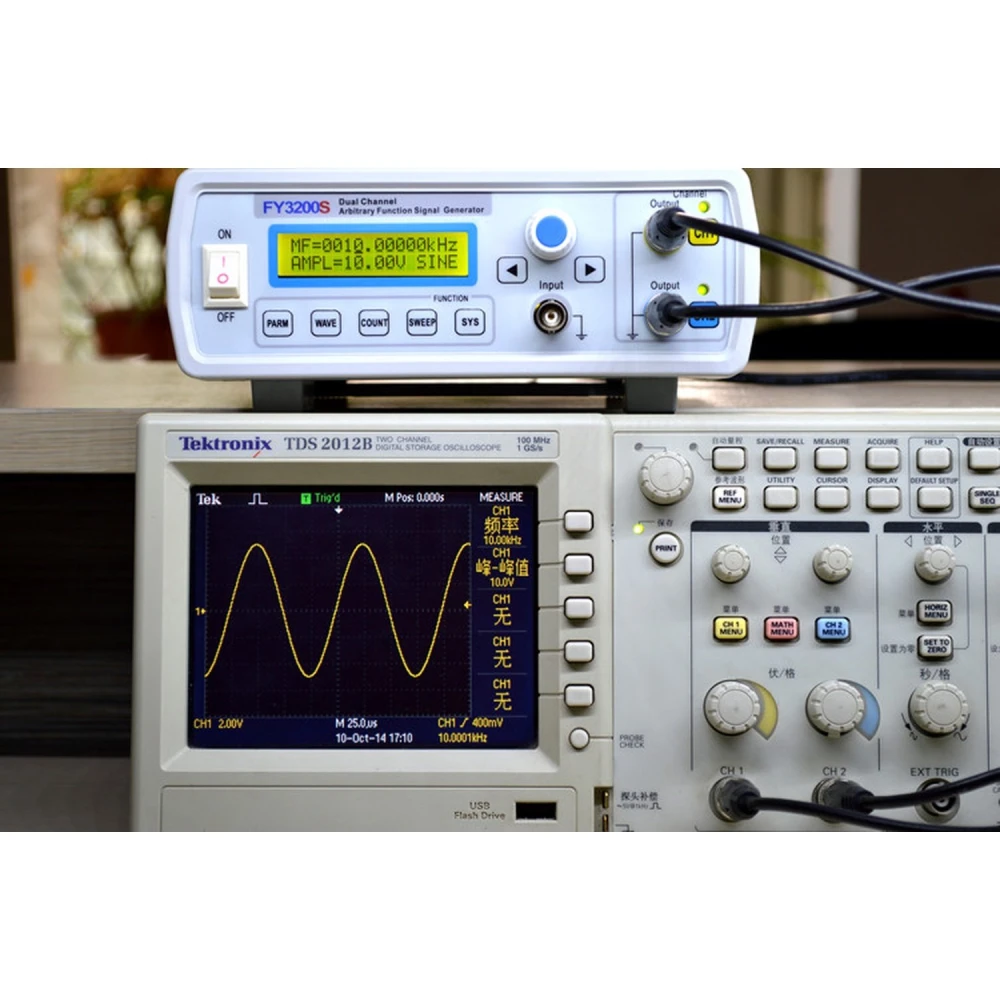
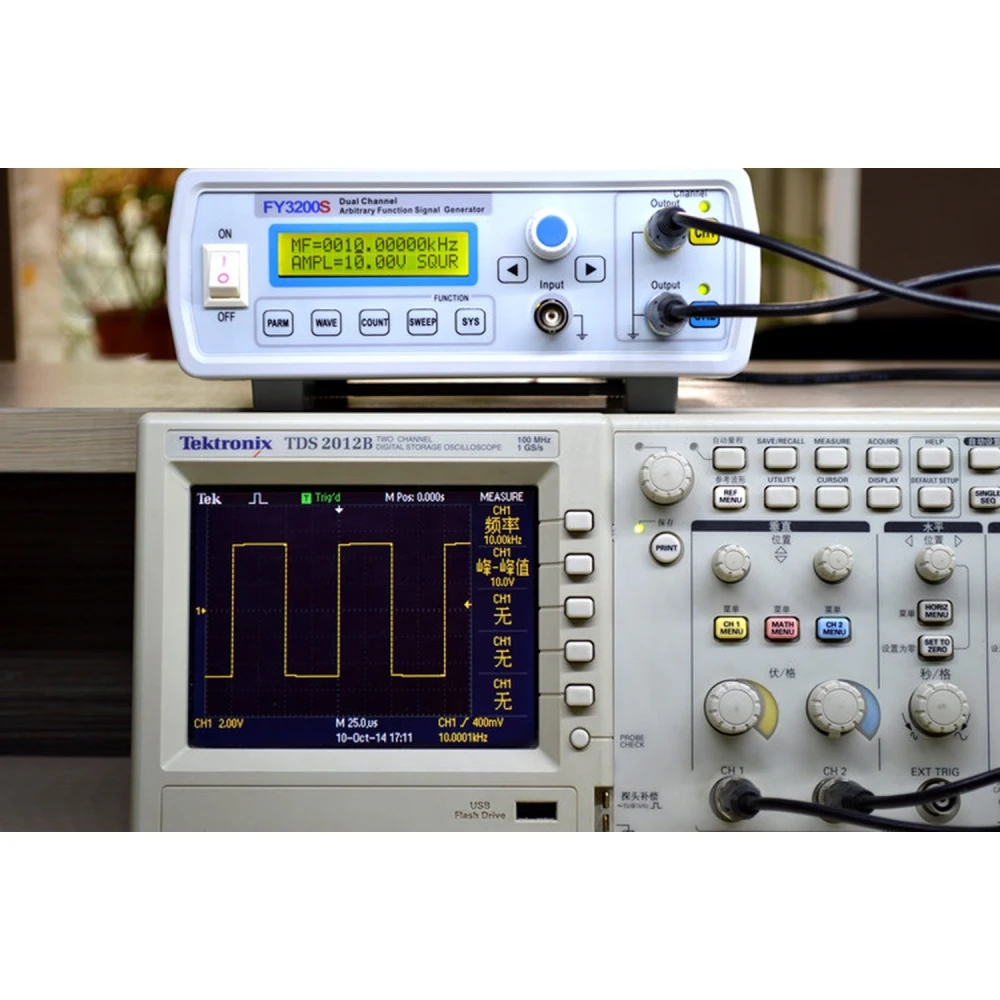
Der Funktionsgenerator 6MHz 2 Kanäle FY3206S von FeelTech ist ein fortschrittliches Gerät zur präzisen Erzeugung elektronischer Signale mit zwei unabhängigen Kanälen. Dieser DDS-Generator (Direct Digital Synthesis) ermöglicht sinusförmige, rechteckige, dreieckige, Sägezahn-, Arbiträr- und modulierte Wellenformen (AM, FM) mit vollständiger Kontrolle über Amplitude, Frequenz, Offset und Phase.
Dank CMOS-IC-Technologie und einem Hochgeschwindigkeits-Mikroprozessor sowie einem aktiven Quarzoszillator bietet er außergewöhnliche Stabilität und Präzision bei der Signalerzeugung, mit einer Frequenzauflösung von bis zu 10 mHz und einer Genauigkeit von ±5×10⁻⁶.
Hauptmerkmale
- Zwei unabhängige Ausgangskanäle (CH1 und CH2) mit Hochgeschwindigkeitsausgang.
- Maximale Frequenz für Sinus- und Rechtecksignal: 6 MHz.
- Verfügbare Wellenformen: sinusförmig, rechteckig (mit einstellbarem Tastverhältnis zwischen 0.1% und 99.9%), dreieckig, Sägezahn, Arbiträr, Standardimpuls, Rauschen, Elektrokardiogramm, AM und FM.
- Ausgangsamplitude ≥ 20 Vp-p (ohne Last) mit Ausgangsimpedanz von 50 ohmios ±10%.
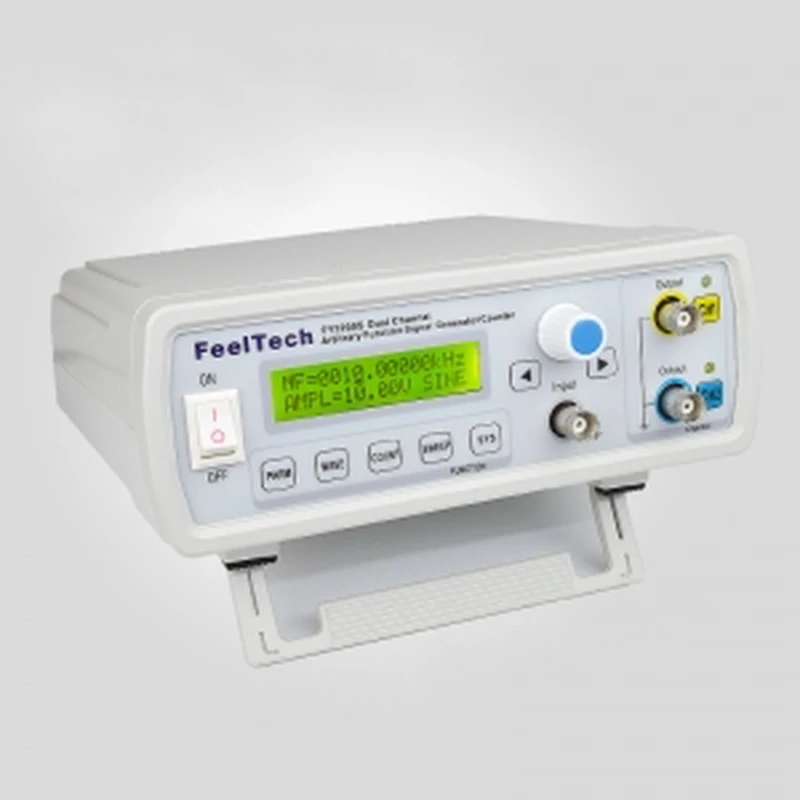
- Synchroner TTL-Ausgang für beide Kanäle mit einstellbarer Phase und elektrischem Pegel > 3.3 Vp-p.
- Integrierter Frequenzzähler mit Messbereich von 1 Hz bis 100 MHz für interne und externe Signale.
- Sweep-Funktion auf CH1 mit linearem und logarithmischem Modus, einstellbarem Bereich und Geschwindigkeit.
- Speicher für bis zu 20 benutzerdefinierte Einstellungen.
- Vollständige digitale Steuerung über Tasten und Drehregler mit LCD1602-Display in Englisch.
- Abtastrate bis zu 250 MSa/s und 12-Bit-Wellenformgenerator für geringe Verzerrung.
- Kompakte Abmessungen: 200 x 190 x 90 mm und ein Gewicht von ca. 500 g.
Typische Anwendungen
Dieser Generator ist ideal für:
- Elektronikentwicklung und Schaltungsdesign.
- Forschungs- und Prüflabore für elektronische Geräte.
- Produktionslinien für Funktionstests und Kalibrierung.
- Lehre und Ausbildung in Elektronik und Telekommunikation.
Kompatibilität und Zubehör
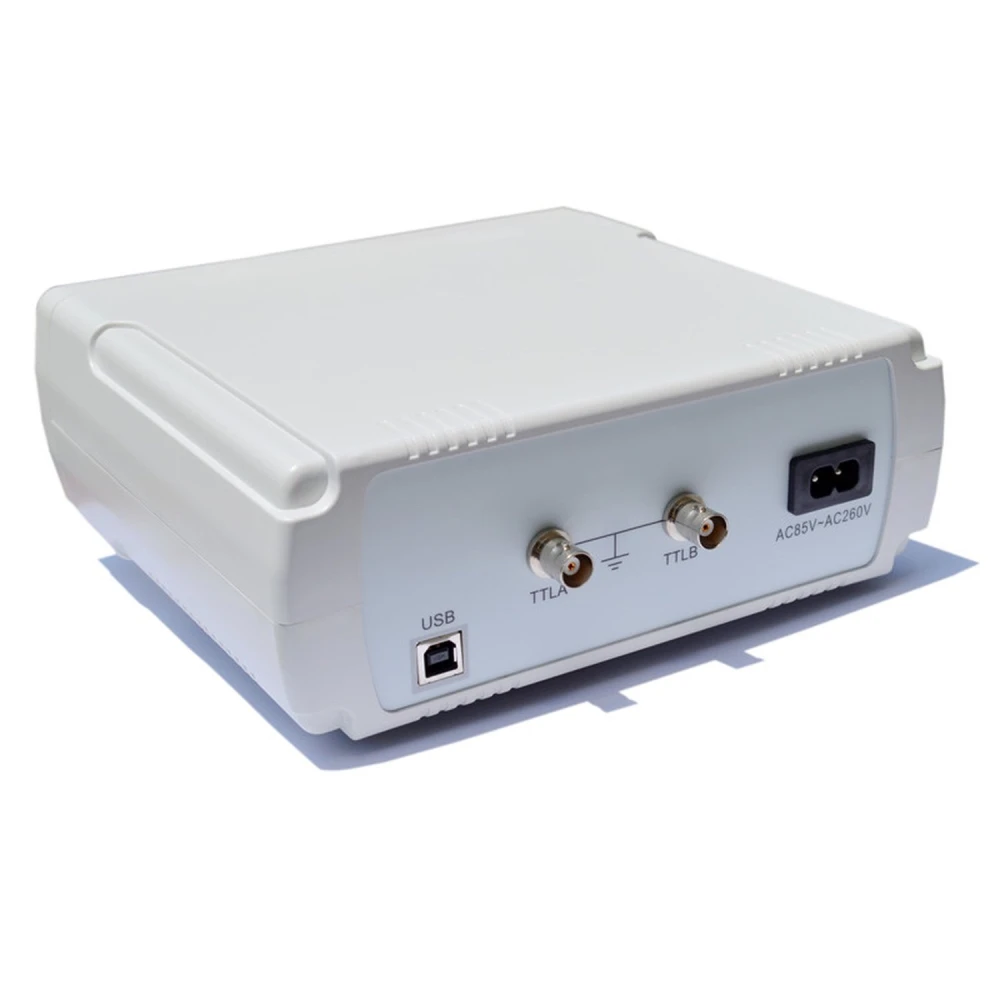
Im Lieferumfang enthalten sind Netzkabel, USB-Kabel für den Anschluss an den PC, Q9-Krokodilklemmen und eine CD mit Software und Handbuch. Kompatibel mit Systemen, die Arbiträrsignale und Sweep-Funktionen für erweiterte Tests benötigen.
Hinweis: Dieses Produkt ist derzeit nicht auf Lager. Sie können eine Benachrichtigung bei Wiederverfügbarkeit anfragen.
- Doppelkanal-DDS-Generator mit maximaler Frequenz von 6 MHz
- Wellenformen: sinusförmig, rechteckig, dreieckig, Sägezahn, Arbiträr, AM, FM
- Integrierter Frequenzzähler mit Messbereich bis 100 MHz
- Digitale Steuerung mit LCD1602-Display und Speicher für 20 Einstellungen
- Einstellbare lineare und logarithmische Sweep-Funktion auf CH1
- Hohe Präzision und Stabilität dank aktivem Quarzoszillator
- Synchroner TTL-Ausgang mit einstellbarer Phase
- Abtastrate von 250 MSa/s und 12-Bit-Generator für geringe Verzerrung
- Kompakte Abmessungen und geringes Gewicht für einfache Handhabung
- Inklusive Kabel, Klemmen und Software für Anschluss und Steuerung
Kundenfragen & Antworten
Quines són les formes d'ona que pot generar el FY3206S-6MHz i per a quines aplicacions específiques són útils?
El FY3206S-6MHz pot generar ones sinusoidals, quadrades, triangulars, dent de serra i formes d'ona arbitràries programables. Les ones sinusoidals són ideals per a proves d'equips d'àudio i filtres; les quadrades s'empren en simulació digital o test de rellotges lògics; les triangulars/dent de serra s'utilitzen en circuits de modulació i control, mentre que les arbitràries permeten emular senyals complexes específiques, fonamental per a mòduls analògics o dissenys personalitzats.
Quina interfície de sortida i nivells d'amplitud ofereix el generador i com es connecta a altres instruments de laboratori?
El generador compta amb sortides estàndard tipus BNC i admet nivells de senyal ajustables fins a ±10 Vpp en càrrega d'alta impedància (aproximadament 50 Ω). Inclou sortida TTL per a sincronització digital. Això permet connexió directa a oscil·loscopis, analitzadors o equips de prova compatibles amb entrades BNC, assegurant versatilitat en laboratoris educatius i industrials.
L'equip requereix algun programari o controlador específic per carregar formes d'ona arbitràries i és compatible amb sistemes Windows o Mac?
Per carregar formes d'ona arbitràries, s'utilitza el programari dedicat proporcionat pel fabricant, generalment compatible amb sistemes Windows (normalment Windows 7/8/10). No es garanteix suport natiu per a macOS, de manera que per a usuaris de Mac caldria un entorn virtual o un equip Windows. El controlador sol incloure's al paquet o està disponible en línia.
Quines són les especificacions elèctriques d'alimentació i hi ha tolerància davant variacions de voltatge?
El FY3206S-6MHz habitualment opera amb una font d'alimentació externa de 12 V DC, amb un marge de tolerància de ±10 %. El consum màxim sol ser inferior a 10 W. És important no excedir els valors especificats per evitar danys o un funcionament inestable, especialment en entorns amb variacions de voltatge freqüents.
Quina diferència tècnica principal presenta aquest model respecte a altres generadors DDS de gamma similar, com el FY3200S-10MHz?
La diferència clau rau en la freqüència màxima de sortida: el FY3206S-6MHz arriba a 6 MHz en sinus, mentre que el FY3200S-10MHz arriba a 10 MHz. A més, el rendiment en distorsió i fidelitat de la forma d'ona és molt similar entre tots dos, però el model de més freqüència ofereix més marge per a aplicacions de RF o necessitats de més amplada de banda. Si el rang de 0–6 MHz cobreix les seves necessitats, el 3206S és més eficient en cost i potència.
What waveforms can the FY3206S-6MHz generate, and which specific applications are they useful for?
The FY3206S-6MHz can generate sine, square, triangle, sawtooth and programmable arbitrary waveforms. Sine waves are ideal for testing audio equipment and filters; square waves are used in digital simulation or logic clock testing; triangle/sawtooth waves are used in modulation and control circuits; while arbitrary waveforms allow the emulation of specific complex signals, which is essential for analogue modules or custom designs.
What output interface and amplitude levels does the generator offer, and how is it connected to other laboratory instruments?
The generator has standard BNC outputs and supports adjustable signal levels up to ±10 Vpp into a high-impedance load (approximately 50 Ω). It includes a TTL output for digital synchronisation. This allows direct connection to oscilloscopes, analysers or test equipment with BNC inputs, ensuring versatility in educational and industrial laboratories.
Does the unit require any specific software or driver to load arbitrary waveforms, and is it compatible with Windows or Mac systems?
To load arbitrary waveforms, the dedicated software provided by the manufacturer is used, generally compatible with Windows systems (normally Windows 7/8/10). Native support for macOS is not guaranteed, so Mac users would need a virtual environment or a Windows machine. The driver is usually included in the package or available online.
What are the power supply specifications, and is there tolerance for voltage variations?
The FY3206S-6MHz usually operates from an external 12 V DC power supply, with a tolerance margin of ±10%. Maximum consumption is usually less than 10 W. It is important not to exceed the specified values to avoid damage or unstable operation, especially in environments with frequent voltage fluctuations.
What is the main technical difference between this model and other similar-range DDS generators, such as the FY3200S-10MHz?
The key difference is the maximum output frequency: the FY3206S-6MHz reaches 6 MHz in sine mode, whereas the FY3200S-10MHz reaches 10 MHz. In addition, distortion performance and waveform fidelity are very similar between the two, but the higher-frequency model offers more headroom for RF applications or wider bandwidth needs. If the 0–6 MHz range covers your requirements, the 3206S is more cost- and power-efficient.
Kundenbewertung schreiben
Kunden, die diesen Artikel gekauft haben, kauften auch
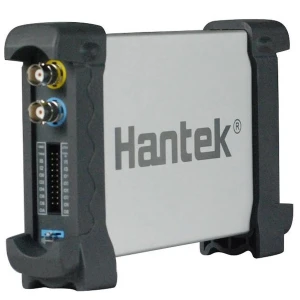
Victor VC2002 Funktionsgenerator mit 8-stelligem Display und hoher Sicherheit
Ihre zuletzt angesehenen Artikel
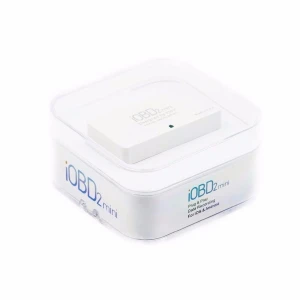
Xtool iOBD2 Mini OBDII Bluetooth-Scanner für iOS und Android - Fahrzeugdiagnose